
Grease Separation for Wastewater Treatment | Removal Solutions

Grease Separation to Treat Wastewater: High-End Solutions
- Appropriate Grease Separation for Wastewater Treatment is crucial in hygiene preparation, securing plumbing, and adherence to environmental law. Food processing plants, restaurants, and industrial kitchens produce large quantities of fats, oils, and grease (FOG), which may block the drainage systems, generate unpleasant odors, and add to the maintenance fees. This is the reason why effective separation of grease to treat wastewater solutions cannot be ignored.
- The major manufacturers of grease separation systems offer a fully-designed system, such as industrial grease separation, wastewater grease removal, and grease interceptor systems that can be installed and utilized in high-volume and high-temperature conditions.
The Importance of Grease Separation in the Treatment of Wastewater
FOG in sewage poses a significant problem to commercial and industrial kitchens. Grease that is built up may result in:
- Plumbing clogs that interfere with the functioning.
- Bad smells that impact the kitchen hygiene.
- Violation of environmental rules.
- Raised drainage and treatment systems maintenance.
Through the purchase of quality grease removal systems to treat wastewater, businesses would avoid these problems, enhance their efficiency, and keep the environment clean.
Grease Separation System Types
Various systems can be offered, depending on the type of kitchen and the amount of wastewater:
Passive Grease Traps and Interceptors
- Basic systems that are fitted in-line through kitchen drains.
- Intended to serve smaller restaurants and low-flow.
- To prevent further contamination in the main wastewater system, capture FOG.
- Need manual cleaning regularly.
Additional Automatic Grease Separators
- Perfect in restaurants with large volumes of food services.
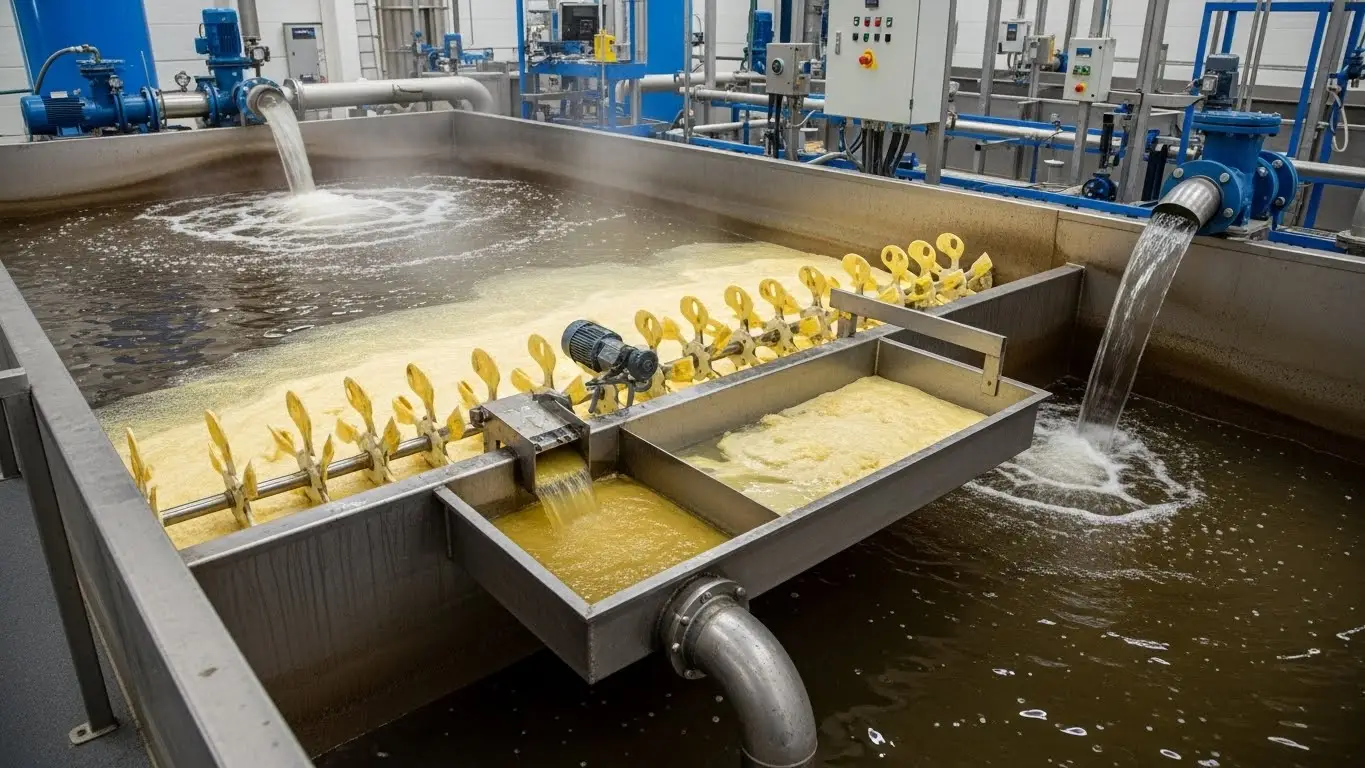
- Apply self-cleaning brushes, flow-controlled division, and digital control units.
- Cloud removes grease automatically and eliminates human effort.
- Keep down to the environment through clean discharge.
Industrial Grease Interceptors
- Custom-built for large food processing facilities.
- Fitted with modular grease separation units, submersible pumps, and heated grease chambers.
- Deal with changeable flow conditions at high temperatures.
- Stainless steel construction to ensure its longevity.
Introduction of MEA(r) Standard Grease Separation System
The MEA Standard Grease Separation System (Model: GS-2S) is one of the best solutions in grease management. This is a highly automated system that provides all-day grease cleaning to commercial kitchens, restaurants, and food processing plants.
Key Features:
- Closed odorless operation to preserve a hygienic atmosphere.
- Grease Separating Self-Cleaning Brush.
- Customizable 2.5mm SS304/316 tank with high sludge chamber and two-stage separation, eliminating sludge >1.5mm.
- An optional heating system to keep the oil flowing when it is colder.
- Auto timing and discharge digital microcomputer control.
- Removable design is used in channels greater than 850mm with variable inlet/outlet.
Applications:
- Restaurants
- Central kitchens
- Food processing plants
- Commercial kitchens with a great volume of grease separation are needed.
Benefits:
- Odor prevention, blockages of pipes, and expensive system maintenance are prevented.
- Minimizes the cleaning frequency and staffing.
- Favors the grease disposal in compliance with the environment.
- Enhances sanitation and hygiene in foodservice departments.
Technical Specifications to Be Taken into Consideration
The following technical characteristics are important when selecting a grease separation system:
- Material Quality: Construction Stainless steel 304/316L: Corrosion resistance and long-term durability.
- Capacity: Grease interceptors and flow-controlled systems of high capacity can handle the changing levels of wastewater.
- Automation: Grease removal systems are automated, thereby minimizing labor needs and ensuring consistent performance.
- Heating Features: Keeps the oil flowing, especially under cold climatic conditions or high-viscosity conditions.
- Maintenance Access: Panels on front access and removable units can be easily cleaned and inspected.
Benefits of Grease Separation in the Treatment of Wastewater
The advantages of investing in advanced grease separation systems are several:
- Hygienic Compliance: The removal of FOG eliminates bacterial growth and keeps the environment sanitary.
- Operational Efficiency: The grease separation is real-time, which ensures that the kitchen activities run continuously.
- Environmental Protection: Minimizes the release of grease to the municipal wastewater systems.
- Cost Savings: This saves the cost of costly plumbing work and manpower used on such manual cleaning.
- Safety: Removes greasy floors and reduces the risk of slips and falls.
Long-Tail Usages of the Commercial and Industrial Kitchens
Large Restaurants and Hotels
- OD needs to install the industrial grease separation systems and high-capacity grease interceptors to treat massive FOG loads.
- The constant cleaning enhances the cleanliness in the kitchen and shortens downtime.
Food Processing Unit and Central Kitchens
- Wastewater grease removal equipment is automated to achieve rigorous industrial standards.
- Complex operations are facilitated by characteristics like modular separation units and grease chambers that are heated.
Small and Mid-Sized Restaurants
- Systems, Grease cap, and the smallest separators do not block the space.
- The low-cost and effective solutions contribute to the sustainability of work in restaurants and cafes.
Benefits of Environmental and Wastewater Management
Proper grease separation of wastewater treatment has a contribution to:
- Eliminating wastewater pollution from the environment.
- Adherence to local laws on the disposal of grease.
- Enhancement of the water quality of the municipal wastewater systems.
- Waste management through the recovery of grease to be reused.
- In commercial kitchens and industrial plants, the prevention of pollution.
Choosing the Appropriate Supplier
In selecting a grease separation system supplier, consider:
- Industrial and commercial kitchen experience.
- Access to tailored and individual solutions.
- Maintenance and technical support as an after-sales service.
- Established record in adherence to environmental conditions.
- Equipment, from passive grease taps to fully automatic GS-2S.
The leading suppliers, like CMSA MEA, offer a wide range of services that include installation, on-site support, and maintenance services to guarantee maximum operation of all the grease-removing equipment in wastewater.
Conclusion
Effective Grease Separation for Wastewater Treatment is needed in wastewater treatment so that the restaurants, commercial kitchens, and industrial food processing departments can operate efficiently. To guarantee hygiene, high-capacity interceptors, and automated removal solutions, it is necessary to invest in industrial grease separation systems and guarantee their effectiveness and adherence to environmental requirements. To find out more about grease separation systems and other wastewater treatment methods, be sure to go to CMSA MEA.
Share on Social:


