
The Indispensable Locking Mechanisms in Ductile Iron Grating Design

A busy city provides a fantastic backdrop to discuss the importance of the expansive underground metal mesh structural system system. One could hardly imagine the vast system of ductile iron grating that underpins the traffic and pedestrian drainage systems in an industrial area. Such systems are utilized because they are durable under heavy loading, resist corrosion, and are reliable for long-term use. One aspect often overlooked by the untrained eye is the design of the locking mechanism. Why is it important? How does the design of the locking mechanism, for example in the CMSA Ductile Iron Grating Model: 11A295, impact safety and functionality? As we will explore, the design of the 10-Ductile Iron Grating System, is innovative and advanced.
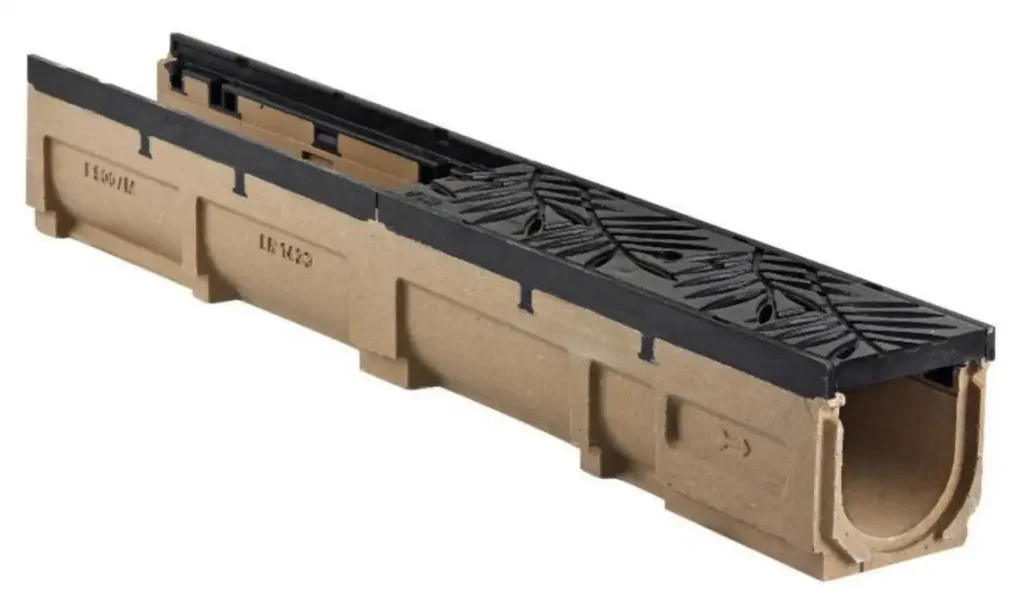
What is Ductile Iron Grating?
Ductile iron is a cast iron that is subjected to a magnesium treatment that converts flake graphite structures to spherical nodules. This microstructure gives the metal exceptional tensile strength, ductility, and impact resistance that are far superior to the traditional gray iron. Ductile iron grating is used as a cover on drainage channels that allow water to flow through the channels, while still supporting heavy loads from vehicles and people, or from equipment.
However, grating that simply supports itself on the drainage channel framework is no longer safe after a period of time. Traffic vibrations, thermal differential expansion, theft, and inadvertent movement can lead to the grating getting displaced and leaving openings in a drainage system. This can be damaging to vehicles and also create a tripping hazard. This is why grates should have locking mechanisms.
Significance of Locking Mechanisms
A mechanism that locks grates in place is crucial. It helps keep grates in place, prevents loss or theft, and stops grates from being blown off or sucked off by an operating vehicle. Here are the important reasons locking mechanisms are integral to 10-Ductile Iron Grating Design.
1. Public Safety
Grates that are not secured lock in place can move and can potentially pop out. When this happens to grates that are placed on sidewalks and roads can cause serious problems such as:
•Trips and falls of pedestrians
•Entrapment of bicycle wheels
•Vehicle accidents and damage to tires
Locking mechanisms can also be adjustable and can be helpful to companies that manufacture grates. This prevents grates from being removed from their position. An example of this locking mechanism is located in the CMSA Model 11A295.
2. Prevention Of Theft
One major problem that the entire world is facing is metal theft. Because ductile iron is made of scrap metal, it is used in constructing unprotected grates. Locking mechanisms are used for theft deterrence since they can only be opened with specific tools or keys which makes it even hard for the thieves to acquire this.
3. Resistance to Vibrations and Fatigue
Traffic also causes disruption with low level vibrations but this can be controlled and reset. An unlocked grate also causes a lot of noise and can be misaligned or come apart from the entire channel and fail completely. To solve this problem, a channel that has considered this problem during design and a locking mechanism can be used.
4. Flood and Uplift Protection
Rapidly filling drainage channels present new problems. Fast moving water generates uplift forces which can displace an unsecured grate. The exposed trench poses a new danger. A locking mechanism resist hydraulic uplift protecting the grate from displacement during a storm event.
5. Long-Term Infrastructure Reliability
Operationally, municipalities and industrial site operators want drainage solutions that can last decades without constant inspections. A grate with a locking mechanism will reduce maintenance calls, thus prolonging the grate and channel frame's service life. This is a key aspect of CMSA's engineering philosophy.

CMSA Ductile Iron Grating: Design and Technical Advantages
CMSA's Model 11A295 ductile iron grating has been designed with the most demanding requirements in mind. This includes compliance with EN1433 (the European standard for drainage channel covers) and load ratings up to Class F900. The highest class for airport and industrial use.
Key Specifications at a Glance
| Feature | Detail |
| Model | CMSA 11A295 |
| Material | Ductile iron |
| Width | 122 mm |
| Locking Mechanism | Standard (optional lockable) |
| Compliance | EN1433 |
| Load Class | Up to F900 |
| Compatible Systems | EN1000, U1000, Z1000, LZ1000/80, etc. |
Corrosion Resistance That Lasts
CMSA applies advanced anti-rust coatings to every grate. These coatings are not just paint—they are engineered layers that resist:
•Road salts
•Chemical spills
•Coastal salt spray
•Long-term moisture exposure
“A range of slot widths and styles are suitable for application scenarios with various drainage requirements.” – CMSA Technical Note
Multiple coating options exist, including epoxy, polyester, or hot-dip galvanizing. This flexibility allows specifiers to match the coating to the environment, from urban roads to chemical plants.
Lightweight But High-Load Design
Ductile iron's high strength-to-weight ratio means CMSA 11A295 remains manageable for installers while supporting extreme loads (F900 = 90 tonnes test load). The lightweight design reduces manual handling injuries and speeds up installation.
Variations in Slot Designs for Hydraulic Efficiency
Different drainage problems can be resolved with different slot designs. CMSA provides:
•Tighter slots for pedestrian zones to avoid heel entrapment
•Wider slots for increased stormwater collection
•Heel-proof designs for increased safety
The grate makes an active contribution to hydraulic and debris management instead of passively resting on the channel.
Mechanism of the Locking System in CMSA Design
The CMSA lock can be standard (interference fit) or an optional lock (key operated). The system consists of:
•Locking bolts or turn bolts that are spring loaded and engage with the channel's frame
•Locking points set below the surface to thwart malicious opening
•Levelling pins (stainless steel or brass) that are resistant to rust.
The grate is held in place by an installer operated locking mechanism that is rapid but resilient to vibration, theft, and hydraulic uplift.

Benefits of the CMSA Locking Approach
•Tool-free removal for maintenance (authorized personnel only)
•Positive audible click confirms secure locking
•No loose parts that can be lost
•Compatible with all CMSA channel systems (EN1000, U1000, etc.)
Applications Where Locking Mechanisms Are Critical
| Environment | Why Locking Matters |
| Airport aprons | Jet blast can lift unsecured grates; F900 rating required |
| Highway toll plazas | Constant heavy braking causes grate shifting |
| Industrial loading docks | Forklift traffic and chemical spills demand secure fit |
| Pedestrian plazas | Theft and trip hazards are high |
| Flood-prone roads | Uplift forces during flash floods |
In every case, CMSA's 10-Ductile Iron Grating Design with locking capability provides the necessary security.
Installation and Layout Flexibility
CMSA grates are designed for modular integration. The 122 mm width matches multiple channel systems, allowing straight or curved layouts. Installers report that:
•Locking mechanisms do not slow down installation
•The system resists loosening under vibration and load stress
•Coatings remain intact even after repeated locking/unlocking cycles
For curved drainage runs, CMSA offers specialized radius grates that still accommodate the same locking hardware.
Compliance and Quality Assurance
EN1433 is the benchmark for drainage channel covers in Europe and beyond. It defines load classes from A15 (pedestrian only) to F900 (extreme traffic). The CMSA Model 11A295 is compliant to EN1433 regulations, as independent tests have verified:
•Load capacity
•Deflection limits
•Retention force of locking mechanism
•Coatings for both adhesion and corrosion resistance.
For additional tests and installation guidelines, the CMSA brochure can be downloaded.
Conclusion: Locking Mechanisms are Imperative
In 10-Ductile Iron Grating Design, locking mechanisms are what turn a basic cover into a component of a reliable and robust infrastructure. Grates without locking mechanisms are prone to theft, loosening due to vibrations, and uplift due to hydraulic pressure. CMSA Model 11A295 has a completely rust-proof reinforced locking system (up to F900, EN1433) AND high-strength Ductile Iron. Always specify locking mechanisms when detailing drainage gratings. For the CMSA brochure, or to get a quote, request today.
Locking Mechanisms and Ductile Iron Grating Design FAQs
Q1: Is a locking mechanism necessary for ductile iron grating systems?
A: A locking mechanism is not strictly necessary for the grating system to function, however, it is not immune to theft, or vibration loosening and uplift due to hydraulic pressure. For safety and reliability of the system, it is highly encouraged.
Q2: What load class does CMSA Model 11A295 support?
A: It is a fit in the F900 class, and is designed for use in heavy industry and on airfields and roads.
Q3: Is the locking mechanism built into the CMSA grating?
A: It is, there is a basic locking mechanism and a key-lockable version for greater security.
Q4: How does the anti-rust coating work in the coastal environment?
A: CMSA grates have an anti-rust coating that is resistant to salt and moisture, and CMSA coatings are superior to all other coatings in highly corroded environments, especially coastal environments.
Q5: In what drainage systems can Model 11A295 be used?
A: It fits CMSA channels such as EN1000, U1000, Z1000, and LZ1000/80, and so on.


