
Food Industry Drainage Systems: High-Performance Solutions

The Introduction of Food Industry Drainage Systems
In the contemporary food business, hygiene and proper management of water are very important. Whether it be restaurants and bakeries or huge food processing plants, a well-developed food industry drainage system provides a smooth-running system, compliance with regulations, and avoidance of contamination. Our innovative engineering is available at CMSA, offering a combination of durability, safety, and hygiene with innovative solutions to drainage problems, which are specifically designed to cater to food facilities.
The Importance of Food Industry Drainage Systems
A food industry drainage system is not only a practical requirement but also a requirement in terms of hygiene, safety, and efficiency in working. Defective or badly maintained drainage may lead to:
Cross-Contamination: Drainage is not done properly, which will cause bacteria, grease, and food residues to build up, resulting in contamination of production areas.
Odor Issues: Ineffective drains are a source of unpleasant smells, which can also have an impact on both worker comfort and the quality of products.
Waterlogging and Operational Disturbance: Ineffective drainage can cause flooding and slow down food processing lines, which can lead to accidents.
Non-Compliance with the Regulations: Food facilities are required to follow the strict requirements, including the HACCP and local food safety standards. Failure to comply may attract fines, closure of plants, or recalls.
Basic Characteristics of Drainage Systems
Good drainage in food facilities is centered on efficiency, durability, and hygiene. It has some crucial characteristics such as:
Anti-Bacterial Design Hygienic
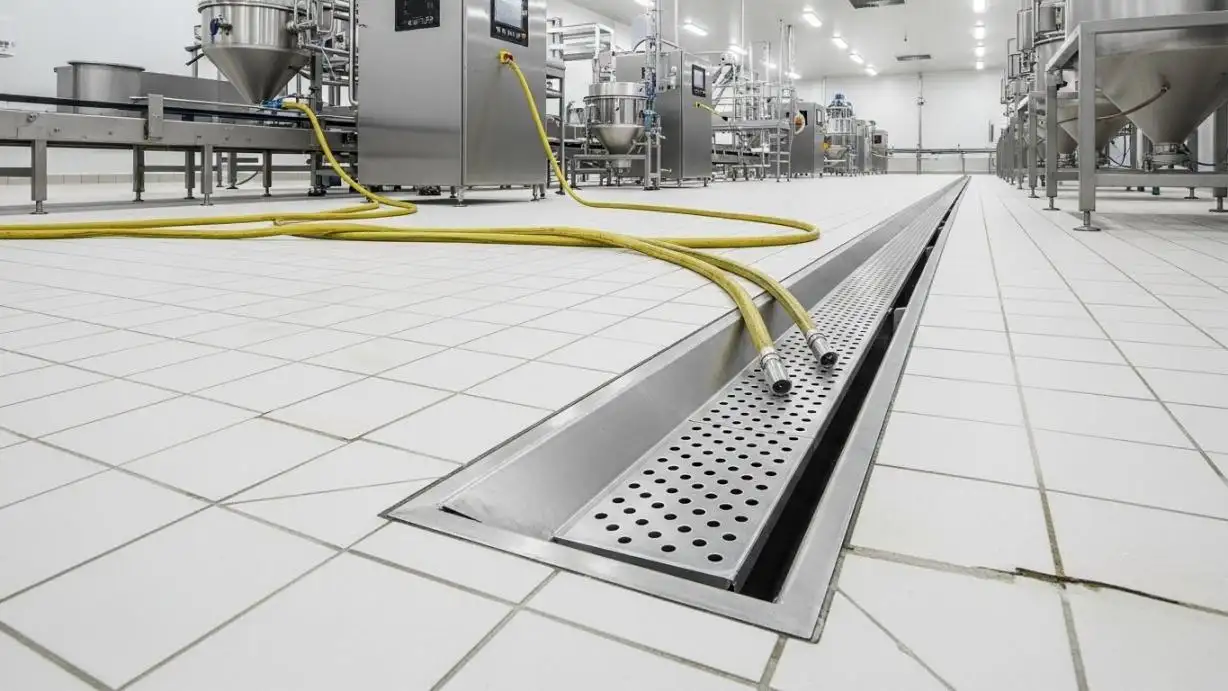
An adequately constructed drainage system should not allow bacteriological development and cross-contamination. Food industry drainage systems made of stainless steel are the best choice as they have smooth surfaces, are not corroded, and are easily cleaned. The addition of drain filters, traps, and grease separation units assists in ensuring that the management of water is contamination-free.
Odor and Backflow Prevention
Water seal depths of 50mm in food processing facilities' drainage systems should be provided to avoid backflow as well as foul odor. Creative designs, including an anti-bacterial drainage system and odor control drainage, minimize health risks and enhance comfort in the workplace.
Corrosion and Chemical Resistance
Acidic or alkaline materials, oils, and cleaning chemicals are very common in food plants. Systems such as MEA(r) Ductile Iron Grating (Model 11A295) are stronger products with a corrosion-resistant finish and are not affected by exposure to chemicals, thus capable of delivering the same effect in the long run. Long-term durability is guaranteed by the use of anti-rust coating and heavy-duty construction.
Effective Waste and Water Management
Effective drainage clears off water, food particles, grease, and other residues in the processing areas. Systems have to conform to the high-capacity industrial drains, modular system, and also to the grease trap to avoid blockage and ensure flow is regular.
Food Industry Uses in the Food Industry
Commercial Kitchens
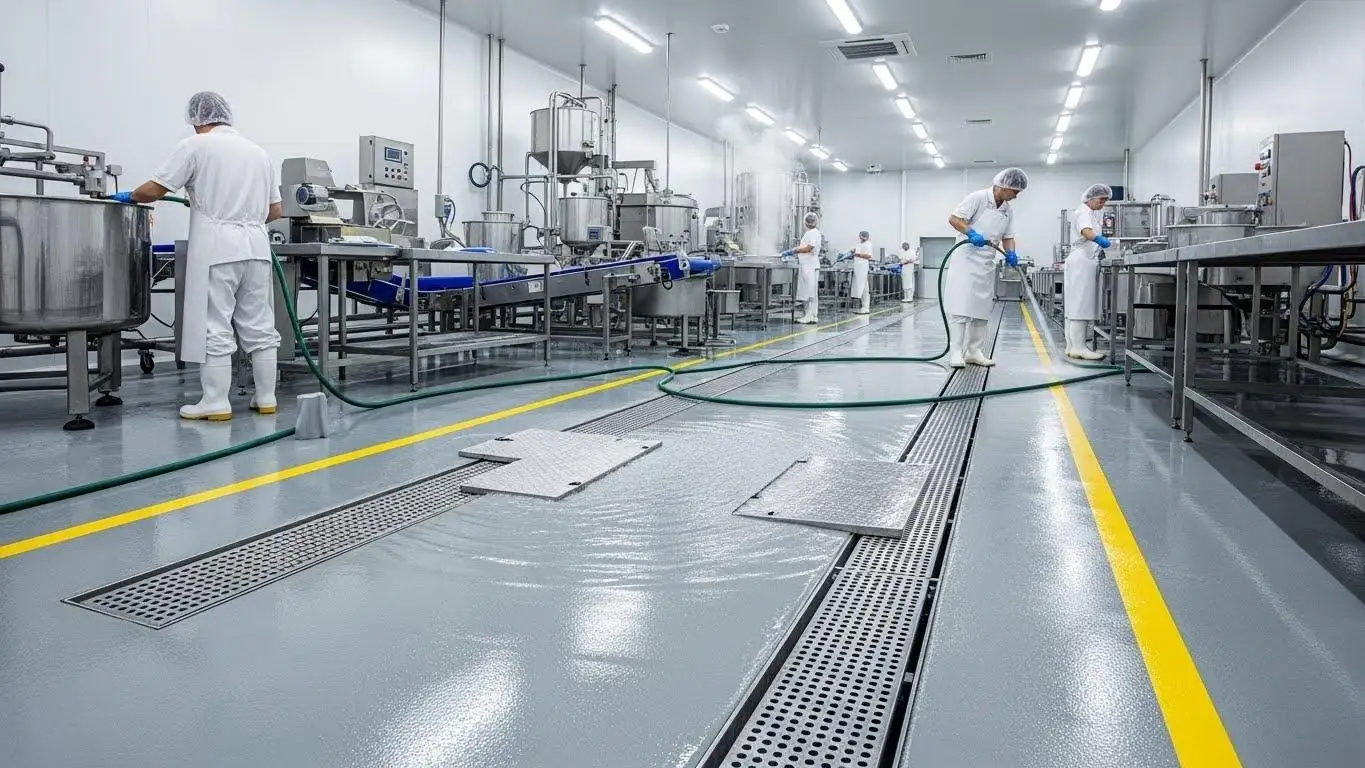
Commercial kitchen drainage systems are needed in restaurants, hotels, and catering facilities to accommodate large quantities of water, oil, and food waste. Hygienic floor drains, trench drains, and underfloor drainage are effective solutions to stem contamination and flooding.
Bakeries and Confectioneries
The bakeries have special problems with flour, sugar, and dough residues that block the drains. Food processing hygienic drainage in a bakery keeps the drains clean and makes them easy to clean, and the drainage is modular in stainless steel, which means that it can be easily repaired without hampering production.
Processing Plants, Meat and Dairy
These plants process wastewater in large amounts that include fats, oils, and proteins. Grease management and anti-bacterial grease drainage systems designed specifically to accommodate the requirements of industrial food drainage are designed to facilitate adherence to compliance with food safety drainage and HACCP requirements.
Beverage and Food Manufacturing Plant
Since the soft drink plants are up to large-scale food factories, food production facilities have to be able to withstand high flow rates and chemical exposure. The stainless steel floor channels, ductile iron gratings, and flexible modular drainage patterns are flexible and long-lasting.
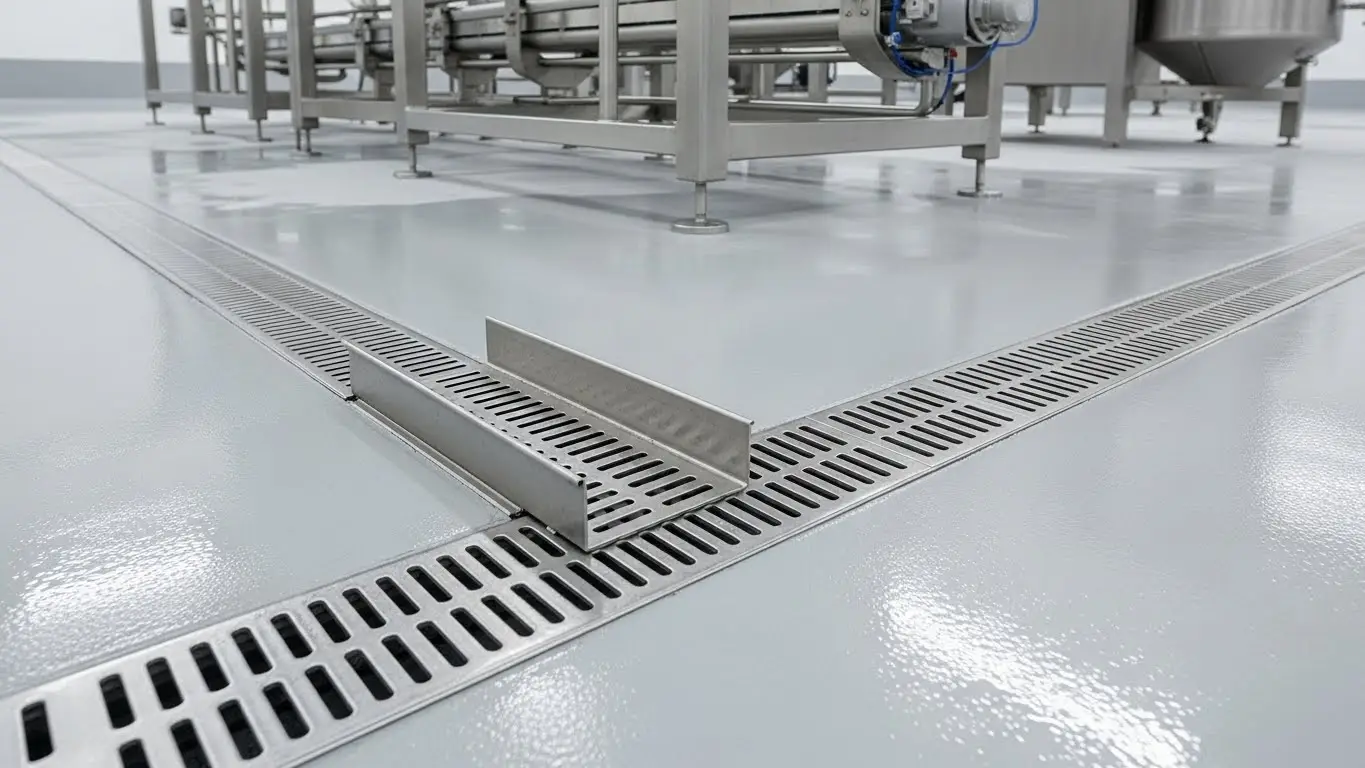
MEA Food Industry Drainage System Ladder Grating Hygienic
MEA hygienic ladder grating is a progressive drainage solution that is clean, safe, and durable. This grating is made of high-quality stainless steel 304 or 316L and has a parallel bar ladder design, which maximizes the flow of liquids and does not create the difficulties of washing the surface. Its seamless welds, curved internal edges, and anti-slip design make it meet high standards of hygiene, making it ideal in cases where sanitation is of high priority. Surface treatments that increase corrosion resistance, such as passivation, electropolishing, and sandblasting, are optional. The grating is fully certified to EN 1253 (indoor) and EN 1433 (outdoor), and has been an effective drainage solution in the food industry and other sensitive hygienic installations in use.
Key Features:
- Stainless steel construction 304 /316L has high-level corrosion.
- Ladder layout allows good drainage and structural stability.
- A bacterial buildup is reduced by having a smooth and weld-free surface.
- Safety in the wet and sterile setting is promoted by anti-slip.
- Finishing: passivated, electropolished, or sandblasted to enhance durability.
- Meets the standards EN 1253 (indoor) and EN 1433 (outdoor).
Design Bearings of Drainage Systems in the Food Industry
Modular and Flexible Layout
The modular drainage systems enable straight, curved, and complex designs depending on the chosen floor plan of a food facility. This flexibility will guarantee maximum water collection and quick access to maintenance.
Combination with Grease and Oil Management
Grease traps and oil separation units play a very important role in ensuring that there is no clogging. The industrial drainage pipes solutions must be intertwined with grease management systems that are operational nonstop and that meet the food safety standards.
High-Capacity Flow Handling
Large plants with large volumes of drainage (e.g., meat processing plant or beverage factory) need to have large capacity drainage channels that are able to operate at peak flows without compromising on hygienic standards.
Simple Maintenance and Cleaning
Routine cleaning is essential to the prevention of bacteria. The removable filters, smooth and clean stainless steel surfaces, and easily accessible traps minimize downtime and simplify the sanitation process. The designs that are easy to maintain are also conducive to preventive maintenance programs and reduce the cost of the lifecycle.
Food Industry Sustainability Drainage
Sustainable drainage: This is becoming a critical issue:
- Minimization of the use of water by efficient drainage of industrial wastes.
- Stopping water pollution in the vicinity.
- Adoption of environmentally friendly drainage systems that have a lesser environmental impact.
- Designing to maintain long-term durability to minimize replacement and the use of resources.
At CMSA, our solutions are based on marketing sustainable water management as well as preserving hygiene and safety, which are mandatory in the food processing environment.
Maintenance and Lifecycle Management
Routine care is a way of increasing the lifespan of drainage systems. The suggested practices consist of:
- Cleaning floor drains, trench drains, and grease tabs on a routine basis.
- Checking of ductile iron grating and stainless steel surfaces for corrosion or damage.
- Seeing that the water seal depths and backflow prevention features are not impaired.
- Filter changes and removable traps to prevent clogs should be prevented by replacing the filters in advance.
The practices guarantee sustainable industrial drainage systems that allow nonstop operations and adherence.
Cost Considerations
Drainage systems of the food industry are worth investing in because they are more durable, hygienic, and efficient. Affectors of cost include:
- Material choice: polymer concrete vs. stainless steel 304/316L.
- Complexity of installation and modular designs.
- Combination with wastewater and grease management.
- Compliance requirements of regulators.
We offer cost-effective, high-performance solutions, including preliminary design consultancy through to complete installation and maintenance services at CMSA.
Why Select CMSA for the Food Industry Drainage Systems?
End-to-End Solutions: Calculation of drains and planning of layout, to BIM assistance and installation advice.
Durable Products: Stainless steel and ductile iron products with high levels of corrosion resistance and hygiene.
Regulatory Compliance: Solutions are in compliance with HACCP, EN1433, ISO, and EPA requirements.
Technical Expertise: On-site training, professional support, and periodical inspection of the sites.
Modular Installation: Modular systems are easily set up, and they are easily maintained.
Visit our entire portfolio of food industry drainage products to find out how CMSA can assist you in providing safe, hygienic, and efficient drainage systems to your facility.
Conclusion
The modern food facilities cannot do without efficient food industry drainage systems. It is hygienic, high-flow capacity management, regulatory, and sustainable. Your food facility will get professional, strong, and innovative drainage requirements that enable long-term functionality, cleanliness, and conformity with CMSA. It should not be at the cost of safety--select the systems that are designed to match the demands of the food industry.
Visit CMSA now and seek the services of a professional installer and maintenance of your company's or industry's food plant.
Share on Social:


