
Commercial Hygienic Drainage: Efficient Solutions for Hygiene

Best Guide to Commercial Hygienic Drainage
Any business that deals in places where there is a high level of concern for cleanliness, hygiene, and wastewater control needs proper commercial hygienic drainage. Since any commercial premise can be a healthcare facility or a restaurant, it requires a proper drainage system that prevents blockage and odor and does not violate the local standards.
What is Commercial Hygienic Drainage?
Commercial hygienic drainage, in its purest meaning, is described as a drainage systems that control cleanliness and avoid contamination of commercial premises. These systems are vital in busy areas, food service areas, hospitals, and industrial areas. It is aimed at properly handling wastewater and food waste and controlling the hygiene of the space and unwelcome smells, clogs, and possible dangers.
In commercial areas today, drainage systems are supposed to be firm to sanitary requirements and must be maintenance-friendly and efficient in their functionality. An effective drainage system is one that meets a number of issues, such as water quality, smell, and environmental effects.
The Importance of Hygiene in Commercial Drainage Systems
Preventing Contamination
Water impurity is able to propagate dangerous bacteria, viruses, and pathogens very easily in commercial kitchens, healthcare, and food processing plant settings. The contaminants are not only harmful to the health of the employees and the customers but also ruin the infrastructure. Hygienic waste management could be applied so that wastewater is treated and disposed of in a proper manner, and the chances of contamination are minimized.
Lessening the Risk of Odor and Backflow
Poor smells in commercial drainage are a prevalent issue, especially in kitchen and bathroom areas. An efficient design of a hygienic drainage system that is of high standard, like water traps and anti-bacterial drainage systems, ensures that backflow does not occur and ensures that the environment is always fresh. Odor control and minimizing the risk of backflow a vital features of high-traffic places such as hotels, restaurants, and hospitals.
Complying with Regulations
All commercial drainage systems have to be in line with local building codes, environmental, and food safety drainage requirements. Companies that do not comply with the sanitary drainage code used in businesses face penalties, fines, or being closed down. The compliance also makes sure that the businesses are kept safe for the employees and the customers.
Critical Characteristics of a Commercial Hygienic Drainage System
Durable Materials
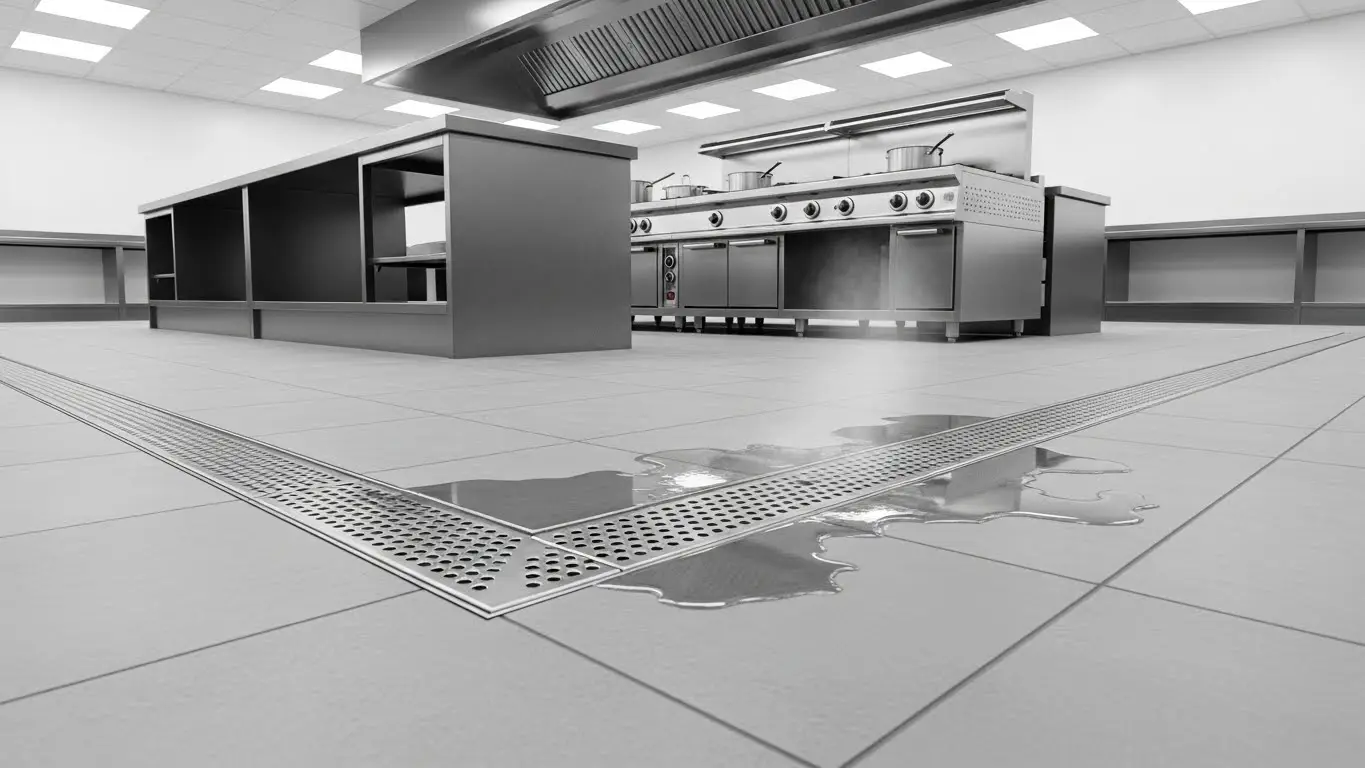
The materials to be applied in the commercial drainage systems are of great importance to the durability and hygiene in the long run. One of the most desired materials is stainless steel (304 or 316L) because it does not corrode, and it is easy to clean. Stainless steel drains have a smooth surface, which reduces the accumulation of grime, bacteria, and other contaminants. This is essential in companies where hygiene is essential, like the medical organizations and food production factories.
Antishipping Filter and Gratings
To be safe and functional, commercial hygienic drainage systems may be fitted with slip-resistant gratings and filters to trap food waste, oils, and other debris. This characteristic comes mainly in handy in commercial kitchens and restaurants where grease and food particles may easily block the drains. An inbuilt water seal of depth [?]50 mm of the removable water trap allows for keeping the odor and backflow at bay, along with the growth of bacteria to maintain optimum hygienic conditions.
Our Quality Product Will Look Like the Following:
The MEA(r) Hygienic Floor Drain is a product that can easily be cleaned with drainage, and the 304/316L stainless steel was used to provide a smooth, non-porous surface. The gratings that are slip-resistant and incorporate filters are both hygienic and safe. It is very popular among industries, and the reason is its fast installation and maintenance capabilities.
Easy Installation and Maintenance, Modular Design
Hygienic drainage systems should be designed in a modular way so that they will be easier to install and maintain. These systems are flexible in nature and can therefore be easily adapted to meet different project requirements. As an illustration, the MEA(r) Hygienic Drain series is easily installed in the shortest time possible, which saves labor expenses on the ground.
Drainage of Healthcare Facilities
The medical offices, hospitals, and clinics need specialized drainage systems in order to avoid further spread of infection. The drainage systems used in the healthcare facilities need to be of high hygiene standards to avoid cases of cross-contamination. Such characteristics as water traps, antibacterial surfaces, and easy clean surfaces are necessary to ensure a sterile environment. Furthermore, the healthcare facilities tend to generate large quantities of wastewater, and thus, effective waste disposal systems are essential to patient safety and the well-being of the staff.
Drainage Systems in Restaurants
Hygiene is of the utmost importance in the food service industry. Restaurant drainage systems should be able to deal with a massive volume of wastewater, which includes greasy food waste. To prevent blockage and improve the smooth flow of drainage, grease tabs, oil collectors, and modular drainage systems are frequently applied. An easy-to-clean and maintain system ensures that the restaurants comply with the health and safety regulations.
Drainage, Industrial Hygiene
Industrial hygienic drainage systems are used in industrial environments like factories, warehouses, and manufacturing facilities to manage the wastewater and waste products at a large scale. Most of these systems are usually tailored to suit the needs of various industries to provide clean drainage systems to businesses without violating environmental standards.
Commercial Hygienic Drainage Sustainability
Environmentally-Friendly Wastewater Management
With the increased environmental restrictions, companies are slowly moving towards using friendly drainage systems that consume less water and cause less environmental harm. Sustainable use of wastewater solutions, including rainwater harvesting systems and stormwater management methods, will see to it that businesses will contribute to the conservation of the environment.
Energy-Efficient Systems
The current solutions for drainage are also energy efficient. Higher levels of wastewater disposal techniques mean that water is effectively treated and reused, and as a result, water sources are minimized. The water-efficient drainage systems are of great advantage in buildings that consume water, such as commercial buildings, since they help the buildings reduce their costs as well as minimize their environmental impact.
Major Factors When Deciding on a Commercial Hygienic Drainage System
The choice of an appropriate drainage system to use in a commercial space takes into consideration several factors:
International Local Regulations
Make sure that the drainage system is in line with all the sanitary drainage rules concerning businesses. The regulatory compliance will check that your business is up to the standards of the industry and that you are not in legal trouble.
Capacity and Load Class
The system should be in a position to manage the amount of waste generated by the business. The example is that a restaurant with high traffic will demand a bigger drainage system compared to a small office building. The best solution can be identified using calculations of the drainage system.
Material Durability
Use a durable, corrosion-resistant, and easily maintained material. 304 or 316L stainless steel is best in most commercial applications and will provide long life and easy maintenance.
Maintenance Requirements
Think about the ease with which the system will be cleaned and maintained. It can be said that such modular drainage solutions are also popular since the essential elements can be easily accessed, which makes maintenance simpler and less time-consuming.
Conclusion
As the need to be more sustainable, hygienic, and operationally efficient, businesses are turning to high-end drainage technology that provides performance and eco-friendliness. We have provided state-of-the-art stainless steel drainage systems at CMSA, which are of high standards in terms of hygiene and performance. The MEA(r) Hygienic floor drains offer an efficient remedy to different business industries, as they can be installed within a short time, maintainable easy and have a long life cycle.
Get in collaboration with us to identify the right solution for drainage for your business. We have professionals who will be there with you at all stages, including drainage calculation and installation instructions.
Share on Social:


