
Hygienic Floor Drains: Protecting Production Facilities from Contamination
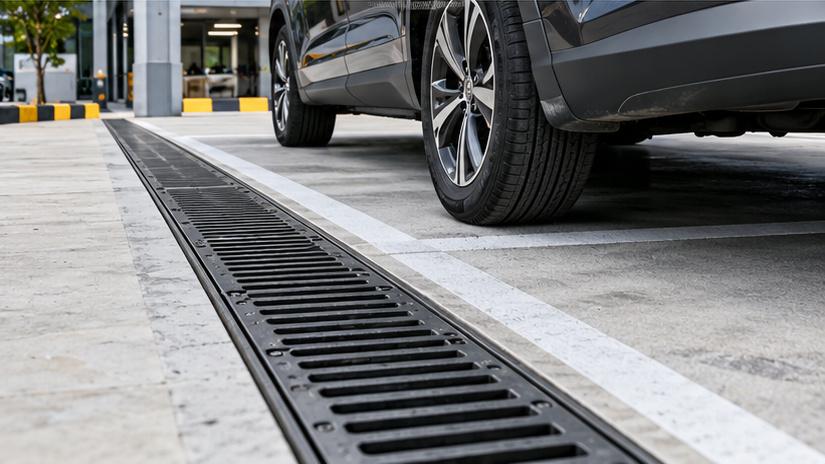
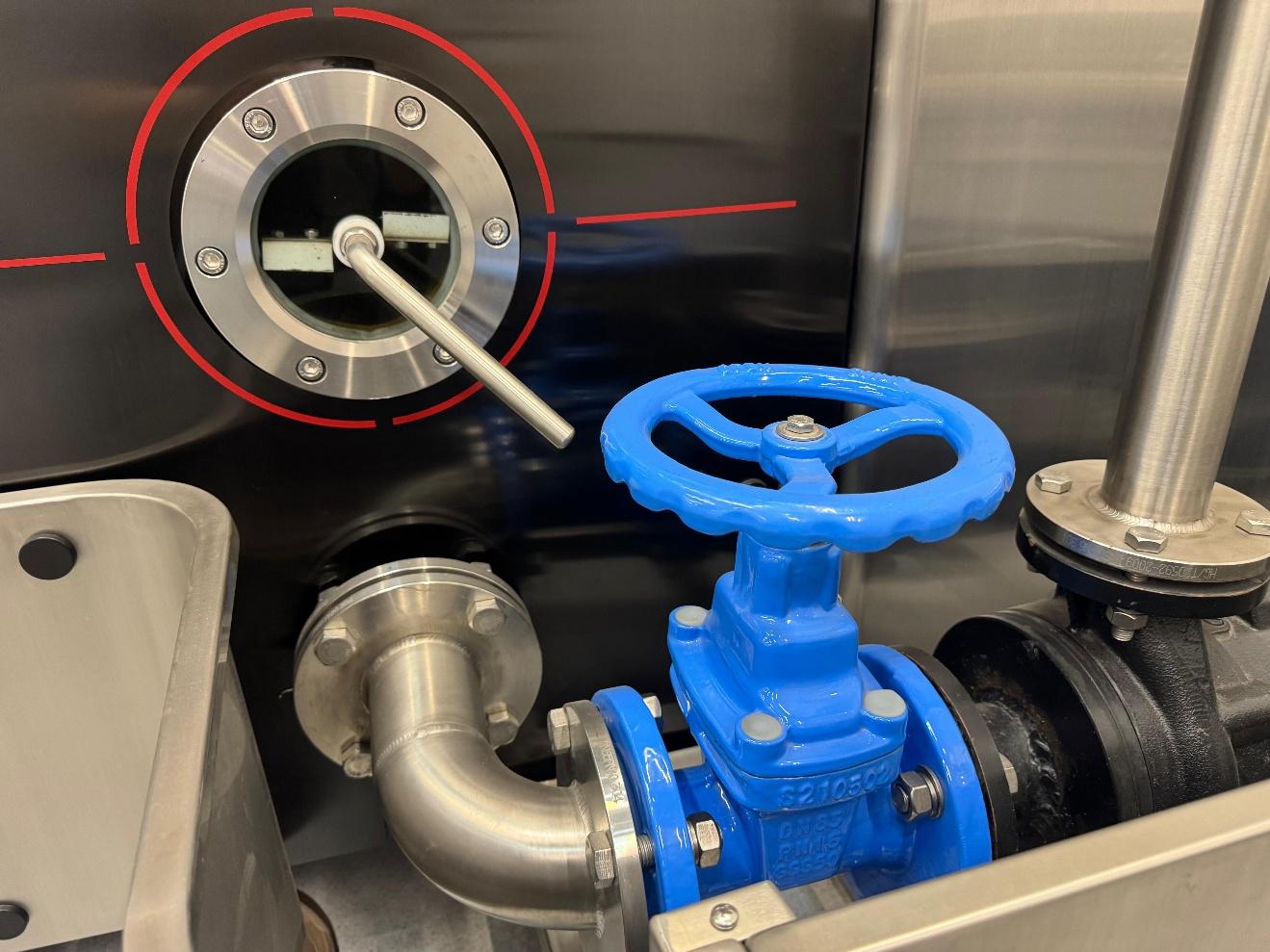
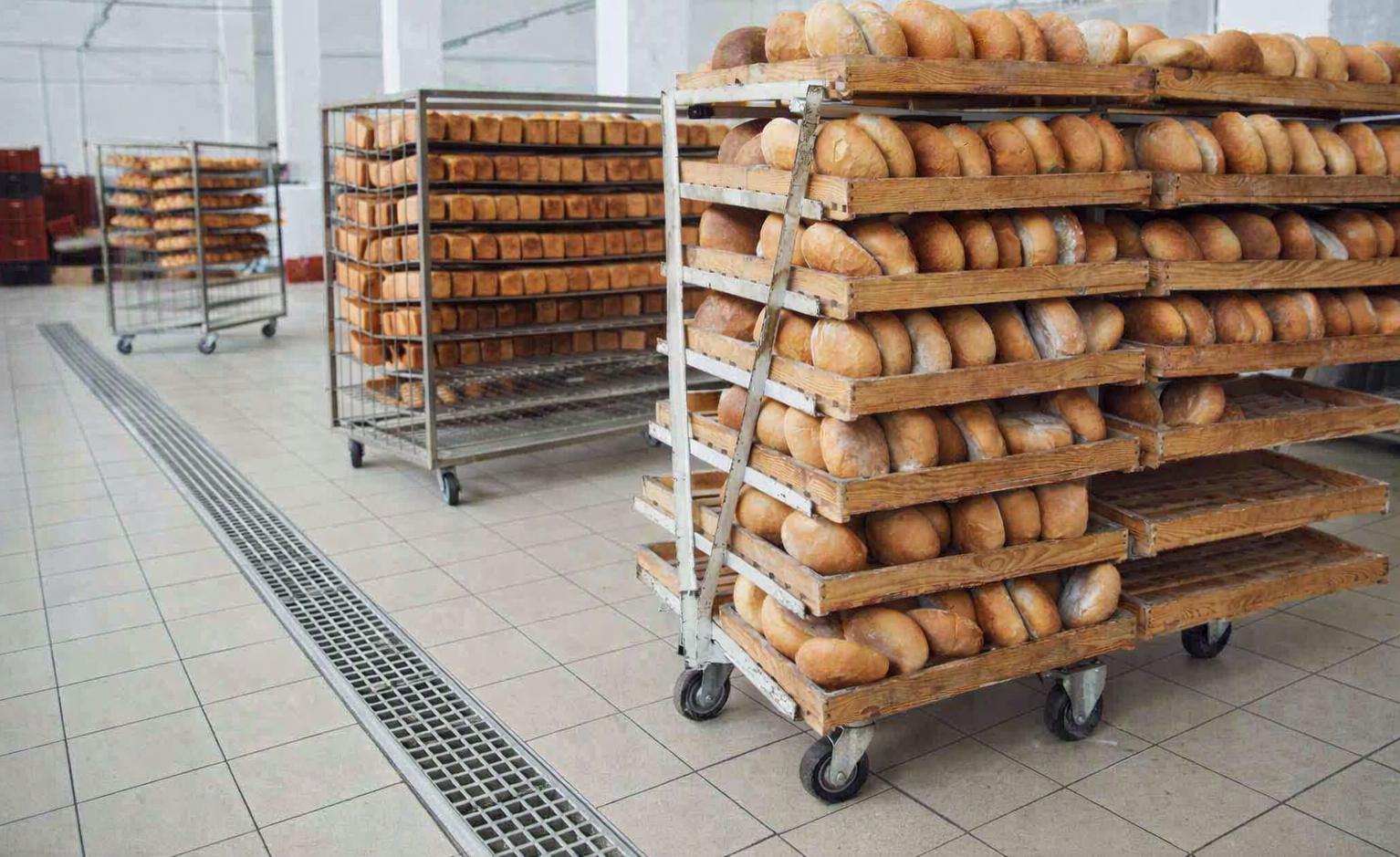
A drain can carry washdown water away while retaining meat particles, fats, or cleaning residues beneath its grate. In a food plant, that distinction matters: a dry-looking floor does not prove the drainage assembly is clean. Selecting Hygienic Floor Drains therefore begins with the contamination pathway, not the stainless steel finish.

Where Contamination Starts: Inside the Drain and Across the Floor
Residues, Splashing, and Reverse Flow
Floor drains collect organic debris and wastewater from equipment, hoses, and cleaning operations. Deposits trapped in corners, weld crevices, or inaccessible traps can support biofilm formation. Three failures deserve separate controls:
• Standing water: Inadequate floor gradients or poorly placed inlets leave wastewater in traffic and production zones.
• Splash and aerosols: High-pressure drain cleaning can spread contaminated droplets toward nearby surfaces.
• Sewer-gas entry or backup: A depleted water seal permits gas movement; a blocked or pressurized downstream line can cause wastewater to return. The two problems require different safeguards.
Hygienic Floor Drains should not direct raw-area wastewater through cleaner processing zones.
What Makes Hygienic Floor Drains Easier to Clean?
Internal Geometry Matters More Than a Polished Appearance
Hygienic construction techniques reduce the zones where debris can become inaccessible. Continuous welds, removable gratings and rounded corners should be noted. Removable gratings can conceal crevices and traps. Surface roughness (Ra) is measured for cleanability, but it is essential to keep in mind that no single Ra value can guaranty cleanability.
CMSA’s MEA hygienic drainage range specifies smooth internal transitions, sealed construction, impact-resistant edges, and optional surface treatments. Its system literature describes internal radii of at least 3 mm and bottom radii of at least 10 mm; dimensions must be confirmed on the selected model drawing.
A Strainer Is Not a Water Seal
A strainer intercepts food solids; a water trap maintains a liquid barrier against sewer gases. Smaller filter openings may reduce downstream debris but increase cleaning frequency.
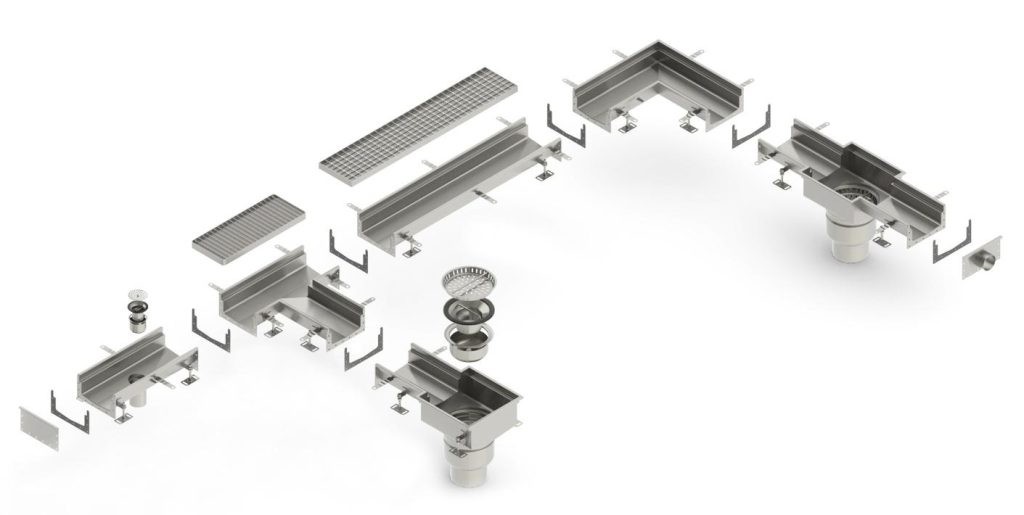
CMSA’s Hygienic Floor Drain D-G168.168N(Ladder) offers 304/316L construction, a removable trap with a water seal exceeding 50 mm, and filtration of debris larger than 6 mm.
Detachable traps can be examined directly, unlike fixed assemblies which cannot be moved, but they must be assembled correctly. These features do not substitute backflow prevention or hygiene.
Point Drains, Channels, or Narrow Slots?
Selection depends on discharge patterns and hygiene zones—not simply the largest opening.
| Design | Strongest Fit | Technical Trade-Off |
| Point Drain | Localized washdown and equipment discharge | Needs floor gradients toward one inlet; local pooling can occur |
| Linear Channel | Water released along a production line | More internal length to inspect and wash |
| Narrow-Slot Channel | Locations needing a restrained surface opening | Slot blockage and access to the concealed channel need assessment |
In higher-hygiene areas, minimizing exposed drainage surfaces may favor point drains where flow requirements permit. Check grating open area, trolley loads, and removable access.
Choose 304 or 316L Against the Cleaning Regime
304 stainless steel suits many routine food-processing conditions. 316L generally improves resistance to chloride-related pitting, but hot, concentrated chlorine-based chemicals can attack either grade.
Request chemical concentration, temperature, exposure time, and rinsing conditions before specifying a material. Likewise, choose seals for chemical and thermal compatibility—not on steel grade alone.
Size Hygienic Floor Drains for the Complete Wastewater Route
Peak discharge should include simultaneous equipment drainage, clean-in-place (CIP) releases, hose stations, and tank emptying where applicable.
Hydraulic selection must then consider:
• Inlet capture: Floor gradient, drain position, grating open area, and any obstructions.
• Internal resistance: Trap geometry, filter loading, and the water head available above the drain.
• Downstream capacity: Outlet DN, pipe gradient, ventilation, and potential surcharge.
The installed system’s effective capacity must accommodate design peak flow. An oversized outlet cannot correct a flat floor or a clogged strainer.
CMSA provides drainage calculations and layout support; buyers should request flow data under stated test conditions rather than infer capacity from nominal diameter.
Installing and Sanitizing Hygienic Floor Drains
Seal the Drain-to-Floor Interface
A stainless steel body does not prevent wastewater from entering damaged grout or gaps at a resin-floor junction.
Specify a compatible flange or edge detail, continuous waterproofing, appropriate anchorage, and allowances for floor movement. Verify finished elevations and local gradients before pouring or coating the floor.
Make Internal Cleaning Repeatable
• The drain should be cleaned away from exposed product and used packaging.
• Use dedicated tools to remove grating, strainer and trap parts.
• Thoroughly clean, sanitize, and inspect hidden surfaces.
• Replace seals and re-assemble the water trap. Check for leaking seals.
• Increase cleaning frequency based on loading of debris in the trap, inspections and risk-based environmental monitoring.
Do not use high-pressure hoses to clean drains containing aerosolizing materials. Aerosolization can impact other areas of the production floor.
Which Standards and Evidence Actually Matter?
EN 1253-1 addresses water seals and performance of trapped floor gullies.
EHEDG guidance addresses hygienic design and cleanability; EN 1253 compliance alone is not EHEDG product certification.
US food facilities should also consider the drainage requirements in 21 CFR §117.37. Pharmaceutical cleanrooms require their own site-specific assessment of whether drains are permitted.
Ask for model-specific reports, not blanket certification claims.
A Procurement Checklist for Hygienic Floor Drains
| Verify Before Ordering | Evidence to Request |
| Material and Chemical Resistance | 304/316L declaration, cleaning-agent compatibility |
| Hydraulic Performance | Tested flow, outlet dimensions, downstream assumptions |
| Hygiene and Maintenance | Component drawings, trap access, cleaning instructions |
| Floor Integration and Loading | Edge details, installation depth, grating load documentation |
| Compliance | Applicable reports and certificates for the exact model |
Compare lifetime access and maintenance costs alongside purchase price. If filters cannot be reached or replacement traps are unavailable, a low initial quote may become expensive during sanitation shutdowns.
CMSA can help translate washdown loads, floor layouts, and cleaning requirements into a drainage specification, with product drawings, BIM resources, and installation guidance. Explore CMSA Hygienic Drainage to review suitable floor drains and channels for your project.
FAQs
Q1. How Do CMSA Hygienic Floor Drains Help Prevent Contamination?
CMSA’s MEA Hygienic Floor Drains feature smooth internal surfaces, removable traps, and debris filters to reduce residue accumulation and support thorough cleaning. Effective contamination control also requires proper installation and sanitation.
Q2. What Stainless Steel Grades Are Available for CMSA Hygienic Floor Drains?
CMSA offers MEA Hygienic Floor Drains in AISI 304 and 316L stainless steel. Grade selection depends on cleaning chemicals, chloride exposure, operating temperature, and corrosion requirements.
Q3. How Do CMSA Hygienic Floor Drains Control Sewer Odors?
The MEA Hygienic Floor Drain D-G168.168N(Ladder) features a removable water trap with a seal depth exceeding 50 mm. The water barrier limits sewer-gas entry when properly maintained.
Q4. Can the Filters and Water Traps Be Removed for Cleaning?
Yes. CMSA’s MEA hygienic floor drain design includes removable filters and water traps for debris removal, internal inspection, and sanitation. Components must be correctly reinstalled after cleaning.
Q5. What Size of Debris Can CMSA Hygienic Floor Drain Filters Capture?
The MEA D-G168.168N(Ladder) model includes a filter designed to retain solid particles larger than 6 mm. Smaller particles may pass through, so filter selection must match wastewater composition.


