
Aesthetic Design of Ductile Iron Gratings: Engineering Appearance for Heavy-Traffic Applications
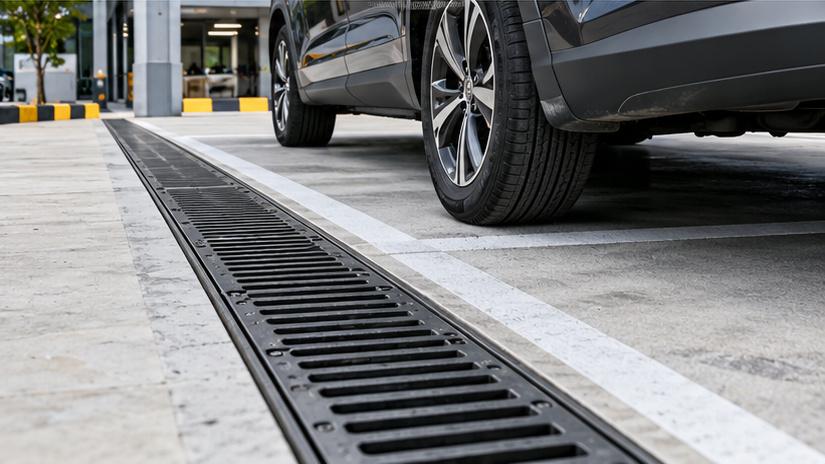
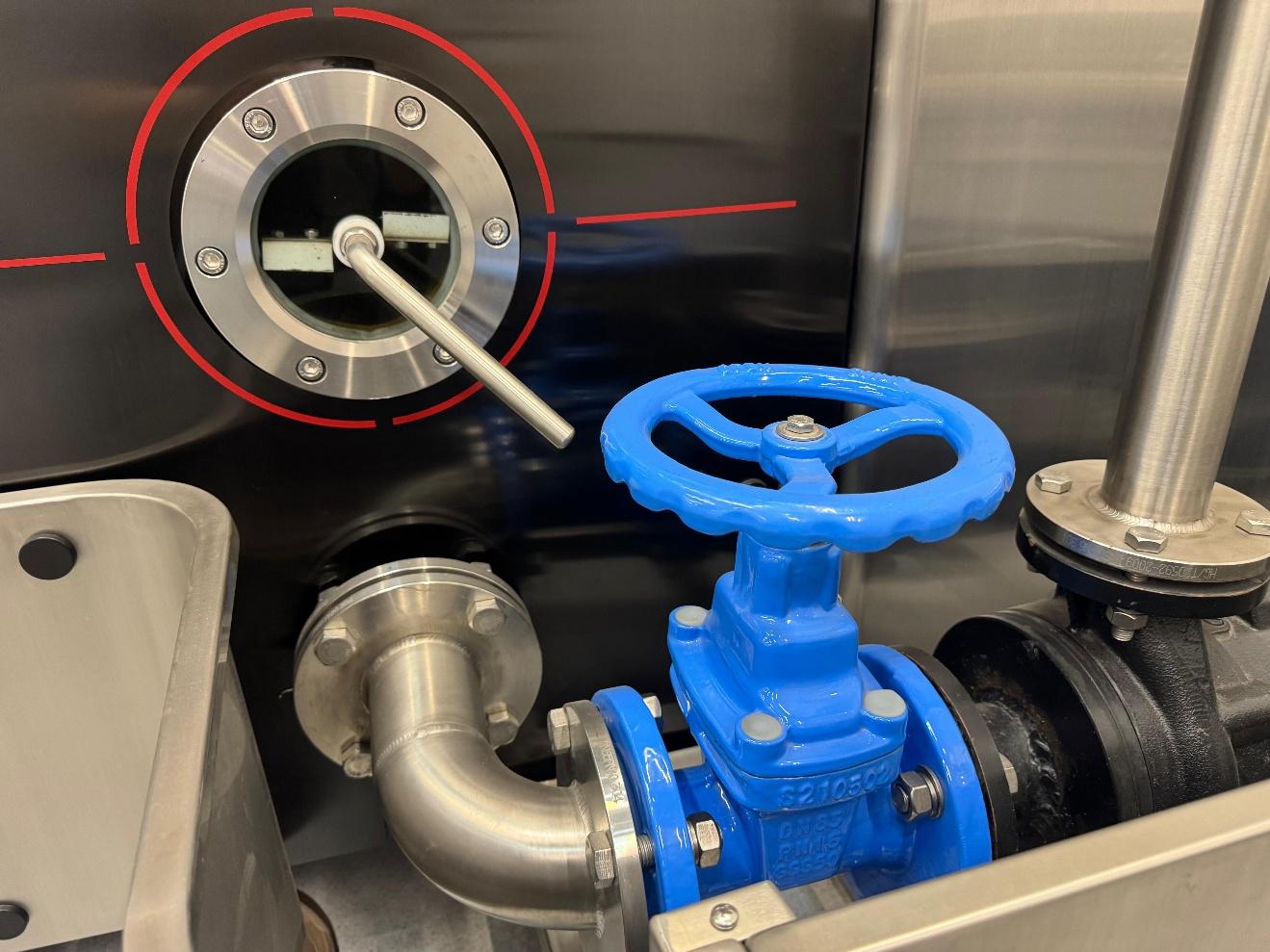
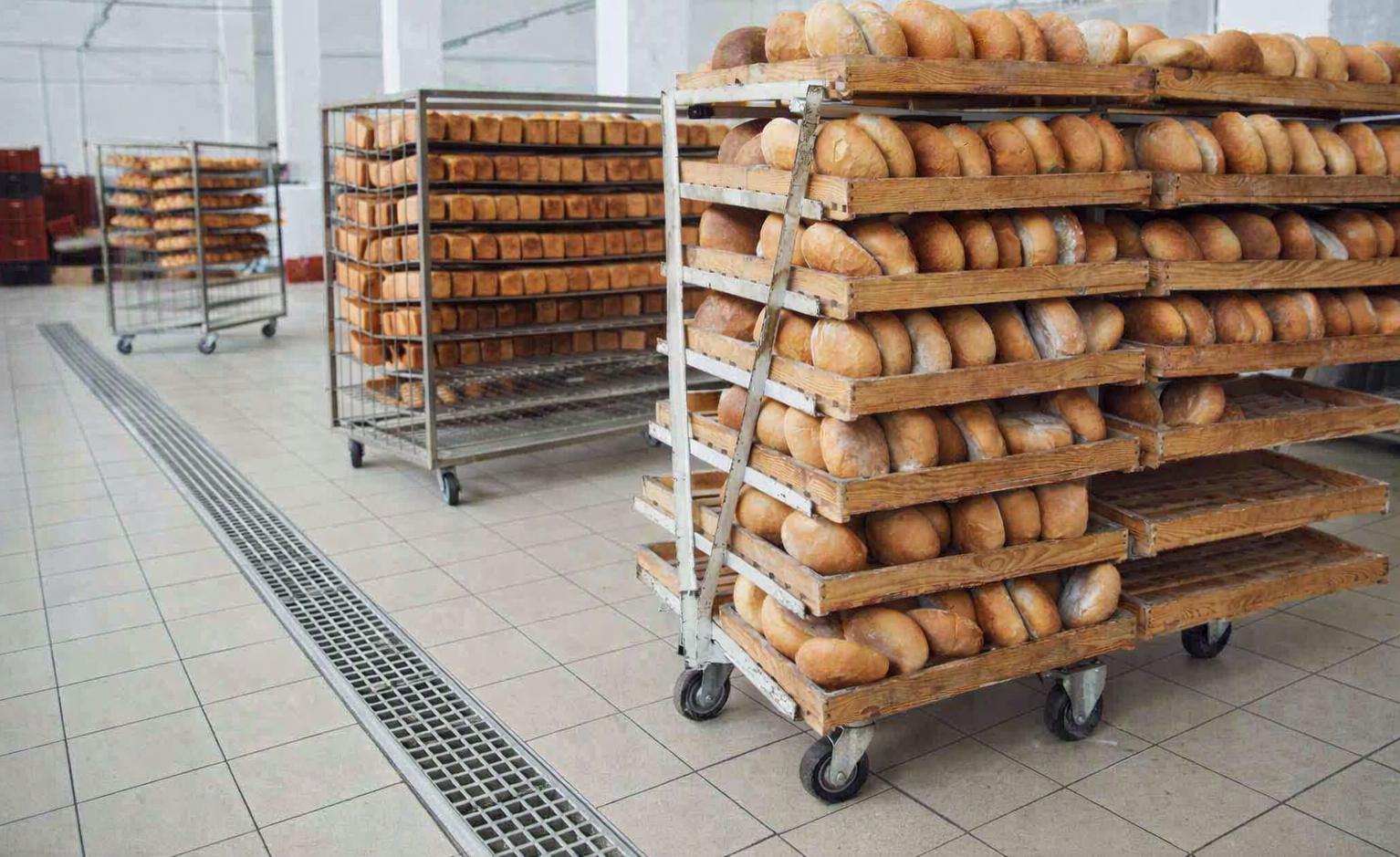
The Aesthetic Design of Ductile Iron Gratings must incorporate a number of requirements including architectural appearance, wheel-load resistance, hydraulic capacity, and surface safety. Decorative openings cannot be independently designed from structural ribs, bearing supports, and drainage requirements.
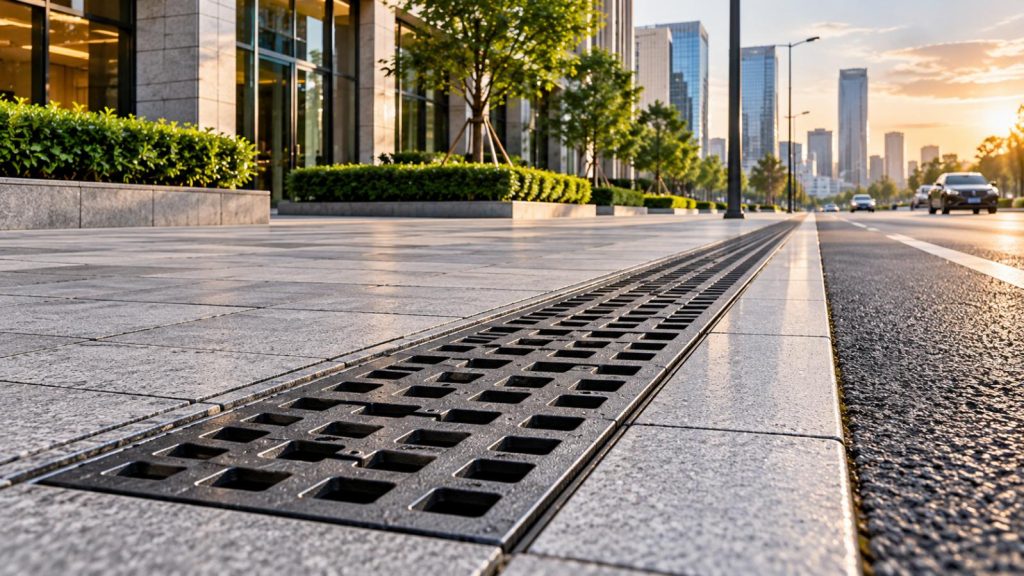
At CMSA, we evaluate grating selection as a system-level engineering decision. Among other considerations, slot geometry and ductile iron’s physical and chemical properties, classification of loads, surface treatments, and dimensions affect architectural covers for drainage.
1. How Grating Geometry Affects Architectural Appearance
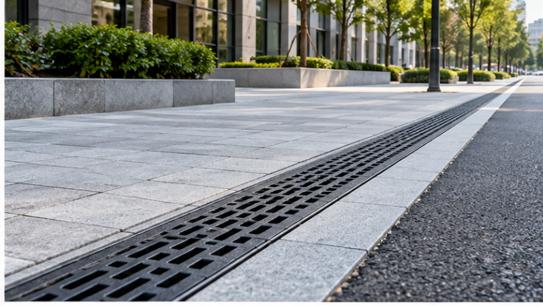
Designers of ductile iron grating think of the arrangement of slots and surface texture as well as how it meets adjacent surfaces.
Slot Patterns and Structural Implications
Grating with linear slots creates a sense of directional visual continuity and may be used for lengthy drainage covers. However, the ribs may not be sufficiently stiff to resist lateral deflections over the length of the slot.
Grating with transverse slots creates repetitive architectural patterns and may be used for finer drainage covers, for example, in lobby or entry ways.
Textured Surfaces:
Light will reflect differently off various textured surfaces, which may affect traction. This should be verified through surface testing.
Decorative Castings:
There must be enough material around openings, fixing points and bearing edges. Castings with sharp transitions and insufficient ribs can lead to failure around a bolt hole or other distresses around a bearing edge.
Urban Streetscapes:
When looking at grating-to-pavement alignment, surface elevation and joint continuity of a grate; installation of a grate can be visually disruptive.
2. Structural Performance Under Heavy Traffic
Ductile Iron and Load Distribution
Spheroidal graphite makes cast iron more ductile, unlike cast iron with flake graphite.
Actual load resistance is affected by:
• Ribs: If ribs are spaced too far apart, they will not provide sufficient support from bending.
• Contact: If grating is not evenly spaced, contact forces may be concentrated in a very small area.
• Locking arrangement: Limiting movement in the locking arrangement will also reduce the potential for impact noise and movement.
EN 1433 Load Classification
| Load Class | Test Load | Typical Application |
| D400 | 400 kN | Roadways and vehicle access |
| E600 | 600 kN | Industrial yards and loading areas |
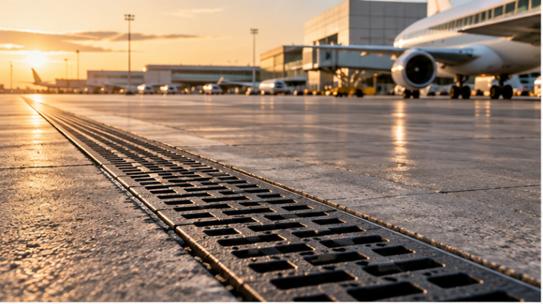
| F900 | 900 kN | Aircraft pavements and exceptional heavy-duty zones |
Aircraft pavements and exceptional heavy-duty zones
These are standardized test loads, not allowable vehicle weights.
The MEA® ductile iron grating range offers classifications up to F900. The applicable rating must be verified for the selected grating, supporting channel, and installation configuration. Decorative variants should not automatically inherit the highest published classification.
3. Balancing Aesthetic Slots, Drainage Capacity, and Safety
The Aesthetic Design of Ductile Iron Gratings influences hydraulic inlet behavior.
Increasing open area with surface runoff can also increase flexural-bending stiffness. Therefore, trade-offs between design, function, and safety also exist with slot width and orientation.
| Design Parameter | Hydraulic Effect | Engineering Trade-Off |
| Wider slots | Larger potential inlet area | Reduced rib sections; wheel safety concerns |
| Narrower slots | Smaller individual openings | Potential debris blockage |
| Geometric patterns | Variable water-entry distributions | Local stress concentrations |
| Reinforced ribs | More load-bearing material | Reduced open area |
Drainage capacity is a function of inlet geometry, approach flow, slope of the channel, and the downstream channel conditions. An increased opening ratio does not necessarily improve hydraulic performance.
We recommend evaluating the following at CMSA:
• Design rainfall intensity and the contributing catchment area
• Effective inlet area and potential debris blockage
• Slot orientation in relation to bicycle and vehicular movement
• Traction on surfaces and accessibility requirements
Hydraulic calculations should confirm that modifications to the building do not change the drainage function of the gratings.
4. Material Comparison and Corrosion Protection
The material of the decorative gratings determines the maintenance requirements and the integrity of the structure as well as its appearance.
| Material | Principal Characteristic | Design Consideration |
| Ductile iron | High ductility and casting flexibility | Requires corrosion protection |
| Gray cast iron | Established casting performance | Greater brittle-fracture susceptibility |
| Stainless steel | Corrosion resistance and refined finish | Higher material cost; grade-dependent strength |
CMSA provides MEA® ductile iron gratings with anti-rust coatings for various exposure conditions.
Coating selection depends on the existence of chloride and/or other industrial chemicals and whether the coating will be exposed to surface abrasions and/or moisture. Coating thickness and evidence of adhesion and/or corrosion tests should be evaluated against project specifications.
Long-term appearance also depends on how often the grating is cleaned, traffic, and maintenance access.
5. Manufacturing Precision and Channel Compatibility
Aesthetic design of ductile iron gratings requires precision to balance various dimensional constraints. For example, continuous architectural drainage lines over a long distance must remain level, and components joining the drainage lines must remain stable.
CMSA’s MEA® product specifications include:
| Specification | CMSA Model 11A295 |
| Material | Ductile iron |
| Nominal width | 122 mm |
| Compatible systems | EN1000, U1000, Z1000, LZ1000/80 |
| Locking | Standard arrangement; optional locking |
| Standard | EN 1433 |
| Load classification | Up to F900, subject to configuration |
Nominal system matching dimensions are established by a 122 mm width. This dimension is not published as a tolerance.
For precision-sensitive installations, confirm the following in approved drawings and inspection documentation:
• Casting dimensions and permissible warpage
• Seating surface flatness and contact
• Rib consistency
• Locking alignment and clearance
• Coating and surface acceptance criteria
Dimensional variations in Grating Castings may cause uneven seating, undue loading and vibration:
• Hydraulic Performance: Inlet capacity; channel discharge and blockage.
• Construction Quality: Concrete support and pavement elevation; Seating and Drainage alignment.
• Documentation: Relevant EN 1433 testing; Drawings; Material Specifications; Inspection Records.
Lifecycle assessment should include, access for coating maintenance, replacement, and potential traffic disruption.
Selecting Architectural Ductile Iron Gratings with CMSA
The Aesthetic Design of Ductile Iron Gratings refers to the architectural requirements for passageway access, and requires that the selected pattern not result in unacceptable structural, hydraulic, and/or maintenance compromises.
We help our clients make these decisions using MEA® product selection, hydraulic calculations, drainage layouts, BIM, and installation support.
Explore our website to see our MEA® Ductile Iron Gratings. Our Team can assist with identifying acceptable grating patterns and verifying requirements for your heavy-traffic drainage project.
FAQs
Q1: Does CMSA offer decorative ductile iron grating designs?
Yes. CMSA offers MEA® ductile iron gratings with different slot widths and surface styles to accommodate architectural and drainage requirements.
Q2: Can CMSA ductile iron gratings withstand heavy traffic?
CMSA offers load classifications up to F900. The exact rating must be verified for the selected grating and channel assembly.
Q3: What material does CMSA use for Model 11A295?
Model 11A295 is made from ductile iron, providing ductility and structural strength suitable for engineered drainage applications.
Q4: Does CMSA’s ductile iron grating comply with EN 1433?
Yes. CMSA offers EN 1433 compliance for its MEA® ductile iron grating.
Q5: What is the width of CMSA Model 11A295?
The nominal grating width is 122 mm. Installation dimensions should be confirmed against the corresponding channel drawings.


