
Ductile Grating Design in Modern Architecture: Choosing the Right Pattern, Slot Size, and Load Class

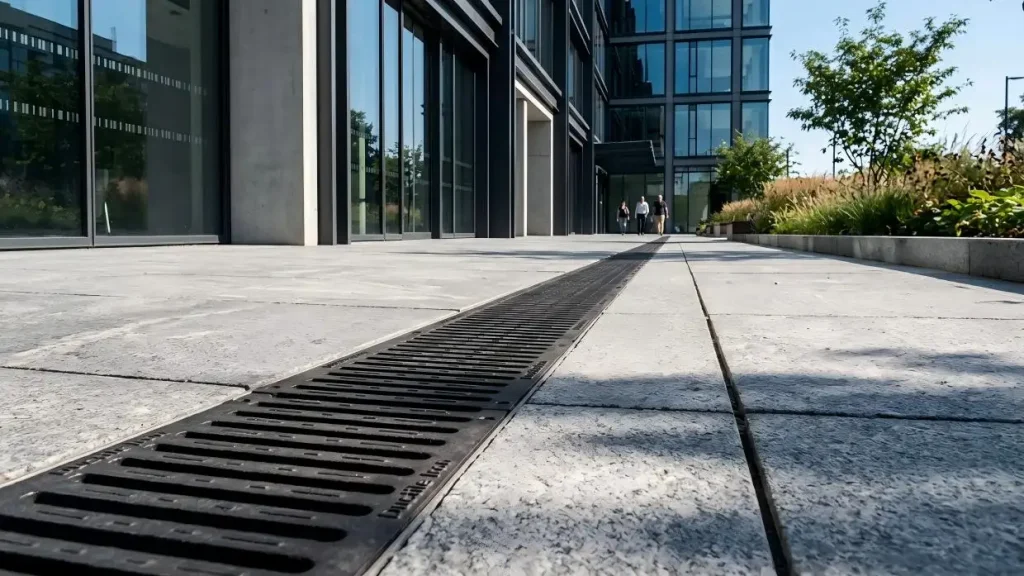
Drainage grates interface surface traffic with systems designed to manage subsurface drainage. Ductile gratings make effective drainage grates due to Ductile gratings' enhanced strength, ductility, and corrosion resistance. Engineering considerations for pattern geometry, slot size, and load class help designers account for factors such as structural and hydraulic needs of gratings as well as longevity.
Ductile Iron as a Grating Material
Gratings made from Ductile Iron are made to demanding metallurgical standards like ASTM A536 Grade 80-55-06 or EN-GJS-500-7. The Spheroidal structure of the Ductile Iron offers a few distinct advantages which include:
•A load bearing capability which offers a high strength to weight ratio. This facilitates the handling and installation of gratings.
•Ductility and impact resistance: helps absorb shock in contact with gratings which is extremely important in gratings which encounter high vehicular impact as well as thermal cycling.
•Corrosion resistance: offers long term protection when coated from water, chemicals and atmospheric exposure.
•Designs of gratings can include a great deal of mechanical features such as rib patterns due to considerations of the casting process.
The Three Pillars of Ductile Grating Design
1. Design Geometry: Pattern Determines Purpose
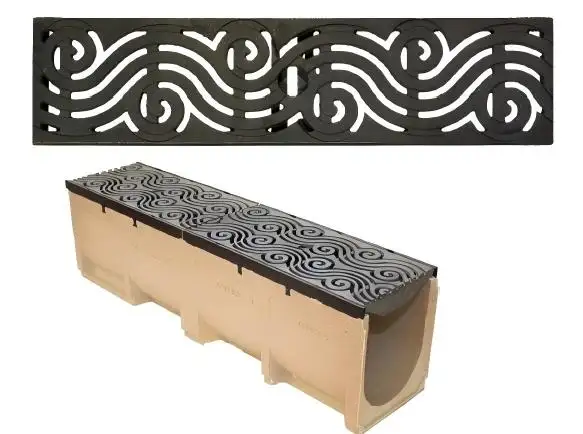
The design of the surface geometry of a ductile iron grating is fundamental to its appearance and function, including its performance in the hydraulics, management of debris, and safety of pedestrians. The main types of patterns are:
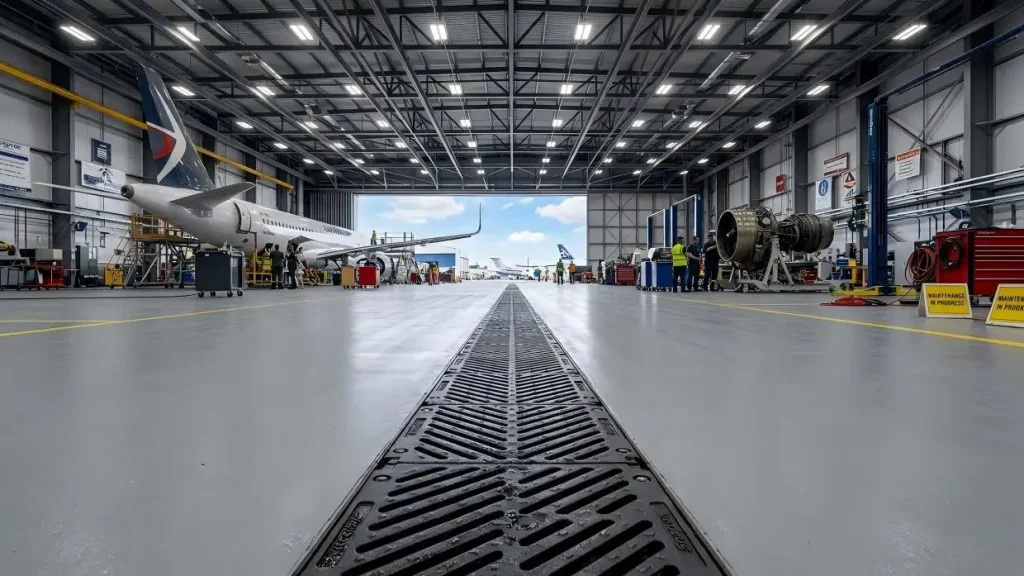
•Slotted Grating patterns are forms with parallel and extended openings. They are designed to take in the maximum amount of water with the least amount of debris. They are ideal for applications that are high-flow, such as airport aprons, highways, and industrial yards, where fast removal of stormwater is critical.
•Gratings of Mesh or Longitudinal Bar designs have a grid of relatively small openings. They are safer for pedestrians (heel-safe) and better hold small, loose, debris. These patterns are designed for most of the pedestrian and vehicular traffic commercial areas, loading docks, and other mixed use high and low flow areas.
Element to be taken into consideration when selecting a pattern design include:
•Hydraulic performance: High flow rates allow larger open areas and longer slots.
•Debris management: Greater openings increases the likelihood clogging by items such as leaves, litter and construction debris.
•Safety: designs that are heel-safe ensure high heel shoes and bicycle wheels do not get trapped.
•Aesthetics: Patterns that integrate a design aesthetically with architectural finishes or urban design patterns.
2. Slot Dimensions: The Balance Between Flow and Maintenance
Slot size is one of the key factors that impacts the maintenance of a grating.
| Slot Size | Performance |
| Wide slots (14–16 mm) | Work better in grates in regions with heavy rainfall. |
| Narrow slots (10–13 mm) | Hold debris better, are safer for pedestrians, and have less chance of clogging. |
| Increasing the length of a slot | More area is left on the grate and drainage is improved. |
| Increasing the spacing of the slots | Increases the support and the load carrying capacity of the grate. |
Things to consider when determining slot width:
•Area of the drainage basin and the expected rainfall: A wider slot should be used with a wider drainage basin and a greater rainfall.
•Use of the area around the grate: A narrow slot should be used in areas that are heavily vegetated and/or littered to reduce clogging.
•Type of traffic: A narrow slot should be used in a pedestrian area for safety, while a wide slot should be used in a vehicular area for adequate drainage.
•Maintenance: A broader slot may be more appropriate to reduce maintenance.
3. Load Class: Capacity Versus Use
In the context of ductile grating design, load class occupies a central position concerning EN 1433. Grating may be classified into differing load classes based on the following contexts of use:
| Load Class | Load Capacity | Applications |
| A 15 | 15 kN | Pedestrian areas and cycle ways, gardens |
| B 125 | 125 kN | Pedestrian areas and car parks (cars only) |
| C 250 | 250 kN | Kerbside channels and roads (cars only) |
| D 400 | 400 kN | Roads and car parks (all vehicles) |
| E 600 | 600 kN | Areas of industry and loading bays, forklifts, etc. |
| F 900 | 900 kN | Airports and ports, areas with heavy equipment |
Load class F900 certifies a capacity of 900 kN (about 90 tons). Grating systems of this class are tested to EN 1433 and are suitable for heavy traffic industrial corridors and aircraft paving.
Factors to assess for the correct load class are:
•Traffic patterns: Consider the traffic patterns that are likely to be present in the future in addition to the existing traffic patterns.
•Types of vehicles: Have passenger cars, service vehicles, forklifts, and even aircraft, been included?
•Impact loads: What will be the effect of braking and turning?
•Regulatory concerns: What are the codes and standards that would govern minimum load classes?
Corrosion Protection - Expanding the Life
These products come with improved coating technologies that enhance ductile iron's in-built response to corrosion. There are various anti-rust coating systems, with examples of performance capabilities that include the following:
•KTL (cathodic electro-deposition) coating systems: Create a uniform and tough barrier through electrochemical exchange and have been reported to survive 480 hours of corrosion in a salt-spray test.
•Hot dip galvanizing: Provides a bonding with zinc metallurgy which is especially beneficial in coastal and chemically aggressive areas.
•Zinc, Epoxy, or asphalt-based systems: Protect against the intrusion of moisture and chemicals and with some systems, exceed 5,000 hours of salt spray resistance.
•Bituminous: Coatings offer temporary protection for shipment and installation of the coating in less aggressive environments.
Coated Ductile Iron Gratings corrosion resistance provides the following benefits:
•Extended service life exceeding 20 to 30 years in numerous applications.
•Reduced maintenance costs and lower frequency of replacement.
•Consistent performance and reliability in coastal, chemical, and high humidity areas.
•Protection of the gratings structural and load-bearing capacity.
Installation and System Integration
The trend for modern systems of ductile grating design has focused on modularity and on the design for compatibility with the standard systems of channel drainage. Grating systems are available in a number of width options to suit channel arrangements which are commonly 122 mm, 150 mm, 200 mm and 300 mm wide.
Installation features:
•Locking systems: A four-point bolting system not only ensures a secure hold but also prevents dislocation due to vibration or impact. A self-locking feature is an option and is recommended when threats of theft or vandalism are present.
•Channel integration: Gratings are generally designed to integrate with specific channel systems allowing for the fit and the transfer of load as well as the required hydraulic performance.
•Branched modular layout: Gratings are produced in standard lengths of, quite typically, 500 mm designed for a straight or a branched, modular layout of gratings, while also permitting structural continuity.
•Maintenance feature: Gratings should be designed to be removable for the purpose of maintenance and inspection of the channel.
Conclusion: The Value of the Expert in Ductile Grating Design
The integration of the design of ductile grating systems and the expertise in the science of materials, hydraulics and structures is essential. The correct choice of the pattern, slots and the load class can be made for the specific application.
The essential aspects are:
•Load class: covers all the traffic.
•Slot geometry: is to be matched with flow and debris.
•Protection from corrosion: is to be provided as a coating to the environment.
•Channel integration: fit should be ensured.
•Maintenance: should be secure and removable.
CMSA design and manufacture gratings that are versatile, F900 certified and coated for all applications. Our gratings will meet your safety and long-term operational needs.
FAQs
Q1: What entails ductile grating design?
A: This refers to the art or technique of balancing drainage with strength and durability by choosing an appropriate pattern and slot size and a suitable load class for ductile iron gratings.
Q2: What should I consider when choosing a slot size?
A: Slot size should consider the rate of expected flow and the expected size of debris. A larger slot would be suitable for a higher expected flow with a smaller size of debris. If the expected size of debris is larger, a smaller slot would be more appropriate, as that would help prevent clogs.
Q3: What load class should I be looking at?
A: This would depend on the expected class of traffic. A15 would be for pedestrian traffic, B125 would be for expected vehicular traffic, C250/D400 would be for road traffic, E600 for industrial traffic, and F900 for airport traffic or the expected movement of heavy machinery.
Q4: What is the advantage of using ductile iron as opposed to cast iron for gratings?
A: Ductile iron has a structure that enhances the strength of the iron and its resistance to impact and therefore, lowers the risk of the gratings being fractured.
Q5: How is the protection from corrosion achieved?
A: There is a coating that prevents the grating from coming into contact with oxygen or moisture which extends service life. Examples of such coatings are KTL


