
Environmental Impact of Using a Grease Separator
The Environmental Issue of Fats, Oils, and Grease (FOG) Discharge
The environmental impact of using grease separators is, to some extent, the responsibility of commercial kitchens and food processing facilities in preventing fats, oils, and grease (FOG) from entering the drainage system.
Generally, FOG is created by:
•Frying oil
•Dairy products
•Meat and Seafood
•Kitchen food wastes and cleaning wastes
As compared to many dissolved pollutants, FOG has the potential to cause significant problems in a drainage system. Once wastewater cools, grease begins to solidify and sticks to the walls of pipes. If this builds up, the pipelines become more prone to blockage and can lead to sewer overflows.
With respect to environmental engineering, unregulated FOG creates three major problems:
| Environmental Issue | Technical Impact | Long-Term Impact |
| Grease build up | Reduced pipeline capacity | Increased frequency of cleaning |
| FOG discharge | Higher organic load for wastewater | Increased treatment cost of wastewater |
| Sewer blockage | Potential contamination of surrounding environments | Impacted environmental quality |
For this reason, the environmental impact of grease separators is not about removing visible grease. It involves prevention of pollution at the source and lessening the burden on the environmental infrastructure of wastewater systems.
How a Grease Separation System Controls Environmental Pollution
Grease separators make use of controlled hydraulic separation. Instead of allowing grease-laden wastewater to discharge into the drainage systems, separators create a designated zone for a wastewater mixture to separate into components of varying densities.
The basic processes in the separation of wastewater involve:
1. Flow Reduction and Retention
Wastewater flows into a chamber, and because of the decrease in flow rate, retention time is achieved. During this time grease droplets rise and solids (generally) settle.
2. Grease Flotation
Less dense particles (typically grease) rise to the top and accumulate in the Grease zone.
3. Sludge Separation
Food particles and larger contaminants settle in the sludge zone, which reduces sediment in the receiving wastewater lines.
EN 1825 includes standards for designs, performance criteria, and testing procedures, and quality assurance for grease separators that remove vegetable oils and animal fats from wastewater.
Separation efficiency is a function of engineering design. A separator with insufficient retention time or improper sizing will allow grease to pass through with no environmental benefit.

Key Technical Aspects of Grease Separator Systems and Environmental Impact
1. Flow Rate and Stability of Separation
Flow rate has a significant effect on the stability of separation, for commercial kitchen wastewater flow is rarely if ever constant. In commercial kitchens, the largest flows are experienced during the following stages:
•Preparation of meals
•Dish washing
•Cleaning of the kitchen
Assuming flow rate of wastewater surpasses the separator design capacity, the following can occur:
•Retention time decreases
•Grease droplets have insufficient time to separate
Concentration of FOG at the separator outlet can increase
As a result, design of grease separators should account for the potential for peak flows, rather than average daily consumption. EN 1825-2 provides a means of calculating the nominal design separator size for given wastewater flow and other relevant characteristics.
2. Effect of Wastewater Temperature on Grease Separation
Grease separation in wastewater decreases as wastewater temperatures increase. High temperatures of wastewater tend to keep grease in a more liquid, dispersed form, which results in inhibition of separation. Grease separation is facilitated with the cooling of wastewater.
3. Effect of Sizing and Maintenance on Separation
A grease separator collects and concentrates the FOG for removal. It does not eliminate grease.
Environmental performance relates to:
•Volume of grease storage
•Size of sludge chamber
•How often cleaning happens
•Method of waste removal
Equipment performance and the environmental benefits can diminish due to lack of maintenance. Managing grease separators efficiently can maximize FOG recovery and efficiency potential for an installation.
Comparing Grease Separation Technologies Based on Environmental Assessment
The optimal separation technology depends on the wastewater characteristics, available space, and preferred maintenance level.
| Technology | Separation Method | Environmental Advantage | Typical Application |
| Gravity Grease Separator | Natural Density Separation | Low Energy-High Efficiency Operation | Restaurants, and Typical Commercial Kitchens |
| Automatic Grease Separator | Continuous Grease Removal | More Stable Performance, Less Manual Intervention | Hotels, Food Processing Plants, Central Kitchens |
| Hydromechanical Separator | Controlled Hydraulic Separation | Compact Design, Improved Separation Control | Space-Limited Facilities |
The most common mistake is to consider cost alone for the first purchase. A separation system with unstable performance may create higher environmental and maintenance costs over its lifetime.
How CMSA Grease Separation Systems Improve Environmental Performance
Based on environmental impact assessment, CMSA specializes in designing grease separation systems for wastewater from industrial kitchens and food services, and continuous FOG control applications.
Through multiple engineering designs, the Environmental Impact of using a Grease Separator is reduced in CMSA systems.
SS304/316 Stainless Steel for Longevity and Corrosion Resistance
CMSA grease separation systems are constructed from Stainless Steel SS304/316 to provide long operability with:
•Grease laden wastewater
•Moisture
•A wide range of chemicals
•Frequent operation
The green design of CMSA systems promotes long system operability with a strong structure free of corrosion.
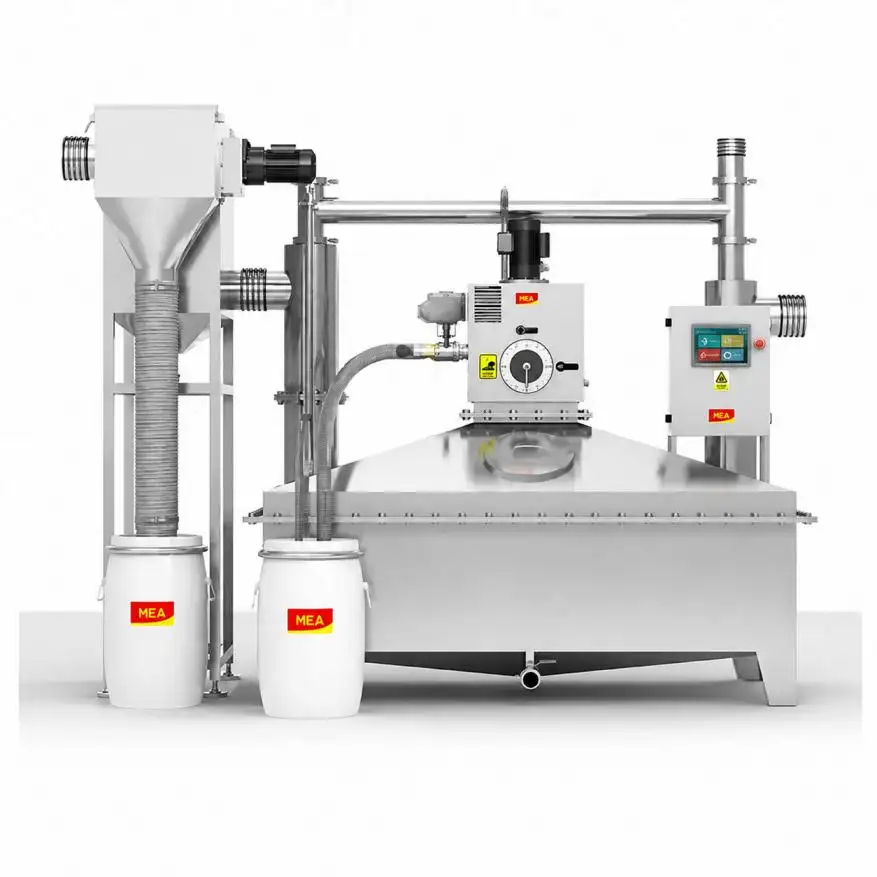
Two-Stage Separation With Large Sludge Chamber Design
CMSA systems combine two-stage separation with large sludge chambers.
This design helps:
•Capture larger food waste before discharge
•Improve grease removal
•Limit passes in downstream pipes
The separation chamber is designed to retain sludge greater than 1.5 mm, thus preventing solid build-up in the drainage system.
Automation for Reliable Environmental Management
Cleaning schedules that are manual rely on operator discretion. This leads to inconsistent cleaning resulting in lower overall grease removal.
CMSA systems include:
•Microcomputer control
•Automatic operation control
•Self-cleaning brush mechanisms
Sensors for monitoring liquid level, as well as, control for system operation and self-cleaning brush mechanisms
These reduce the reliance on frequent human intervention, while stabilizing system performance.
Enclosed Odor-Free Operation for Better Hygiene Management
Environmental performance also encompasses hygiene of the workplace.
An enclosed grease separation unit reduces:
•Odor from accumulated grease
•Exposure to open grease waste
•Hygiene issues in the vicinity of kitchen drainage
This makes the system ideal for installations in commercial units.
Installation Design and Maintenance Practices Determine Real Environmental Benefits
Even with state-of-the-art grease separators, environmental benefits would not be reaped if there is an inadequate design for system maintenance.
Consideration for the design must include:
System Installation
•Outlet/inlet arrangement and access for maintenance
•Design for adequate ventilation
•System connectivity with the drainage channel
CMSA offers a variety of installation designs with adjustable outlets/inlets and systems that can be dismantled, allowing for custom installation in various kitchen layouts and modifications.
Maintenance Requirements
In relation to the abovementioned, regular maintenance should include:
•Checking grease level accumulation
•Sludge removal
•Control component inspection
•Assessment of separation performance
A well-maintained system can provide consistent performance in terms of FOG control throughout its operating lifespan.
Selecting a Grease Separator Based on Environmental Performance
The Environmental Impact of a Grease Separator relies on complete engineering:
•Proper capacity choice
•Adaptable separation technologies
•Selected materials of construction
•Reliable automated systems
•Proactive maintenance
For both commercial kitchens and food processing facilities, grease separation is a legislated wastewater requirement, as well as an important part of environmental management.
CMSA offers engineered grease separation solutions that combine stainless steel durability and flexible practical installations with separation structures. By helping businesses control FOG at the source, CMSA helps create cleaner wastewater systems and more consistent long-term operating systems.
FAQs
Q1: How does a grease separator lower the environmental effect of FOG discharge?
A: The grease separation systems remove fats, oils, grease, and suspended solids from wastewater prior to discharge. By removing FOG at the source, the system manages grease build up in sewage systems, lessens the chance for blacked up lines, and manages the pollution load going to sewage treatment systems.
Q2: Which wastewater applications can CMSA grease separators be applied to?
A: CMSA grease separation systems are developed for wastewater with a lot of grease and organic material from commercial kitchens, restaurants, hotels, central kitchens, catering services, and food processing systems.
Q3: What effect does the two-stage separation structure have?
A: Two-stage separation with sludge chamber is the design structure of CMSA systems. The first stage of separation helps to settle down the heavier food particles, while the second stage of separation helps to float grease and also helps in retention of FOG thereby lessening the amount of FOG entering the drainage system.
Q4: What materials are used in CMSA grease separation systems?
A: CMSA grease separation systems use stainless steel as their primary material of construction which includes SS304 and SS316 steels. They provide resistance against grease, moisture, and cleaning agents found in wastewater.
Q5: What types of kitchen wastewater can CMSA grease separators handle?
A: Yes, they can, as CMSA grease separation systems are also designed to handle high temperature wastewater from the kitchen. They are designed to have heating functions as optional add-ons for cold conditions so that grease does not solidify and separation is made easier in variable conditions.


