
The Intelligent Grease Separator for Kitchen Operations: Your 2026 Upgrade
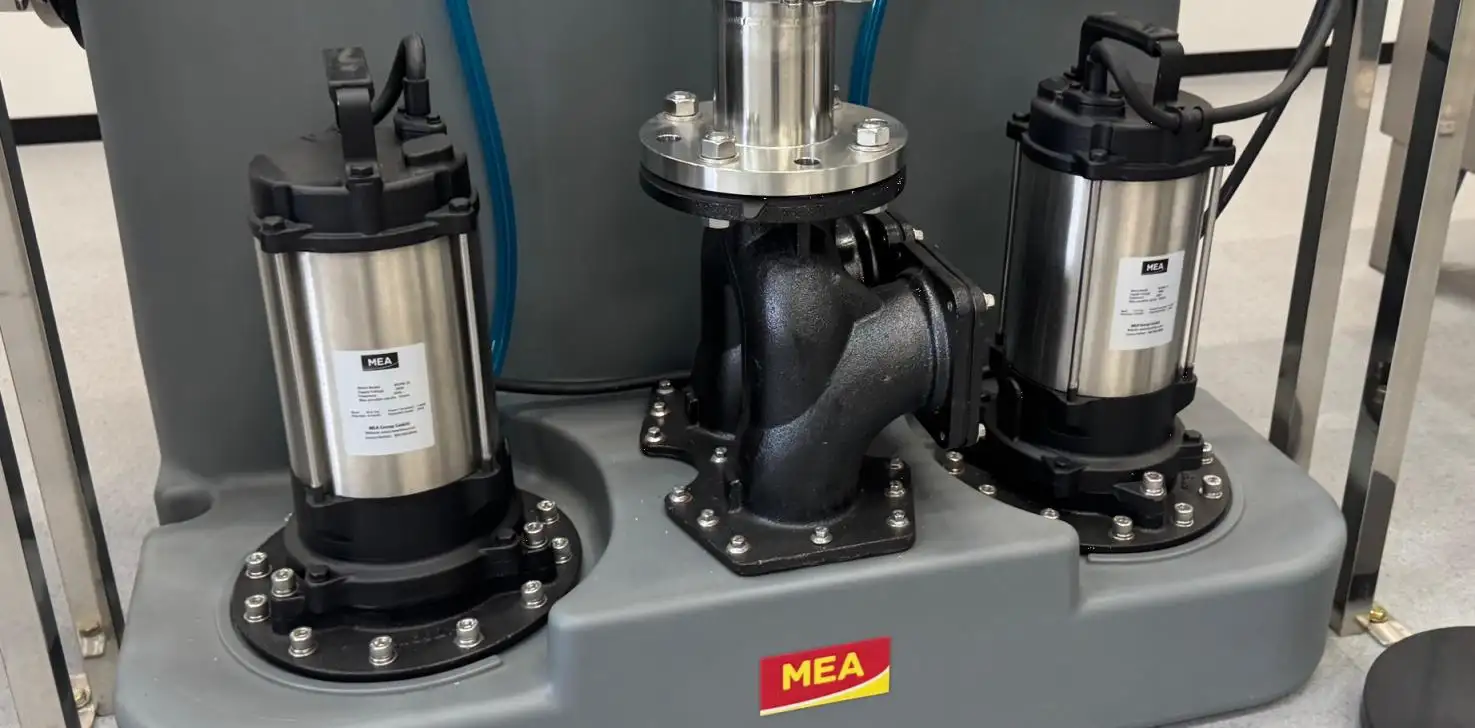
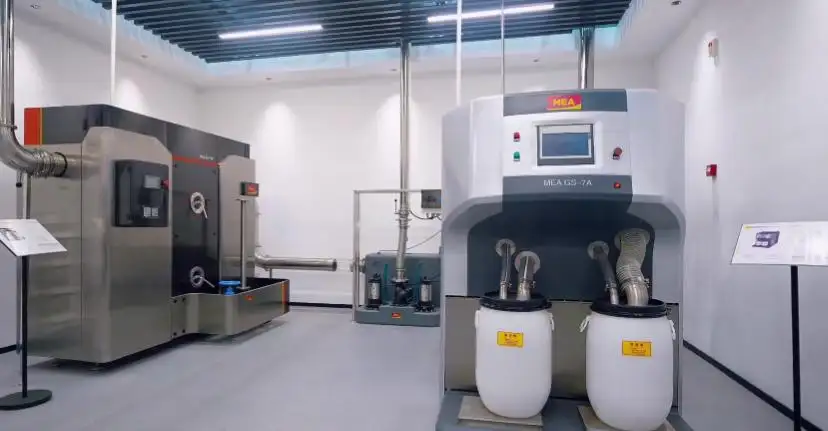

A grease separator for kitchen environments is no longer just a passive box under the sink. In 2026, commercial foodservice operators face a perfect storm: tighter FOG (fats, oils, and grease) discharge limits, chronic labor shortages, and rising pressure to digitize every workflow. The GS-7A Automatic Grease Trap from CMSA turns this compliance challenge into a competitive advantage — by replacing manual maintenance with industrial-grade intelligence.
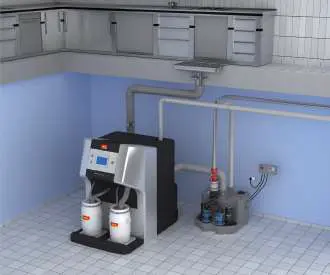
What Is a Grease Separator and Why Does Every Kitchen Need One?
A grease separator intercepts oily wastewater before it enters municipal sewers. Without one, hot grease cools inside pipes, hardens into concrete-like blockages, and triggers costly backups or environmental fines.
In the US, cities like Austin, Texas, already mandate that grease interceptors be fully cleaned by licensed haulers every three months, with three-year record retention. Similar rules now apply across Europe and Asia-Pacific, making a compliant Grease Separator for Kitchen a legal necessity, not an option.
The global commercial grease trap market is projected to grow 7.48% annually through 2032, driven precisely by these enforcement waves. But growth alone does not solve the real-world problem: most kitchens still rely on manual interceptors that demand daily scooping, weekly checks, and quarterly pump-outs — a model that collapses when staff turnover or overtime budgets shrink.
The Hidden Costs of Manual Grease Management
Traditional passive separators store grease until someone removes it. That “someone” is usually a line cook or dishwasher, already pressed for time. The outcome is expected:
- Sewer Clogs: Grease spilling into sewer lines causes nasty backups that can shut down food prep and dishwashing for hours.
- Hygiene Failures: Cleaning cycles are skipped, leading to awful smells, pest invasions, and failed health inspections.
- Plumbing Bills: Emergency plumbing visits handle blockages several times a year, costing between
800 per visit.
- Safety Liabilities: Slip-and-fall accidents from greasy floors are responsible for a massive share of commercial kitchen injuries.
In contrast, an automatic Grease Separator for Kitchen eliminates almost all human touch points. This is where CMSA's engineering philosophy makes all the difference.
CMSA Advantage: From Passive Tank To Smart Appliance
CMSA designed the GS-7A not as a modified holding tank, but as a purpose-built automatic grease trap. Every component — from the two-stage separation chamber to the Siemens PLC controller — works together to run unattended.
Built for Tough Kitchens
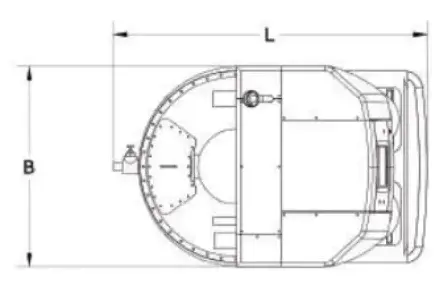
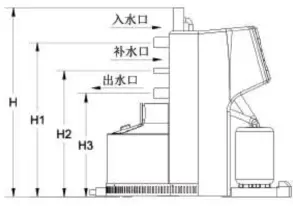
The GS-7A starts with SS304/316 stainless steel construction, thickness customizable to your site's corrosivity. The compact footprint (2100 mm length, 720 kg weight) fits under sinks or beside dishwashers, making retrofits painless. But the real intelligence lies inside:
- Siemens PLC Control: This programmable logic controller automates oil discharge cycles, grease thickness detection, and heater timing. It’s the exact same industrial-grade brain used in automated factories, now protecting your kitchen drain.
- Two-Stage Separation: The first stage captures heavy solids; the second stage floats FOG to the top. The effluent leaving the unit is drastically cleaner than what passive separators discharge.
- Integrated Heating Element: Cold environments cause grease to solidify. The GS-7A's internal heater keeps oil fluid, ensuring a complete, automated discharge every single cycle.
- Easy-Clean Interior: A non-stick coated surface prevents stubborn grease adhesion, meaning periodic inspections take minutes instead of hours.
How Automation Saves Labor and Eliminates Fines
The daily routine for a manual grease separator takes about 15 minutes of skilled labor — opening lids, scraping grease, documenting volumes. Over a year, that adds up to over 90 hours, or roughly $1,800 in wages. The GS-7A reduces that to zero.
Here is what CMSA's automation delivers:
- Automated Discharge: Cycles run on a timer. No staff involvement, no skipped days.
- Digital Monitoring: A digital display allows remote monitoring. You know exactly when a licensed hauler is needed without opening a single bolt.
- Predictive Alerts: The Siemens PLC flags unusual grease accumulation or heater faults before they become plumbing emergencies.
- Audit-Ready Logs: Satisfy health inspectors and demonstrate due diligence to environmental agencies instantly.
The ROI: For a standard 200-seat restaurant, switching to the GS-7A typically cuts annual grease-related operating costs from ~600—yielding a payback period of less than eight months.
Why 2026 Design Trends Favor CMSA's Approach
Three macro trends shape commercial kitchen equipment this year: extreme energy efficiency, IoT readiness, and hands-free operation. The GS-7A aligns with each.
• Energy efficiency: The heating element cycles only when needed, not continuously. The PLC optimizes run time based on real-time grease thickness.
• IoT readiness: With its Siemens PLC, the GS-7A can integrate into building management systems (BMS). As more kitchens adopt remote equipment monitoring, this unit is already future-proof.
• Hands-free hygiene: No employee ever touches wastewater. The unit seals the process, reducing exposure to pathogens and improving food safety scores.
CMSA also offers flexible customization: choose SS304 or SS316, adjust inlet/outlet DN100 layout, or add extra insulation for extreme climates. No two kitchens are identical, and CMSA engineers treat each project accordingly.
Real-World Applications for Commercial Kitchens
The GS-7A is highly customizable (SS304 or SS316, adjustable DN100 layouts) and fits any operation that discharges greasy wastewater continuously:
- Restaurants (Fast-Casual to Fine Dining): Handles peak lunch rushes without overflowing.
- Food Factories: Separates industrial-scale FOG directly from production lines.
- Central & Ghost Kitchens: Allows multiple delivery tenants to share one reliable separator.
- Hotels and Casinos: 24/7 kitchens require zero downtime; automation is the only answer.
The Verdict: CMSA Turns Compliance Into Peace Of Mind
A Grease Separator for Kitchen must do more than hold grease — it must protect your business from fines, accidents, and labor drains. CMSA's GS-7A Automatic Grease Trap does exactly that, using Siemens PLC intelligence, two-stage separation, and rugged stainless construction to automate FOG removal. In 2026, manual interceptors are a liability. Intelligent separation is the standard.
Frequently Asked Questions (FAQ)
Q1: How frequent are licensed hauler service visits for the GS-7A?
A: Usually, a licensed hauler services the GS-7A every 2–3 months, based on how often the kitchen is used. The system has a digital display that prints the grease thickness. It tells the operator when the unit needs to be serviced, leaving no room for error.
Q2: Does the GS-7A have a fit in a kitchen without a significant amount of restructuring?
A: Yes. The GS-7A has a compact footprint (2100mm L × 1360mm W) with flexible inlet/outlet DN100. This allows for easy under-sink or beside-equipment placement.
Q3: Does the integrated heater use a lot of energy?
A: No. The Siemens PLC designed to control the heater provides consistent energy control. The heater only runs when the system is in a cold environment, during a process interruption, or discharge cycles, making the heater energy efficient.
Q4: What maintenance is needed for the GS-7A?
A: The GS-7A only requires a yearly clean of the interior, as well as an inspection of the control panel. This unit is easy to maintain, as there is no grease that needs to be scooped or removed, and there are no pipes that need to be removed.
Q5: Can CMSA make unit adjustments for a site with individual needs?
A: Yes. CMSA units have customizable thickness in both SS304 and SS316, with the option of a non-standard space layout. Contact an engineering team to receive a site-specific quote.


