
Hygienic Drainage Grates Explained: Materials, Benefits, and Applications

Hygienic Drainage Grates play a critical role in modern drainage design because they do more than cover a channel or floor drain. They help control water flow, support cleaning efficiency, improve slip resistance, and protect the long-term hygiene standard of a facility. At CMSA, we see more buyers asking not only how a grate looks, but also how it performs under real operating conditions.
What Hygienic Drainage Grates Are Designed to Do
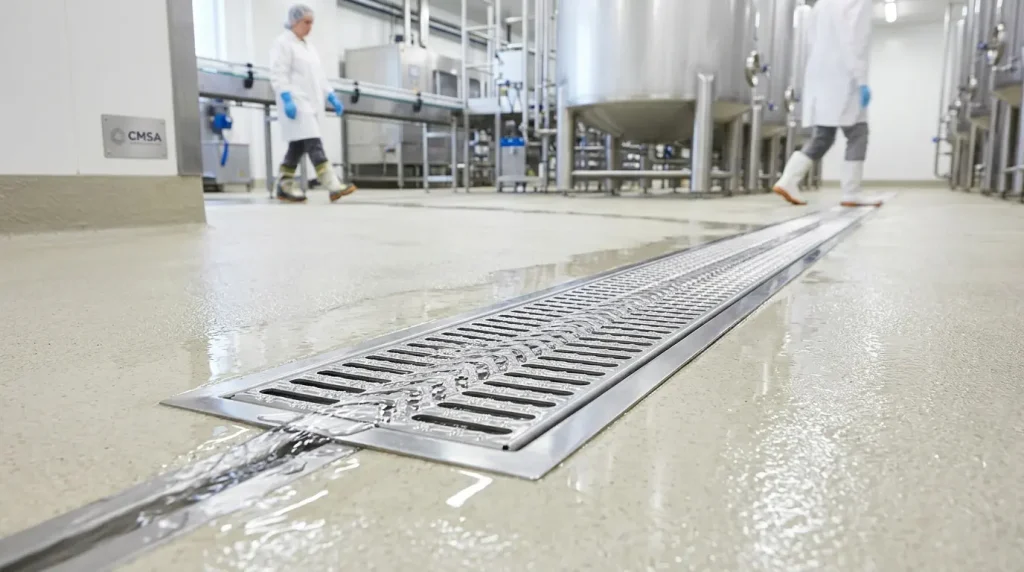
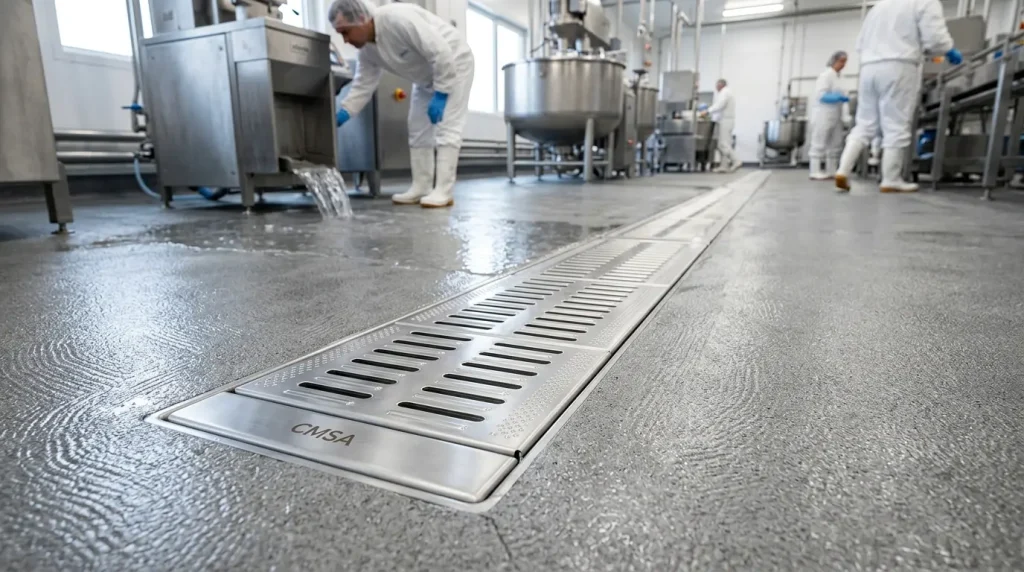
A hygienic grate is the visible upper component of a drainage system. It allows water to enter the drainage channel while helping keep the walking or working surface safe and easy to maintain. In many projects, the right grate design also improves the overall efficiency of the drainage layout.
From a buyer's perspective, the function is practical rather than abstract:
• It helps remove wastewater quickly from working surfaces
• It supports safer footing through anti-slip design
• It reduces areas where dirt and residue can remain
• It makes routine washdown and maintenance easier
• It helps the drainage system match indoor or outdoor use requirements
This is why Hygienic Drainage Grates are often specified in places where cleanliness, durability, and operational reliability matter every day.
Why Material Selection Matters So Much
One of the first decisions buyers should make is the material grade. CMSA stainless steel grates are available in 304 or 316L stainless steel, with optional surface treatments such as passivation, electropolishing, and sandblasting. These options matter because the material affects corrosion resistance, surface cleanliness, appearance, and maintenance performance.
Type 304 stainless steel is widely used because it provides reliable corrosion resistance in many general commercial and industrial environments. Type 316L is frequently specified for harsher operating conditions because it performs better than 304L in many corrosive environments and is often favored where chloride levels are more pronounced. The "L" grade denotes low carbon composition.
For buyers, this translates into a simpler decision path:
• Choose 304 for many standard indoor drainage projects with normal cleaning exposure
• Choose 316L when the environment is more aggressive or when higher corrosion resistance is needed
• Consider electropolishing when surface smoothness and cleanability are a priority
• Consider passivation when strengthening the stainless surface layer is important
• Consider sandblasting when the project calls for a specific finish effect
In practical terms, better material selection means less risk of premature corrosion, more stable appearance over time, and lower replacement pressure.
Standards Help Buyers Judge Product Suitability
Many buyers focus on dimensions first, but certification and standard compliance should come earlier in the review process. CMSA grates are positioned for both indoor and outdoor applications, with indoor products aligned with EN 1253 and outdoor products aligned with EN 1433.
EN 1253 governs gullies for buildings and defines requirements involving material characteristics, mechanical durability, tightness, and flow performance for drainage components. For drainage channels used in vehicular and pedestrian environments, EN 1433 establishes requirements for classification, design, testing, marking, and conformity.
From a buyer's perspective, this standard is important because it helps answer a practical question:
• Is the grate appropriate for building drainage use or for outdoor drainage in traffic-exposed locations?
• Does the product meet a recognized technical framework?
• Is the load and performance expectation appropriate for the project?
• Will the specification process be easier for consultants and contractors?
This is also why buyers should not compare all drainage grates as if they are interchangeable. A product that performs well in an indoor washdown zone is not automatically the right choice for an outdoor area exposed to pedestrian or vehicle loading.
Common Hygienic Drainage Grate Types and Where They Fit Best
CMSA offers several Hygienic Drainage Grates, including mesh grate, ladder grate, wedge mesh grate, slot grate, hygienic ladder grate, and customized grates. Standard product references in the current range include widths of 200 mm, lengths of 500 mm, and material options in 304/316L stainless steel.
Each type serves a slightly different project logic:
• Mesh Grates are often selected where open drainage intake is needed and visual inspection is useful.
• Ladder Grates provide a familiar and practical structure for many floor drainage layouts.
• Wedge Mesh Grates are valuable where buyers want a design that supports drainage performance while improving hygienic cleanability.
• Slot Grates are suitable when a more discreet visual line is preferred.
• Hygienic Ladder Grates are especially relevant in projects where sanitation and washdown performance are central.
• Customized Grates can support projects that involve complex site conditions, specific architectural coordination, or irregular loading and layout requirements.
This variety benefits buyers because product fit becomes more precise. Instead of adapting the project to a generic grate, the grate can be matched to the real operating environment.
How Buyers Should Choose the Right Drainage Grate
A well-informed purchase usually starts with five practical checks:
• Project Type: Is the grate for food processing, a commercial building, an outdoor walkway, or a traffic zone?
• Load Class: Will the area carry only pedestrians, or also carts, service equipment, or vehicles?
• Drainage Capacity: Estimate the amount of water the system must manage when usage reaches its highest level.
• Environmental Conditions: Consider whether the grate will be exposed to intensive cleaning products, retained moisture, or corrosive conditions.
• Maintenance Needs: Consider how regularly the system will need to be cleaned, checked, and serviced.
Modularity and customization should also form part of the selection process. Modular drainage systems can improve installation efficiency, simplify future maintenance, and provide greater freedom in layout arrangement. If the site presents special conditions, customized grate solutions can help prevent avoidable construction limitations.
At CMSA, we support this process with drainage calculation, product selection, solution design, layout planning, BIM support, and installation guidance. For buyers, that means the product decision becomes less uncertain and more project-based. Instead of selecting only by catalog appearance, they can evaluate the drainage system through performance, compliance, and lifecycle practicality.
Why Hygienic Drainage Grates Are a Long-Term Value Decision
The best Hygienic Drainage Grates do not only solve today's drainage problem. They also help reduce future cleaning difficulty, maintenance inefficiency, and replacement risk. That is where value becomes visible over time.
A well-chosen stainless steel grate can help buyers achieve:
• Better hygiene management
• More reliable daily drainage
• Improved surface safety
• Stronger specification confidence
• Better alignment between technical needs and project image
For many projects, this is the real advantage. The grate becomes part of a complete drainage strategy rather than a simple cover component.
If your team is evaluating drainage products for an indoor hygienic area or an outdoor channel application, CMSA can help you move from product comparison to a clearer engineering decision. Contact us to discuss grate type selection, stainless steel grade, customization options, drainage calculations, and installation support for your next project.
For buyers who want to review the relevant standards background, it is also useful to consult the official scope information for EN 1253 and EN 1433, as well as technical guidance on stainless steel selection for corrosive environments.


