
How Polymer Concrete Strengthens Sustainable Urban Drainage
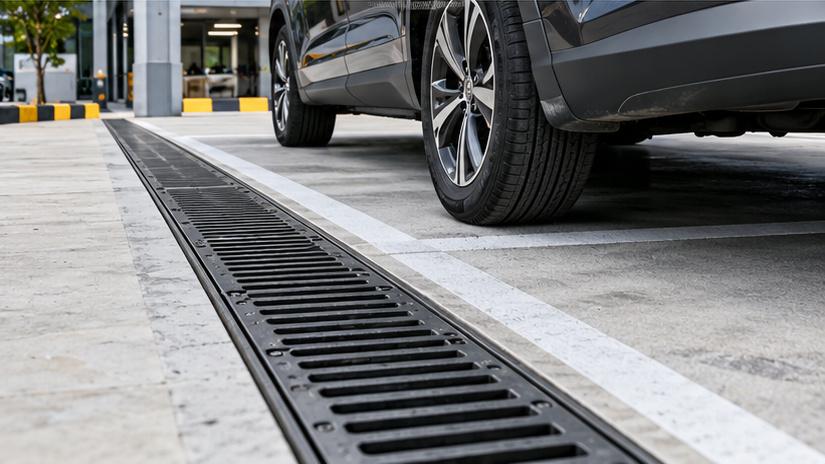
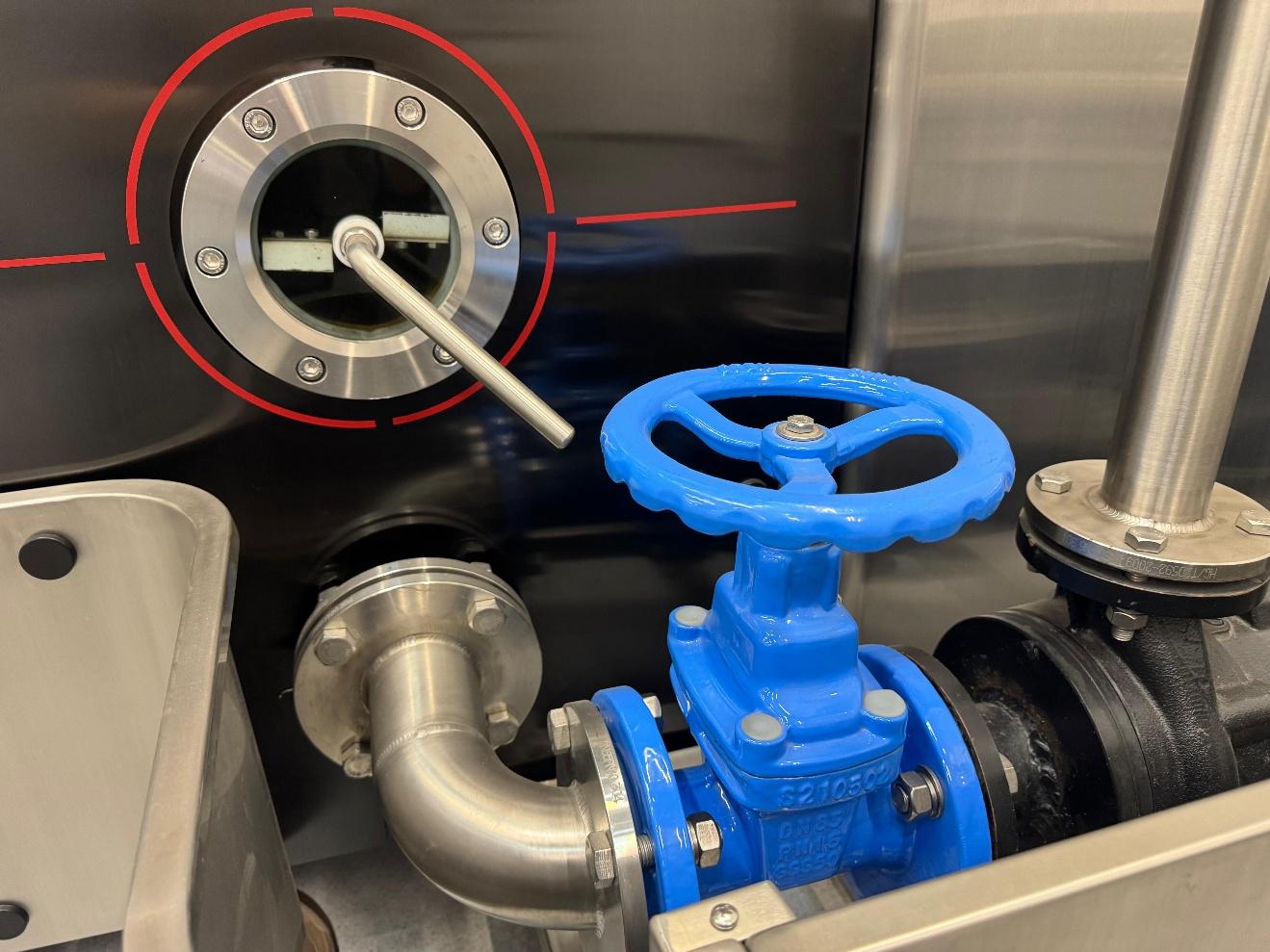
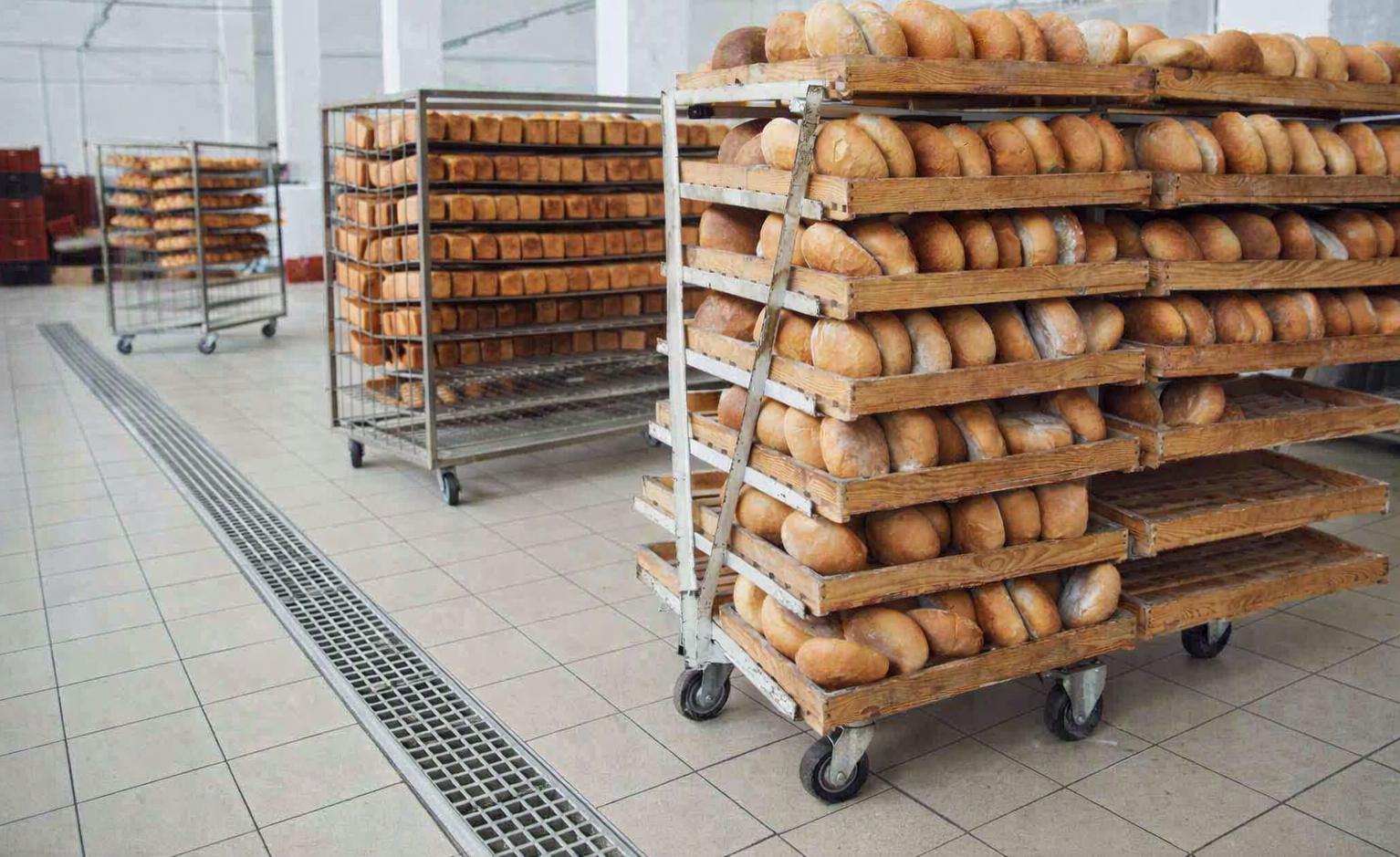
A kerbside channel can remain structurally intact yet leave standing water after a storm. Sometimes the inlet cannot intercept runoff moving along the gutter; elsewhere, sediment reduces the effective opening or a surcharged outlet holds water in the channel. Replacing the drain with a stronger material will not resolve those hydraulic failures.
For Sustainable Urban Drainage, material choice must follow inlet, conveyance, outfall, and exposure assessments. At CMSA, we apply this approach when matching MEA drainage systems to roads and tramway infrastructure.
Why Polymer Concrete Behaves Differently in Harsh Environments
Polymer concrete has a dense matrix that can reduce water absorption and wall roughness.
Low absorption does not mean the element is watertight. Water can pass through unsealed joints and unbonded connections and outlets. Chemical resistance also depends on the resin type and the concentration of the contaminants. Fuel residues and road salts should not be considered equivalent exposures. Long term exposure to acid rain, for example, would not be the same as a one time exposure to strong industrial cleaning agents.
Material Properties That Require Verification
Specify more than compressive strength:
Flexural behaviour: Relevant to handling stresses and structural response.Water absorption and freeze–thaw data: Relevant where moisture cycling and freezing occur.Chemical compatibility: Specific to expected runoff, not a generic “corrosion-proof” claim.Thermal movement and joint design: Important over long channel runs.
None of these material properties independently establishes the installed channel’s traffic load class.
Which Channel Material and Inlet Arrangement Fits the Site?
| Design Decision | Useful Option | Critical Check |
| Dense channel in aggressive runoff | Polymer concrete | Resin compatibility, joint sealing, tested assembly |
| Conventional structural drainage | Cement concrete | Exposure class, reinforcement/detailing |
| Lightweight modular installation | Plastic/composite | Stiffness, temperature range, support |
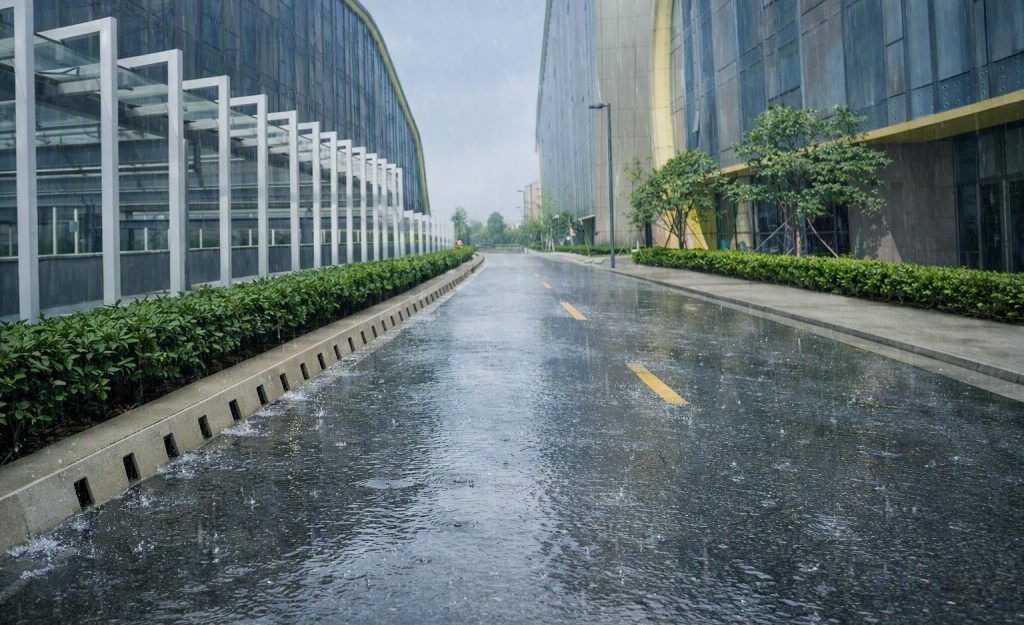
| Runoff concentrated at road edges | Integrated kerb drain | Side-inlet interception, gutter slope |
| Open paved surfaces | Grated or slot channel | Opening capacity, traffic class, cleaning access |
Grated and kerb-integrated channels are not interchangeable. A side inlet must collect water arriving along a gutter under the design crossfall; a top inlet receives a different flow pattern.
Where MEA Kerb Drain Fits
MEA Kerb Drain combines kerb and channel in a monolithic unit. CMSA offers a 100 mm clear width, 154 mm overall width, heights from 195 to 555 mm, and A15–D400 load-class options.
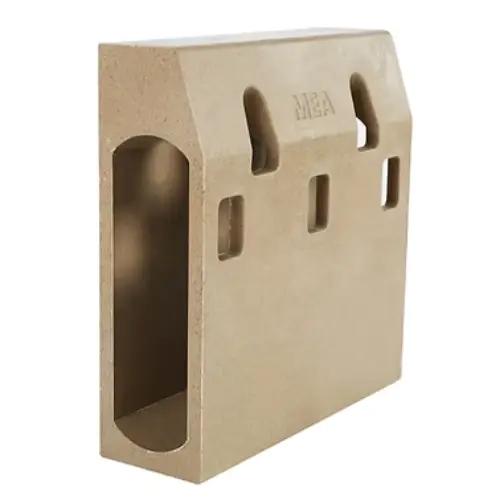
These dimensions inform spatial coordination; they do not replace a project-specific hydraulic check.
Sustainable Urban Drainage Starts at the Inlet, Not the Outlet
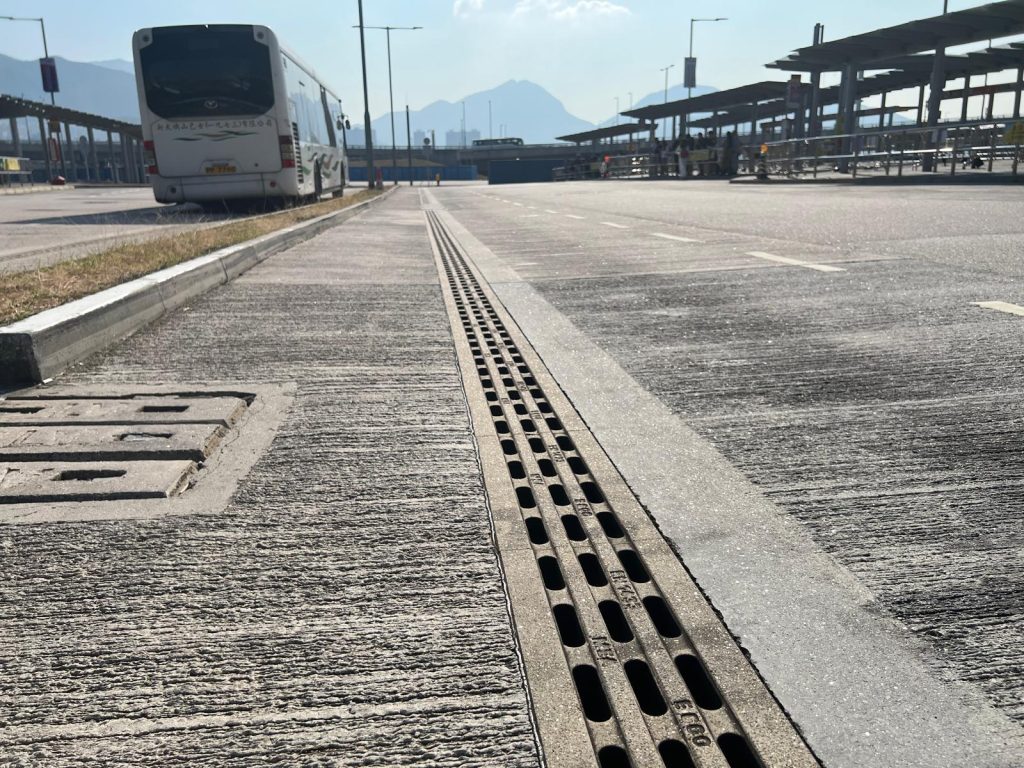
A workable calculation progresses through runoff generation → inlet interception → channel conveyance → downstream discharge or storage.
Four Hydraulic Checks Before Selecting Channel Size
• Determine Design Flow:Use local rainfall intensity, impermeable area, runoff coefficient and design event. The rational method Q = CiA, may be adequate for an initial small catchment estimate, especially if the units are consistent and assumptions are made.
• Verify Inlet Capture: Check spacing and opening geometry and gutter flow, crossfall and bypass at low points. A channel’s internal flow rating does not represent its inlet capture capacity.
• Check Conveyance: Effective wetted area and hydraulic radius, and longitude energy slope and friction governs the flow behavior of a channel. A smooth flow surface cannot correct for insufficient depth and submerged outfall.
• Coordinate Outlet: Consider tailwater, pipe capacity, and sediment in inspection chambers. Built in falls and stepped levels require different elevation checks. Channels without falls, and channels with a rise require different flow checks.
Sustainable Urban Drainage is broader than rapid removal from pavement. Where runoff attenuation, infiltration, filtration, or reuse is required, the linear channel connects to those downstream systems rather than replacing them.
Road Edges and Tram Tracks Require Different Interfaces
Curved kerbs demand continuity of inlet elevation and practical alignment of channel units.
Tramways introduce another constraint: water and grit accumulate near rail grooves, where poorly located components may interfere with wheel-flange clearance.
MEA City Rail Track Drainage Systems use polymer concrete and offer arrangements for specified Ri 53, 54, 59, and 60 rail profiles. Confirm rail section and connection details.
Installation: Where a Rated Channel Can Still Fail
EN 1433 classifies linear drainage systems for pedestrian and trafficked areas. A15–D400 denotes test load classes, not permissible vehicle gross weights. Match load class to location, traffic, configuration, and supporting construction.
Type I vs Type M: Why Supporting Concrete Matters
EN 1433 classifies:
• Type I: Channels that do not require support to carry additional loads.
• Type M: Channels that require additional support to resist loads in service.
For Type M channels, bedding and concrete surrounds, as well as the restraint of adjacent pavement, must be as shown on the manufacturer’s drawings. Poor support may cause movement and/or fracture of the edge of the unit and joint leakage, even if the supplied unit meets its declared class.
Designing Access for Sediment Removal
Drainage systems for Sustainable Urban Drainage also require maintenance. Access must be specified for sediment removal, inspection of joints and the outlet, and/or cleaning.
Cleaning frequency should be based on the actual amount of sediment and debris observed in the system as well as the amount of rainfall, rather than expectation of “maintenance-free” performance.
How to Determine Durability and Sustainability Prior to Purchase?
Ask suppliers for material evidence and test results in support of their ecological and life-cycle claims.
| Verification Area | Documents to Request |
| Material durability | Product-specific absorption, flexural strength, freeze–thaw and chemical-exposure reports |
| Structural compliance | EN 1433 classification, tested configuration, installation drawings, local approvals |
| Hydraulic suitability | Cross-sections, inlet data, flow calculations, outlet levels |
| Environmental evidence | Product-specific EPD or lifecycle assessment with comparable functional units and boundaries |
Does Longer Service Life Mean Lower Carbon Emissions?
Not automatically.
A longer service life means less demand for replacements and less need for road closures. However, the assessment should also address reduction in carbon footprint. Production, transport, installation, maintenance and end-of-life assumptions should be addressed in the assessment.

Specifying CMSA Drainage Systems
For quotation, provide CMSA catchment data, rainfall criteria, traffic location, available depth, chemical exposure and outlet conditions.
Our staff can assist with product selection and provide hydraulic calculations, layout drawings and assistance with BIM coordination. We can also provide support with installation.
FAQs
Q1. What Is Sustainable Urban Drainage?
Sustainable Urban Drainage manages surface runoff through collection, conveyance, infiltration, storage, and treatment. CMSA provides MEA linear drainage systems that support the collection and conveyance stages of urban stormwater management.
Q2. Why Does CMSA Use Polymer Concrete for Urban Drainage?
Polymer concrete offers low water absorption, high material strength, and resistance to suitable chemical exposures. CMSA’s MEA drainage solutions use these properties to address demanding urban conditions, subject to product-specific testing and installation requirements.
Q3. How Does Polymer Concrete Improve Drainage Durability?
Its dense resin-bound structure can limit moisture ingress and certain forms of deterioration. Long-term performance also depends on chemical exposure, joint sealing, traffic loading, and correct installation.
Q4. What Is the Difference Between MEA Kerb Drain and Conventional Trench Drains?
MEA Kerb Drain integrates the kerb and drainage channel into one monolithic structure, using lateral inlet openings. Conventional grated trench drains collect water through surface grates. Selection depends on road geometry, runoff interception, and maintenance access.
Q5. What Load Classes Are Available for CMSA’s MEA Kerb Drain?CMSA lists EN 1433 load-class options from A15 to D400 for MEA Kerb Drain. Engineers should confirm the required class, specific product configuration, traffic conditions, and installation requirements before specification.


