
Designing Resilient Cities: Sustainable Wastewater Drainage Options for City Infrastructure
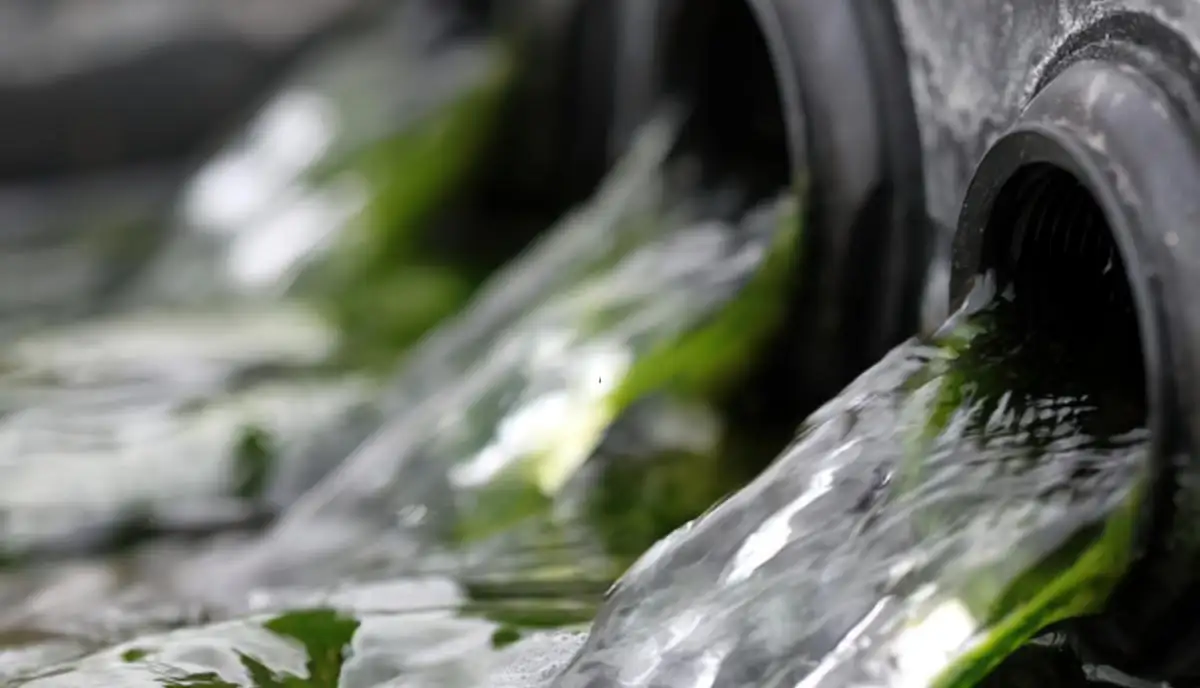
Water is relentless. It will find the lowest joint, the tight corner, and the soft soil. In 2026, that reality has pushed drainage planning to the front of the conversation. Wastewater drainage options for city infrastructure play a vital role in how sites capture, carry, and release water, directly shaping safety, maintenance costs, and even the overall look and feel of public spaces. From plazas and campuses to mixed-use streets, CMSA helps project teams compare options, verify performance, and select systems that work from day one.
What Is Construction Drainage
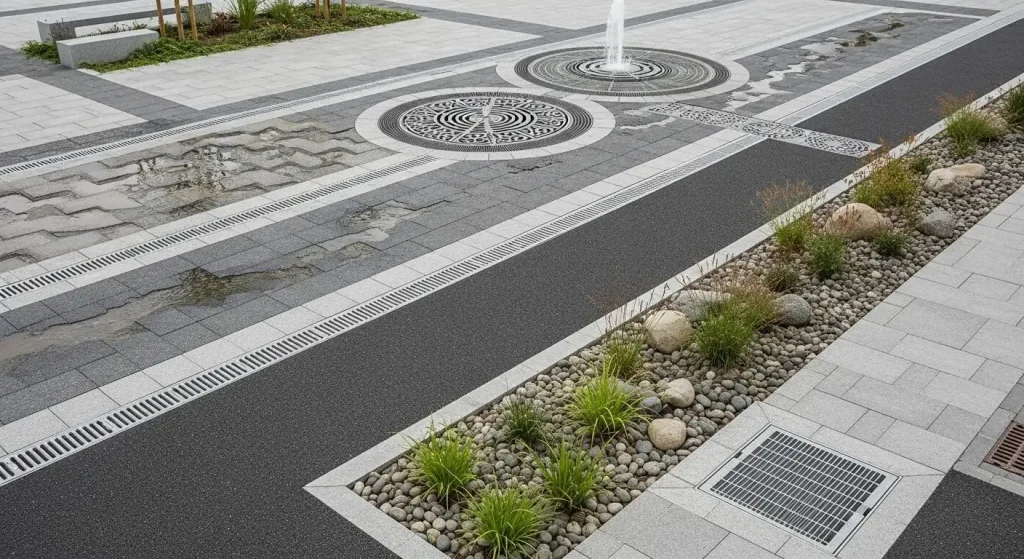
Construction drainage is the deliberate collection, conveyance, and discharge of water on and around a site. It handles visible runoff on pavements and landscapes and diverts subsurface moisture away from foundations and walls. A sound plan prevents ponding and slip risks, limits erosion, and extends the life of hardscape materials.
Think in two layers:
•Surface drainage clears water quickly from finished pavements and landscaped areas into channels or inlets.
•Subsurface drainage intercepts groundwater within soils or behind structures, easing hydrostatic pressure and restricting moisture migration.
•For the best outcomes, a dual‑layer approach is key: choosing Wastewater Drainage Options for city infrastructure that align with site geometry, load class, soil conditions, and the architectural vision.
Why Cities Need Smarter Water Management in 2026
Rising storm intensity and broader hardscape coverage escalate runoff, backing up drains and causing localized ponding. Flat plazas, long curtain wall edges, and confined corridors can concentrate runoff, while regulations highlight resilient, low-impact tactics that sustain mobility and protect assets.
Owners and operators now ask for measurable outcomes:
•Rapid capture to lessen puddles and slip incidents during storm peaks.
•Clean lines that resist clogging and minimize routine cleaning effort.
•Verified load ratings for mixed-use streets and service access, not just pedestrian zones.
•Compatibility with stone, concrete, and precast modules to preserve detailing.
Main Wastewater Drainage Options for City Infrastructure
Wastewater Drainage Options for Heavy Loads provide a clear framework, offering practical pros, cons, and typical applications to guide decision‑making.
Linear Surface Slot and Grated Drains
•Pros: Continuous lines take water off the surface rapidly, limiting ponding along edges and long gradients. Slim slot drains offer a minimal, refined look that aligns with modern joint patterns and modular paving. They are well suited to perimeter runs and long directional falls.
•Cons: Conventional grated channels can hold leaves and litter, increasing the frequency of cleanouts. An under-specified load class can lead to deformation and safety issues in mixed-traffic corridors. Precise grading is vital to convey flows into the line and prevent flat spots.
•Best Use: City squares, pedestrian passages, sunken plazas, curtain wall perimeters, and perimeter paths where continuous capture and crisp visual lines are desired.
Subsurface French Drains
•Pros: Intercept groundwater within soils, decrease saturation, and relieve pressure behind walls and foundations. Installed below the surface, they safeguard the structure without changing the landscape's character.
•Cons: Efficiency falls off in very fine or compacted soils that limit infiltration. Maintenance access is more constrained compared to surface drainage. French drains are not a stand-alone solution for high peak surface flows.
•Best Use: The toe of slopes, behind retaining walls, sports turf margins, and planting beds where subsurface collection is the priority.
Point Inlets
•Pros: Discrete collection points placed at low spots, downspout drops, curb cuts, or transitions. They are flexible to position and cost-effective for small catchments and retrofits.
•Cons: Higher ponding risk if spacing or grading is off. Debris tends to concentrate at points, raising blockage potential and the need for routine checks. Layout precision is key to avoid puddles.
•Best Use: Courtyards, parking bay end caps, roof leader drops, and compact planters that call for precise, localized capture without long continuous lines.
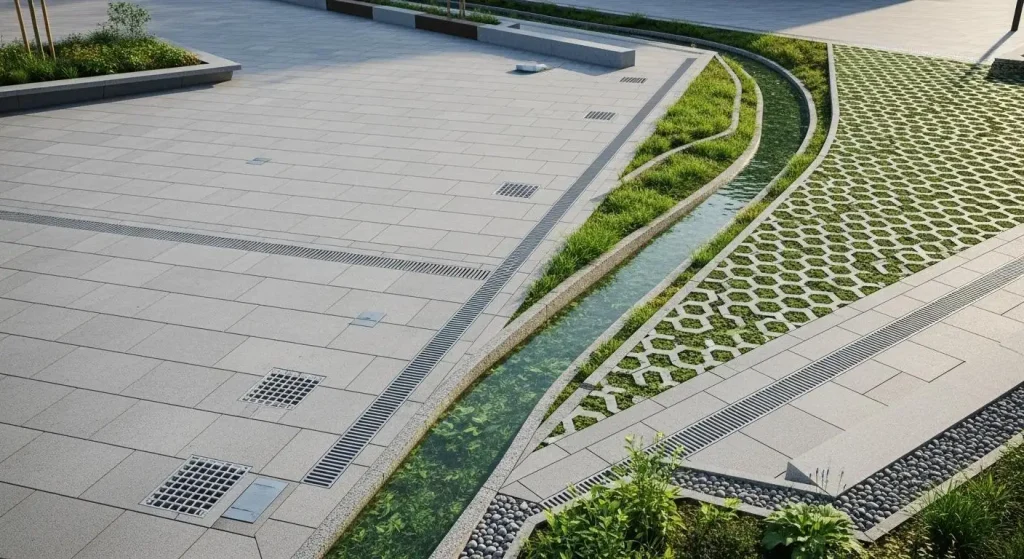
Green Swales and Permeable Pavements
•Pros: Slow, filter, and infiltrate runoff, improving microclimate and advancing LID goals. Add user amenity and landscape value while relieving pressure on piped systems.
•Cons: Depend on adequate footprint and appropriate soil permeability. Performance declines without maintenance. High-load areas may need reinforced sections or hybrids with edge slot drains.
•Best Use: Streetscapes, campus walkways, edge plantings, and parks where ecological performance, comfort, and public amenity are key.
CMSA TopSlot: Visible Design, Proven Performance
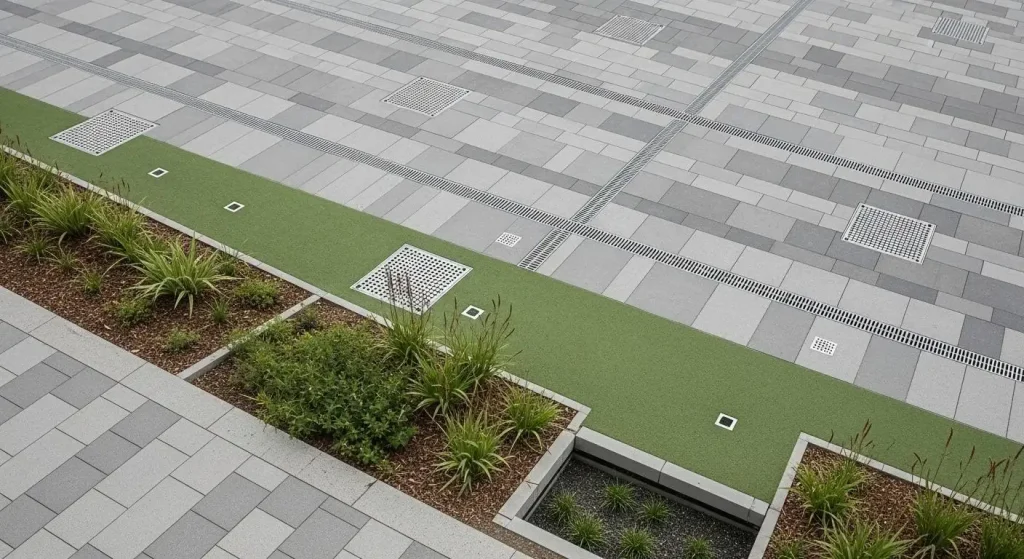
For surface drainage that is both refined and resilient, CMSA's TopSlot offers engineering depth and documented performance. The narrow slot captures water efficiently and keeps debris traveling, reducing blockage risk and the need for manual intervention. That yields cleaner surfaces, faster drying after storms, and fewer maintenance interruptions. TopSlot integrates cleanly with stone, concrete, and precast modules, preserving continuous joints and sleek finishes along façades and edges. For mixed-use spaces, TopSlot is independently tested by national third-party institutions to achieve a Class D400 rating, providing confidence under trolleys, service vehicles, and deliveries.
Expanded Capabilities and Specification Options
For flexibility, CMSA provides MEA TopSlot configurations with adjustable slot placement and height.
•Set slots in the center or along sides; choose single, multiple, or arc slot covers to mirror paving joints and the visual narrative.
•Calibrate slot height to surrounding levels for tight tolerance control and no threshold lip.
•Select cover thickness - 1.2 mm, 2 mm, or 3 mm - to align structural capacity with the needed loading class.
•Channels offer clear widths from 100 mm to 300 mm and varied body heights to suit grades and hydraulic criteria.
•Built for corrosion resistance and low weight, the system is easy to handle and achieves D400 load capacity when properly configured.
Maintenance is easy: lift the slot cover for inspection and cleaning, and use modular units for straight runs or perimeter layouts around buildings and plazas. TopSlot integrates with finished tile or paving, maintaining visual continuity while delivering high performance - ideal for landscaped areas, walkways, plazas, building perimeters, schools, hospitals, and community environments.
In essence, the right Wastewater Drainage Options for City Infrastructure strike a balance between refined detailing and hydraulic strength, making them a reliable choice for modern infrastructure.
How It Differs From Traditional Construction Drainage
• Continuous Capture vs. Points: Continuous edge interception curbs reliance on spaced point inlets that may allow ponding.
• Cleaner Aesthetics: A narrow, continuous slot aligns with joints, minimizing visual clutter from grates.
• Lower Clogging Risk: Slot hydraulics keep debris moving; grate surfaces often hold leaves and litter.
• Safety And Comfort: Reduced openings and flush thresholds increase comfort and safety in pedestrian areas.
• Verified Load Capacity: Independently verified to D400, TopSlot performs in mixed-traffic zones without heavier grates.
• Specification Flexibility: Configure slot position, height, width, and cover thickness to match hydraulic demand and structural criteria.
A Practical Checklist for Selection
Use this pathway to identify and implement the most effective Wastewater Drainage Options for City Infrastructure tailored to your site’s unique needs.
• Quantify Peak Runoff: Measure peak rainfall rates, drainage area, and time of concentration to size the system.
• Map Slopes And Hardscape: Locate flow lines and ponding risks. Linear slots perform along edges; point inlets handle spot lows.
• Define Loads: Verify pedestrian-only or mixed-vehicle requirements.
• Integrate With Paving: Ensure fit with stone, concrete, and precast modules to protect edge detailing and tolerances.
• Plan Maintenance: Prefer self-cleansing geometries and easy access to lower routine effort and downtime.
• Verify Data: Request independent test reports, hydraulic curves, and installation guidelines for compliance and clarity.
FAQ and Next Steps
• Which load class suits plazas with occasional service vehicles?
Choose D400 for areas expecting trolleys, maintenance trucks, or deliveries. CMSA supplies independent test documentation to support specification.
• How does self-cleaning geometry help daily operation?
As water moves through the slot, it sweeps debris along, lowering blockage risk and reducing manual cleaning. Surfaces dry faster and remain accessible after storms.
• Can slot drains work alongside permeable pavements?
Yes. Slot drains manage edge flows and long gradients, while permeable areas handle infiltration. Together they create resilient, low-impact performance.
• Where is TopSlot most effective?
City squares, pedestrian corridors, sunken plazas, curtain wall perimeters, and community spaces - anywhere fast capture, clean lines, and verified capacity are required.
• How is installation coordinated across mixed paving assemblies?
CMSA's details cover stone, concrete, and precast modules, and we partner with contractors to confirm slopes, joint continuity, and edge transitions to avoid ponding-prone flats.
Call to Action
Raise the standard for water control in 2026. Get in touch for design review, specification support, or a sample. We'll help you compare systems, select the right solution, and keep public spaces dry.


