
Sewage Lifting Stations for Fast Food Kitchens With Stable Performance
Sewage Lifting Stations for Fast Food Kitchens are becoming more important in 2026, because fast food operators now expect wastewater systems to do more than move water from one point to another. In modern kitchens, drainage equipment must deal with grease, food particles, peak discharge periods, limited installation space, and the need for stable automatic operation. This trend is consistent with broader industry practice: kitchen wastewater containing fats, oils, and grease can clog pipes and pumps if not managed correctly, and lifting units are commonly used where gravity drainage is not sufficient.
Why 2026 Demands Better Kitchen Lifting Stations
In 2026, buyers are paying closer attention to operating risk. For a fast food kitchen, the key question is no longer only tank size or motor power. The real concern is whether the system can keep working during busy service periods without frequent inspection or unplanned shutdowns.
Fast food kitchens produce wastewater that often carries grease and food residue. That is why equipment selection must consider clog resistance, backflow prevention, enclosure protection, and control accuracy. In many building drainage applications, lifting units are required when wastewater must be discharged from below the backflow level or where natural slope is not available.
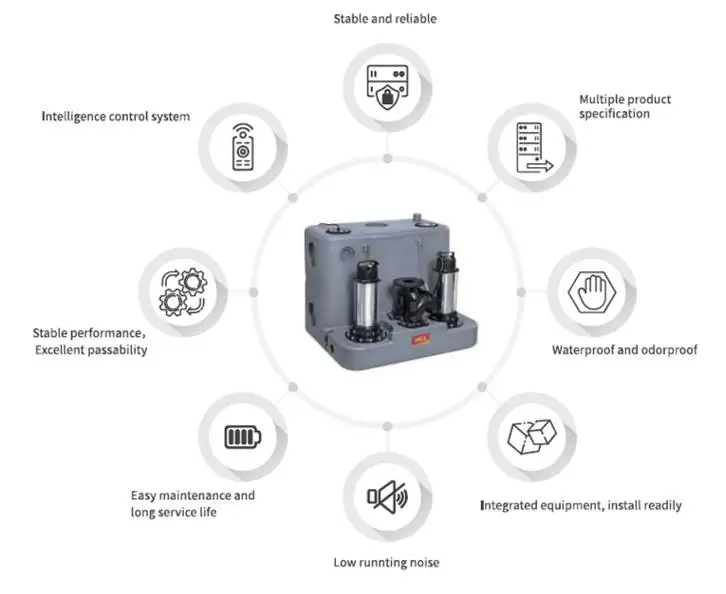
From the buyer's perspective, a good design in 2026 should support:
• Stable pumping during peak kitchen hours
• Reduced blockage risk from grease-bearing wastewater
• Reliable automatic switching without constant staff attention
• Better protection in wet underground or basement conditions
What CMSA Focuses on in Real Fast Food Kitchen Applications
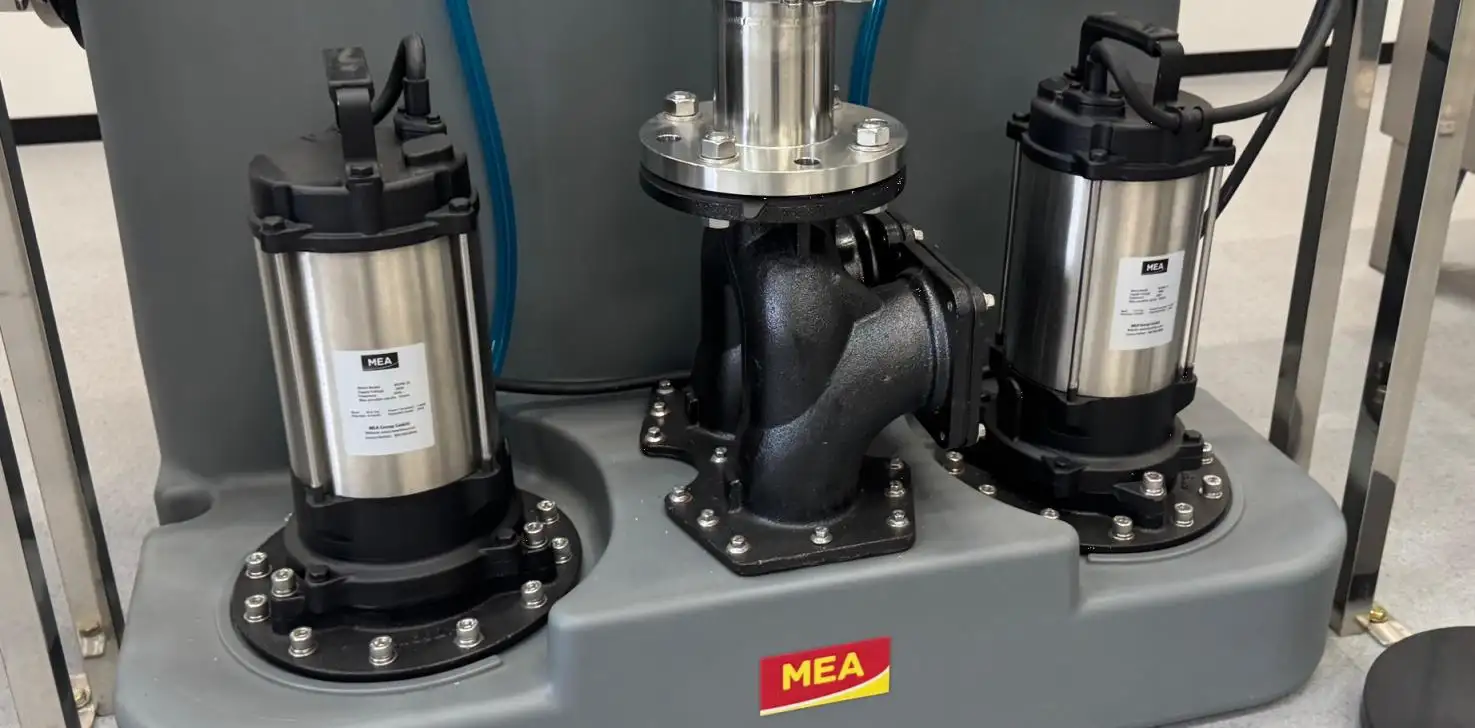
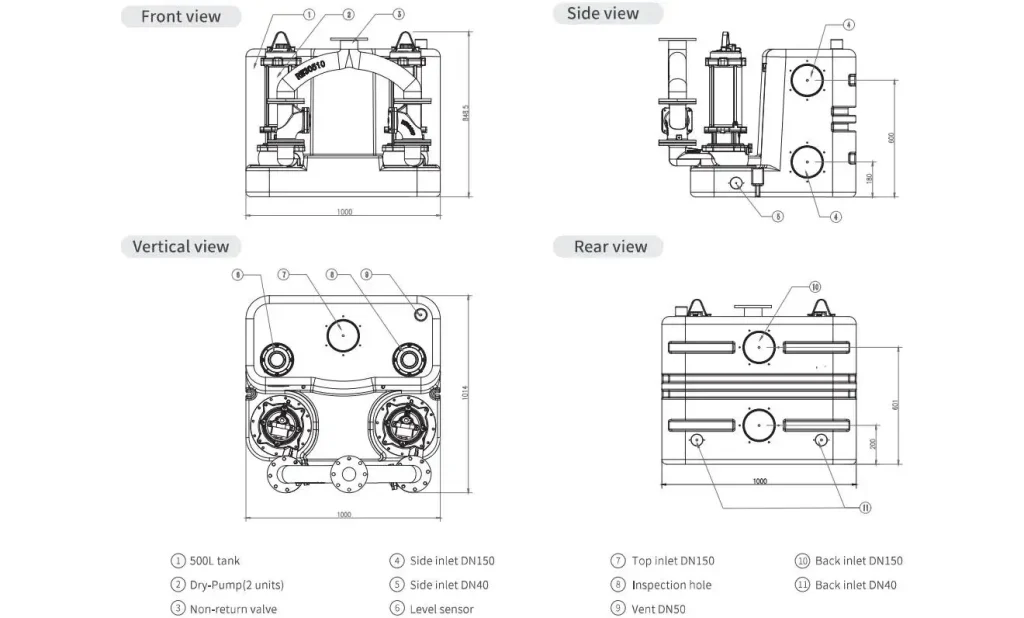
From the perspective of CMSA, stable performance starts with practical engineering rather than visual appearance. Our Steady-Blauwal 500-55/75 is engineered for kitchen and domestic wastewater applications where dependable operation is a core requirement.
In food service settings, the system's double-pump configuration provides important practical value. Wastewater volume can rise and fall considerably throughout preparation and cleaning cycles. A dual-pump arrangement helps improve transfer reliability and supports smoother day-to-day operation. At the same time, air pressure and liquid level control support more accurate pump response under fluctuating wastewater levels.
Several technical points are especially relevant for buyers:
• Double Pump Design
This helps improve overall reliability and supports sustained operation in kitchens with demanding service patterns.
• Rated Power Of 5.5 / 7.5 kW
This rating suggests the unit is suitable for more intensive drainage use, particularly in environments with changing wastewater loads.
• 380V / 50Hz Power Supply
This specification aligns with many commercial installation environments and supports stable motor operation.
• 150L Tank Capacity
A properly sized tank helps the system manage fluctuating inflow without forcing excessive start-stop cycles.
Why the CMSA Structure Supports Stable Operation
The effectiveness of Sewage Lifting Stations for Fast Food Kitchens depends heavily on how the internal flow path and protective components are designed. This feature is a key focus for CMSA.
The Steady-Blauwal 500-55/75 therefore comes with a large non-blocking channel and a metal impeller. For kitchen wastewater, this means better tolerance for suspended solids and grease-bearing flow. Instead of treating anti-clogging as a secondary feature, CMSA treats it as a core requirement for fast food kitchen use.
The unit also has an IP68-rated enclosure, which is important in wet service areas. IEC says that IP ratings show how well an enclosure protects against dust and water getting in. IP68 is a well-known level of sealing for tough environments.
This means that buyers will get a lot of benefits in real life:
• Better protection against water and debris intrusion
• Lower risk of electrical exposure in damp installation zones
• More confidence for underground or basement installation
• Greater long-term stability in service conditions that are not always clean or dry
CMSA vs. Traditional Sewage Lifting Stations for Fast Food Kitchens
Traditional lifting stations can do the basic pumping job, but they can cause problems in commercial kitchens. Single-pump systems might not have as much backup. When grease and food particles get into the wastewater stream, narrower flow passages may be more likely to get blocked. Using simpler control methods might also make the cycling less consistent.
CMSA's approach is more in line with what buyers want these days:
• Several places for water to come in
This gives installers more options when it comes to connecting kitchen drains.
• Included Control Cabinet
This makes it easier to manage the system and helps make sure that everyone does things the same way from the start.
• Corrosion-Resistant Construction
Key parts are made with HDPE, ductile iron, SUS304, and other durable materials to support longer operating life and fewer maintenance repairs.
• Backflow Control Through Non-Return Valve Design
This feature helps limit reverse flow and strengthens system reliability in food service wastewater applications.
For buyers, these are not merely product details. They translate into more reliable drainage performance, fewer maintenance concerns, and better protection against unexpected downtime.
What Buyers Should Check Before Making a Purchase
When evaluating Sewage Lifting Stations for Fast Food Kitchens, buyers should begin with real operating conditions. A suitable unit should match the kitchen's wastewater character, installation space, and service expectations.
A practical checklist includes:
• Whether the unit can handle grease-bearing wastewater
• Whether the system includes backflow protection
• Whether the enclosure protection is suitable for wet environments
• Whether the pump structure is designed to reduce clogging
• Whether the control system supports automatic and dependable cycling
Industry guidance on fats, oils, and grease management continues to show that grease-heavy kitchen wastewater can affect pumps, pipes, and wider sewer performance if not controlled properly.
Choose a More Stable Wastewater Solution With CMSA
For fast food operators, contractors, and project buyers, selecting the right lifting station is not only about meeting a technical requirement. It is about reducing risk across daily operation, maintenance planning, and long-term drainage reliability.
CMSA's Steady-Blauwal 500-55/75 is built for that purpose. By combining a double-pump system, 150L tank, IP68-rated enclosure, large non-blocking channel, metal impeller, and integrated control cabinet, the unit offers a practical and stable solution for handling kitchen wastewater.
If your project involves a new fast food kitchen or the modernization of an existing drainage system, contact CMSA for technical guidance, assistance with product selection, and a quotation matched to project needs. For further reading, you may also consult IEC guidance on IP ratings together with EPA resources on managing fats, oils, and grease in kitchen wastewater.


