
Choosing a Ductile Iron Grating Manufacturer: Your 2026 Guide to Smart Drainage
Ductile Iron Grating Manufacturer CMSA engineers high-performance drainage covers that resist rust, handle extreme loads, and adapt to multiple slot configurations—meeting the exact specifications of modern infrastructure projects.
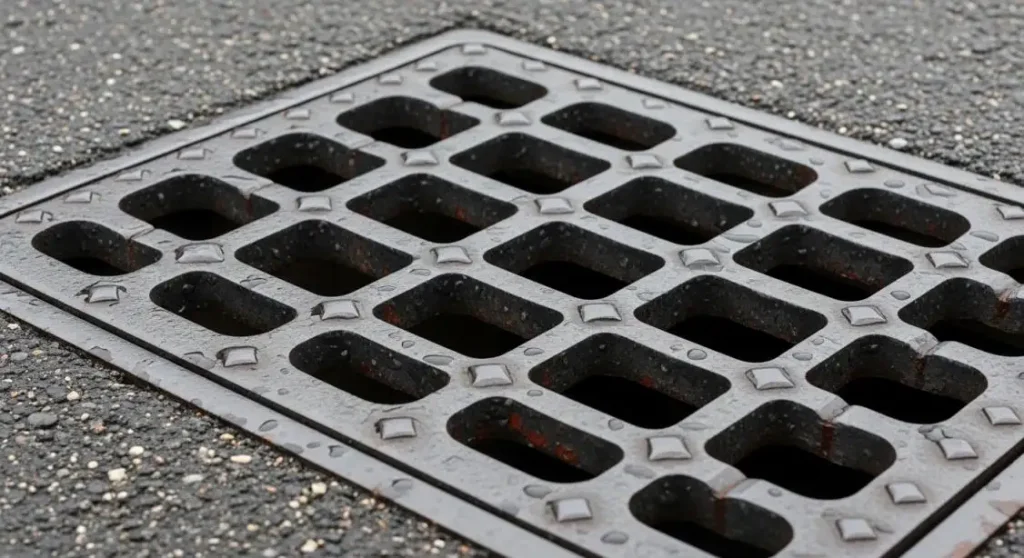
When you specify drainage components for roads, airports, or industrial yards, you face a familiar tension. The grating must survive heavy traffic, aggressive chemicals, and constant moisture exposure—yet it also needs to fit seamlessly into existing channels, allow quick installation, and keep lifecycle costs low. In 2026, as climate patterns intensify and urban renewal budgets tighten, this pressure is greater than ever. The smart solution? A scientifically designed ductile iron grating that turns material science into real-world reliability. Below, we unpack how the right Ductile Iron Grating Manufacturer transforms these challenges into a clear competitive advantage.
Why Ductile Iron? The Structural Edge Explained
Ductile iron is not cast iron. Its nodular graphite microstructure delivers high tensile strength and impact resistance while retaining excellent corrosion tolerance. This makes it the material of choice for heavy-duty drainage, outperforming polymer, steel, and traditional grey iron in real-world loading tests.
•Higher load capacity: Ductile iron withstands repeated shock and vibration without cracking.
•Fatigue life is better: Our alternative maintains integrity after being subjected to millions of wheel passes, unlike brittle alternatives.
•Recyclable and sustainable: 90% ductile iron is reclaimable at the end of life which is compliant to 2026 green procurement policy.
For a ductile iron grating manufacturer such as CMSA, a material foundation such as this is essential. But the real differentiation lies in three applied technologies: anti-rust coating systems, versatile slot geometries, and precision compatibility with international channel standards.
Advanced Anti-Rust Coatings for Severe Environments
There are many kinds of anti-rust coating on the surface of ductile iron grate, which has high anti-rust performance. Yet not all coatings perform equally after five years of salt spray, de-icing chemicals, or industrial runoff. CMSA employs a multi-layer system that actively prevents corrosion initiation at vulnerable points—cut edges, bolt holes, and thread roots.
•Zinc-rich primer layer: Used as a cathodic sacrificial anode to protect primer from corrosion.
•Intermediate epoxy barrier: Stand-alone, blocks water and chloride from transport. Continuous immersion and chloride full submergence.
•Top polyurethane seal: UV, abrasion, and chemical resistant to preserve function and aesthetics.
Using an independent salt spray test with a threshold (B117) of 1,500+ hours without rust, we've shown it to be well above standard (degradation of 1 hour) for coastal towns, chemical plants, and highways in cold areas.
Optimal Slot Widths and Surface Styles
There are optimal slots with various widths and styles that can be tailored to the application, so that bespoke gratings are not required outside the initial design. Designers are offered a selection of engineered solutions that best meet the hydraulic requirement.
•Fine Slot (8–12 mm): rapid transit of water while providing a barrier to debris. Best used in pedestrian and bicycle domains.
•Medium Slot (15–20 mm): Barrier with safety.
•Wide Mesh or Interrupted (25+ mm): Best for applications where unimpeded passage of large .. is required, in the industrial and commercial sector.
The modular style does lend to a complexity of stock and a movement of projects.
Load Class F900 and the EN1433 Standard
The 2026 infrastructure initiatives are placing greater importance for the standard of the EN1433( European standard) drainage system with regulation adherence. A reputable Ductile Iron Grating Manufacturer provides third-party test reports, not just claims.
•F900 rating: Can carry loads greater than 90 tonnes—ideal for runways, seaport container terminals, and access roads to heavy industry.
•Pass/fail criteria: Incorporates some combination of dynamic impact, static load, and residual deflection testing.
•Traceability: All records for certificates of materials and thicknesses of coatings are available by production batches.
We'll help you eliminate site liability with the installation of CMSA® ductile iron grating ratings up to F900. When inspectors come to the site and see the mark of certification, they simply move on. You can be assured that the owners of the project will be very satisfied.
Easy Installation: Locking Mechanisms and Compatibility
More modern drainage systems have specific needs which are no longer met with traditional level grates. They require retention, immunity to vibrations, and the ability to be integrated into existing drainage systems.
•Locking Mechanisms: Offer protection against vacuum suction which poses an accidental risk for raised grates due to rapidly moving vehicles and protects against opportunistic theft.
•Standard width of 122 mm: For easy horizontal replacements with no re-concreting necessary, matching the widths of EN1000, U1000, Z1000 and LZ1000/80 series channels.
Simple cam mechanisms lock sections together.
For construction teams with strict deadlines, this provides forgone labor costs. For engineers, it facilitates repairs or modifications that may need to be done without a crane.
2026 Design & Procurement Trends
Between now and 2026, it is expected that climate change and urban redevelopment will mandate a surge in global drainage system investments. There are three major buying trends with regards to changing value of drainage systems:
•Lifecycle cost analysis (LCCA): Buyers value systems beyond their initial purchase price. LCCA will favor a system with a superior anti-rust costing 15% more if that system provides three times more years than the competition.
•Carbon footprint of the materials: Materials that are mature in the market are less impactful than those systems. CMSA, a leading ductile iron grating manufacturer, can offer Environmental Product Declarations (EPD) when requested.
•Standardization across multiple site procurements: International port and airport operators need to procure units that will be used across multiple international battery systems. This places immense importance on uniformity in grading and coating.
For more information on the most recent EN1433 updates, check out CEN/TC 165. For ductile iron material standards, refer to ISO 1083.
Conclusion
The days of selecting drainage gratings solely on price or basic galvanization are over. Modern infrastructure demands a Ductile Iron Grating Manufacturer that understands corrosion science, hydraulic diversity, load compliance, and installation reality. CMSA's ductile iron grating delivers all four—backed by proven anti-rust systems, F900 certification, and compatibility with the world's most widely used channel profiles.
Whether you are upgrading an airport apron, designing a flood-resilient road network, or standardizing procurement across a port authority, one choice simplifies every downstream decision. Specify CMSA ductile iron grating—and build drainage that lasts.
Request a specification package or F900 test report today. Inform our engineering team of your slot width, class, and conditions for your project.
FAQ: Practical Answers for Engineers & Procurement Teams
Q1: Can ductile iron grates be used in coastal environments?
A: Absolutely! Our ductile iron grates coated with our multiple layer anti-rust coating system have survived over 1500 hours of salt water exposure, making them ideal for use in seaside roads and port area facilities.
Q2: What do you provide to meet the documentation in regard to F900?
A: We provide factory test result documents, 3rd party certifications, and certified documents from the mill for every batch.
Q3: Are special tools required to install the grating?
A: Not at all. Our 122 mm width ductile iron grates fit perfectly in most channel series, and a simple hex key or cam tool can be used to secure the grates with the optional locking system.
Q4: Can you customize slot patterns for unusual debris conditions?
A: Yes. In addition to standard slotted, mesh, and wide-slot styles, we offer custom slot geometries for project-specific hydraulic requirements.
Q5: How do I verify the coating thickness before acceptance?
A: Every grating includes measurable coating thickness records. You can also perform on-site magnetic thickness testing per ISO 2808.


