
High-Performance Maintenance Best Practices to Extend the Life of Hygienic Drainage for Laboratories
From pharmaceutical and biotech labs to diagnostic centres and high-containment facilities, modern laboratories face intense expectations around hygiene and operational precision. Teams monitor every detail to avoid contamination or workflow disruptions. Still, the drainage system - quietly handling everything that leaves the workspace - often remains an afterthought, even though it profoundly shapes daily efficiency. The expectations placed on laboratory infrastructure have changed dramatically.
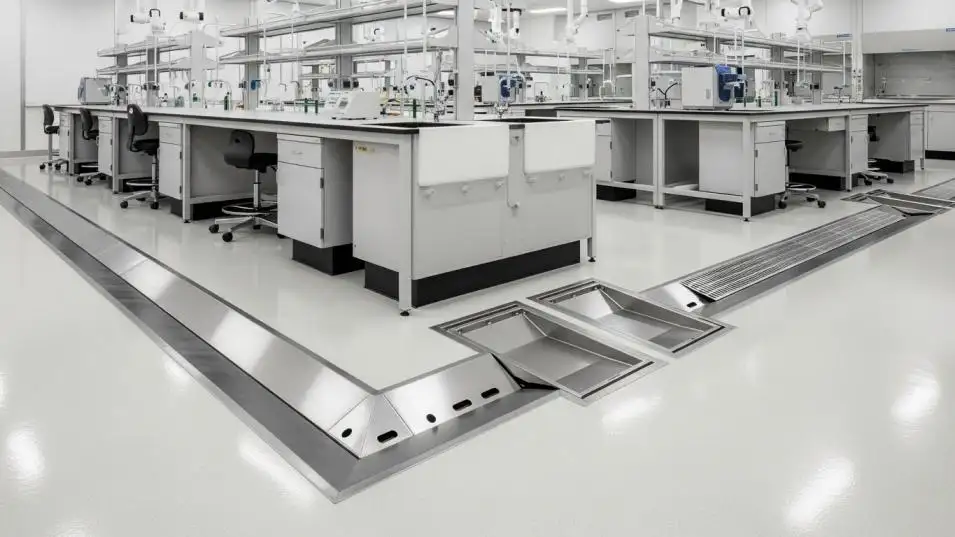
What was once considered an optional upgrade - Hygienic Drainage for Laboratories - has now become an essential part of building design. Research facilities are dealing with tougher waste streams than ever before: hot effluent, corrosive chemicals, disinfectants, biological residues, and complex solvent mixtures. Traditional drainage systems, originally built for ordinary commercial use, simply cannot cope. Failures, contamination risks, and compliance issues inevitably follow. Tightening global standards, from FDA and GMP to ISO cleanroom classifications, have pushed the industry toward more advanced drainage solutions.
What Sets Hygienic Drainage Apart in Laboratories?
A true hygienic drainage system goes beyond basic wastewater transport. It contributes directly to contamination control, supports sterile operations, and withstands the chemical and mechanical stresses typical in laboratories. Engineered for high-performance environments, these drainage solutions pair seamlessly with stringent cleaning regimes, maintain stability under chemical stress, and help eliminate sanitation issues before they escalate into costly disruptions.
Foundational Elements of Hygienic Drainage
Typical design characteristics include:
•Ultra-smooth surfaces to reduce microbial retention.
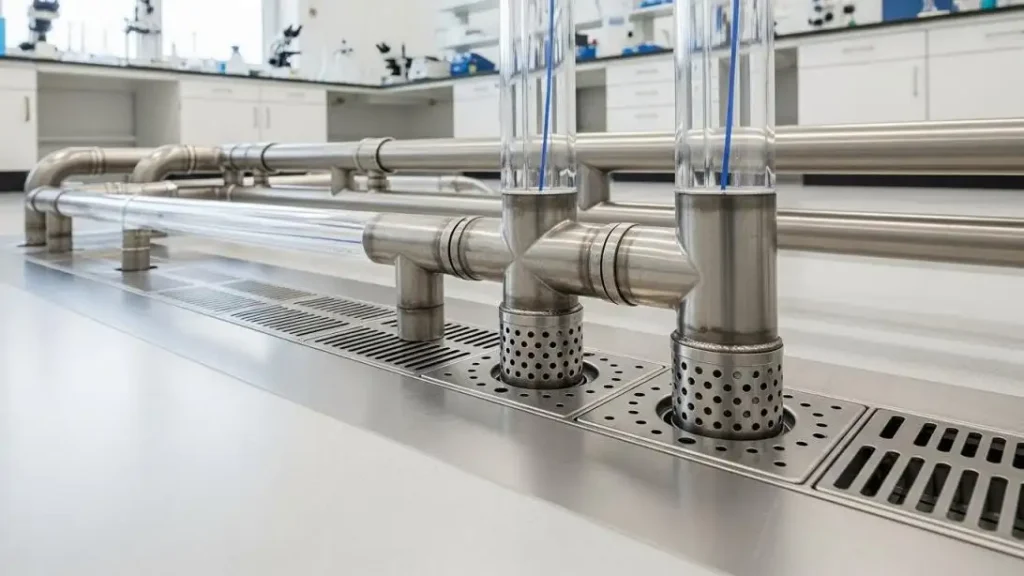
•Continuous welded stainless-steel construction.
•Large internal radii for easy, complete washdown.
•Quick-release strainers and gratings.
•Gas-tight odour seals suited to cleanrooms.
Configurable outlets and connection options reinforce the design versatility of lab drainage system, enabling seamless integration into diverse laboratory architectures.
Such engineered features highlight the distinction between Hygienic Drainage for Laboratories and general-purpose drainage products. Standard drains typically include sharp internal edges, visible fixings, and composite materials that degrade quickly under chemical exposure and thermal fluctuations.
Material Selection for High-Performance Laboratory Drainage
Given the unpredictable and often corrosive nature of laboratory wastewater, drainage materials must be carefully selected to ensure long-term durability and compliance with sanitation standards.
The most widely used materials include:
•316L stainless steel - Offers outstanding corrosion resistance and maintains structural integrity during high-temperature cleaning and sterilisation.
•PP and PE-HD polymers - Resistant to aggressive acids, alkalis, and chemically reactive effluent.
•Coated steels - Designed for environments where strength and heat stability are non-negotiable.
Every material choice influences how well the drainage system endures wear, maintains structure, and preserves hygiene throughout its lifecycle.
Why Hygienic Drainage for Laboratories Is No Longer Optional
1. Stronger Control Over Contamination
Across research and production labs, a single trace of contamination can invalidate experiments, damage valuable batches, or lead to serious compliance issues. Hygienic drainage systems are designed to eliminate hidden niches where residues and biofilms hide. This is especially important in:
•Pharmaceutical cleanrooms
•Microbiology and virology laboratories
•BSL-2 to BSL-4 containment zones
•Areas specialising in sterilisation and aseptic processing
By removing potential microbial harbourage points, these systems reinforce the facility's overall contamination-control strategy.
2. Resistance to Harsh Chemical and Thermal Loads
Laboratories frequently discharge substances that would quickly corrode standard building drains, including:
•Strong disinfectants
•Solvents and reagents
•Concentrated acids and alkalis
•Hot effluent from sterilisation or cleaning
•Steam and thermal cycling
Hygienic drainage systems are purpose-built to withstand these extreme conditions without warping, leaking, cracking, or degrading.
3. Faster and More Effective Cleaning
Sanitation protocols in research and production facilities are demanding. Drainage systems must therefore support efficient, validated cleaning practices. Hygienic drainage offers advantages such as:
•Smooth internal geometries that rinse clean with minimal effort
•Quick-release strainers and gratings
•Compatibility with CIP (clean-in-place) and SIP (sterilise-in-place) systems
•Reduced time spent on manual scrubbing
These features help laboratories maintain reliability while reducing labour effort and operational downtime.
4. Alignment With Global Regulatory Standards
Compliance is a central priority in regulated environments. Hygienic drainage supports regulatory expectations by providing:
•Surfaces that are easy to sanitise and verify
•Gas-tight designs that preserve room pressure programmes
•Features that help maintain zone separations
•Lower contamination risks during inspections and audits
In facilities operating under GMP or ISO classifications, hygienic drainage becomes a structural component of compliance.
5. Durability Designed for Tough Lab Conditions
Lab floors take a beating - heavy carts, autoclaves, and mobile equipment create constant strain. Hygienic drains are built to handle it, with strong construction that resists impact, temperature shifts, and chemical exposure. That means fewer failures and lower long-term costs.
CMSA: Hygienic Drainage Solutions Tailored for Laboratories
Engineered for controlled environments, CMSA's systems provide the durability required in demanding lab settings while incorporating sanitisation-friendly surfaces that streamline cleaning and compliance.
1) Material Choices
Their range includes:
• 316L stainless steel for maximum chemical resistance
• PP and PE-HD for highly corrosive waste
• Coated steel for situations needing specialised thermal or mechanical performance
These materials keep CMSA systems reliable - even in labs with heavy, frequent cleaning cycles.
2) Drainage Configurations
CMSA's product range includes:
• Hygienic floor gullies
• Slimline slot drains
• Channel drains with removable gratings
• Fully welded cleanroom-grade drainage systems
• Each design prioritises uninterrupted flow and easy maintenance access.
3) Applications
CMSA systems are commonly used in:
• Pathogen-handling spaces
• Wet chemistry laboratories
• Pharmaceutical production areas
• High-temperature sanitation rooms
• BSL-2, BSL-3, and BSL-4 environments
Their adaptability makes them suitable for both general research labs and highly specialised facilities.
How to Select the Right Hygienic Drainage System
Choosing the ideal drainage solution requires evaluating the following factors:
1. Check Your Chemical Waste
Know what chemicals go down your drains every day. Strong acids or solvents often call for stainless steel or high-density polymer systems that won't corrode.
2. Make Cleaning Easy
In hygiene-critical spaces, choose drains that include:
•Fully welded construction
•Rounded corners
•Removable strainers
•Clean-friendly gratings
These details keep cleaning fast, reliable, and compliant.
3. Structural Load Considerations
Laboratory floors often support heavy instruments and constant trolley movement. To avoid cracking, bending, or long-term wear, drainage elements need to be matched to appropriate structural load ratings that reflect real-world operating stresses.
4. Hydraulic and Flow Performance
Correct hydraulic sizing is critical to accommodate:
•Scheduled cleaning and washdown flows
•Emergency deluges from safety fixtures
•Process-derived wastewater discharge
•Periodic high-flow cleaning and sanitisation events
Failure to meet required hydraulic capacity may result in overflow, hygiene breaches, and avoidable safety incidents.
5. Odour and Sewer Gas Control
To maintain cleanroom-grade air stability, prioritise drainage components that offer:
•Airtight sealing
•High-efficiency odour traps
•Integrated backflow prevention
These features help prevent contamination and maintain a safe, controlled indoor environment.
Maintenance for Long-Term Hygiene and Reliability
Routine maintenance keeps drainage systems functioning at peak performance. Recommended Maintenance Procedures
To sustain optimal system performance, laboratories should implement routine maintenance tasks such as:
•Cleaning and emptying strainers and baskets
•Flushing channels to remove accumulated material
•Inspecting seals and connected joints
•Replenishing odour traps to maintain air stability
For contamination-sensitive zones, schedule periodic steam or chemical disinfection. Increase cleaning intervals if biofilm presence is detected.
Hygienic Drainage vs. Traditional Drains
When compared to everyday building drains, Hygienic Drainage for Laboratories provides:
• More effective protection against contamination
• Faster, more reliable cleaning processes
• Greater resistance to harsh chemicals and temperature swings
• Better alignment with GMP, FDA, and ISO expectations
• A longer lifespan with fewer unexpected maintenance issues
For laboratories that rely on precision and regulatory compliance, these advantages translate into safer, smoother workflows.
Why Work with CMSA?
CMSA delivers fully engineered drainage solutions tailored to laboratory environments. Their expertise in materials, design, and installation helps ensure regulatory compliance, operational safety, and dependable long-term performance.
For labs that demand robust and dependable Hygienic Drainage for Laboratories, CMSA offers solutions designed to maintain hygiene, enhance workflow efficiency, and ensure the integrity of controlled spaces.


