
How Industrial Wastewater Systems Dominate the Future by Combining Innovative Technology and Engineering Design
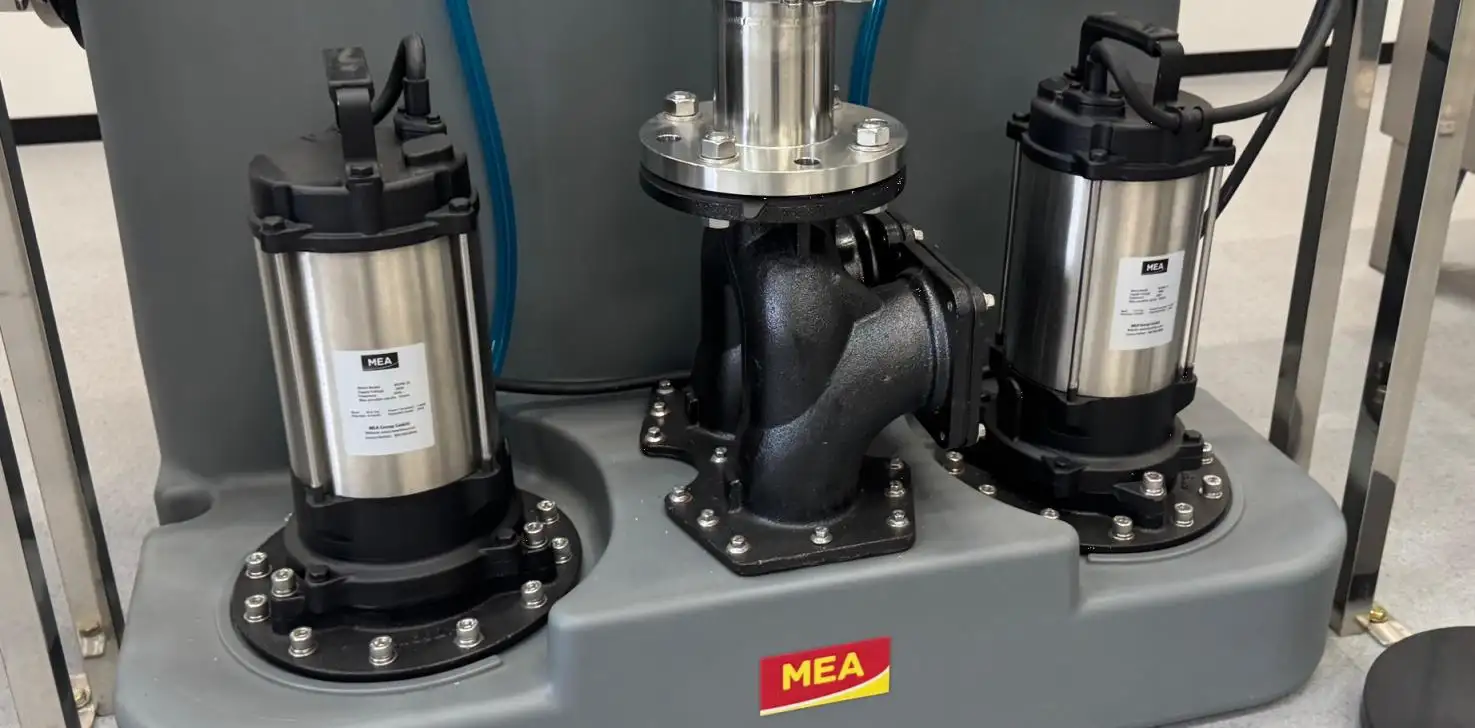
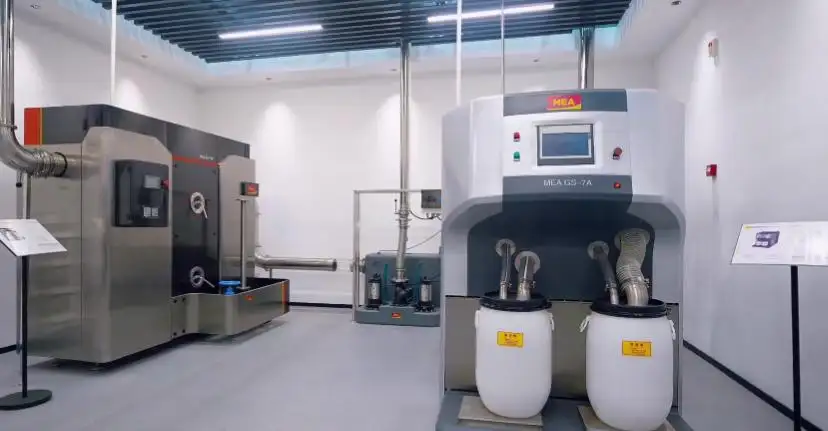
Industrial Wastewater Systems are the quiet backbone of safer buildings. It protects staff, patients, customers, and products by moving water away fast, cleanly, and without leaving a place for germs to grow. In 2026, the stakes are higher than ever. Buildings are denser. Regulations are stricter. And public expectations are clear: hygiene is non-negotiable.

Why Industrial Wastewater Systems Matter In 2026
Water systems can become reservoirs for pathogens if design and maintenance fall short. The World Health Organization reports that at any time, about 7 - 15% of hospitalized patients acquire at least one healthcare-associated infection; waterborne organisms such as Legionella and Pseudomonas are a known part of that risk. Food and beverage plants face similar pressure, with recalls and downtime linked to poor drainage and standing water. In pharmaceuticals, even trace contamination can cause costly batch losses. Good drainage does not eliminate risk on its own, but it removes a major pathway. The payoff is fewer incidents, easier cleaning, and compliance with hygiene programs.
The Basics: How Industrial Wastewater Systems Support and Protect Critical Environments
Industrial Wastewater Systems combine smart geometry, smooth materials, and flow control. The aim is to move water and debris out quickly and prevent biofilm from taking hold. It looks simple from the surface. Under the grate, every detail matters.
- Flow, Slope, And Self-Draining Geometry
• Drains need a consistent fall. A slope of 1 - 2% (1:100 to 1:50) is a common target so water cannot stagnate.
• Channels and pipes should be self-draining. Flat spots create puddles that seed biofilm.
• Trap seals stop odors and sewer gas. In many facilities, a 50 - 75 mm water seal is used to maintain a barrier without frequent dry-out.
• Air gaps and backflow protection prevent reverse contamination during surges or floods.
- Surfaces, Seals, And Biofilm Control
• Smooth, cleanable surfaces reduce microbial attachment. Industry guidelines often target surface roughness at or below Ra 0.8 μm for hygienic design.
• Continuous welds perform better than gaskets in high-risk zones. When seals are needed, closed-cell, food-grade elastomers help.
• Biofilm can establish within 24 - 72 hours in stagnant water. Design should support routine flushing and quick dry-out after cleaning.
Inside A Modern Hygienic Drain System
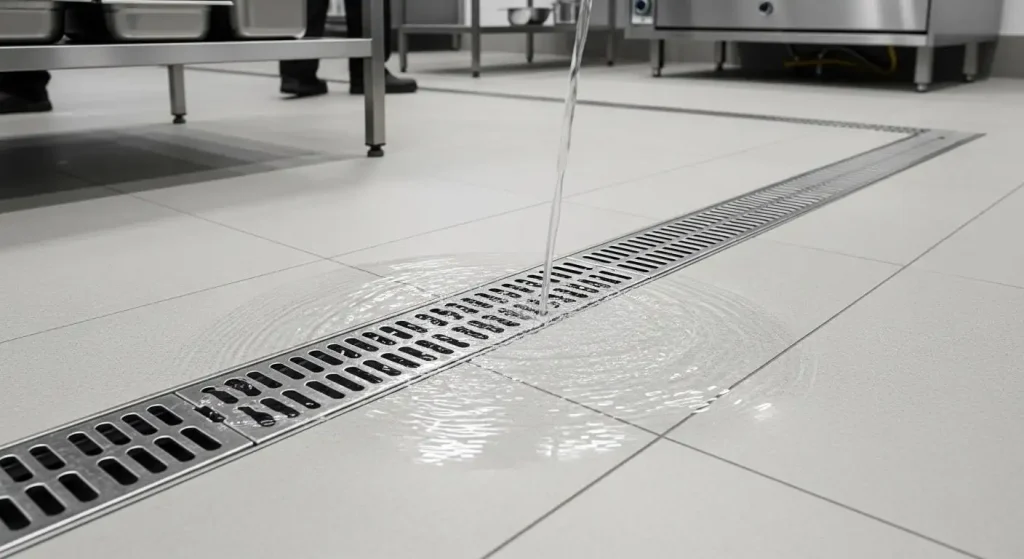
A modern hygienic drain is more than a hole with a grate. It is a small, engineered system designed for speed, safety, and cleanability. Typical features include:
• Fully welded stainless steel construction (304 or 316 for chloride resistance), with radiused internal corners to eliminate dirt traps
• Electropolished, low-roughness surfaces that release soils faster and cut cleaning time
• Built-in fall along the channel so water accelerates toward the outlet
• Removable strainers and baskets to catch solids before they enter pipes
• Odor traps that can be lifted out for inspection and sanitization
• Load-rated gratings with anti-slip patterns for wet process areas
• Adjustable legs and flanges for precise set-out and watertight integration with floors
Flow capacity depends on grate type and head, but floor outlets in hygiene-critical areas often handle around 1 - 6 L/s per point. In washdown zones, long channels distribute flow across multiple outlets to avoid pooling. The right size is the one that evacuates peak water in under a minute and leaves no standing film. Industrial Wastewater Systems aren’t just about function, they’re about smart placement. Positioned near process lines, beneath hose stations, and at room transitions where water naturally flows, they keep operations safe and efficient.
Designing for Risk: Sectors, Standards, and Choices
Because no two environments are alike, Industrial Wastewater Systems are never one-size-fits-all. A hospital ICU, a cheese room, and a tablet-coating suite each face unique hazards and therefore require tailored solutions. Yet the design principles repeat: avoid stagnation, simplify cleaning, separate clean and dirty flows, and protect from backflow.
Sector guidance helps. Organizations such as EHEDG and 3-A set hygienic design expectations for food, dairy, and equipment. In pharma, cleanable surfaces and drain segregation support Good Manufacturing Practice. Rather than chasing every rule, anchor your design to risk.
Wet-clean rooms and hose-down areas need continuous fall and channel drains. Dry-clean spaces favor sealed point drains designed for easy cleaning to keep humidity in check. In healthcare, isolation rooms benefit from closed, trap-sealed drains that enable quick inspection and routine flush programs. Always connect design to validation: verify flow, verify cleanability, and document the outcome.
- Food, Healthcare, And Pharma Priorities
• Food: Fast removal of washdown water, slip resistance, and clean-in-place support. Choose 316 stainless in brine or acidic zones.
• Healthcare: Odor control, aerosol reduction during cleaning, and trap management to avoid dry-out.
• Pharma: Segregated drains between clean and dirty corridors, electropolished interiors, and low-turbulence outfalls to limit aerosol.
Operations: Cleaning, Monitoring, and Reliability
Even the best drain fails without care. Build simple routines. Schedule daily debris removal and visual checks. Use low-foaming, food-grade detergents and compatible disinfectants.
• Thermal shock has limits; hot water above 60°C can aid sanitation, but match it to floor and seal ratings. Consider periodic enzymatic cleaners to break down biofilm in high-risk zones.
• Monitoring is getting easier. Some teams sample ATP on grates and channels to check cleaning efficacy. Others track water temperature and flow events with small IoT sensors to spot stagnation and predict trap dry-out.
• Reliability also means resilience. Select materials that tolerate your chemicals and temperatures. If you run caustic or oxidizing agents, confirm steel grade and surface finish. Simple, robust parts reduce unplanned downtime and speed audits.
Modular Solutions From CMSA: Built for Hygiene and Speed
To fit diverse sites, CMSA offers a modular hygienic range with standardized and customizable components. You can assemble straight runs, corners, outlets, and box channels to match room geometry with minimal cutting. Typical modules cover lengths from about 500 mm up to around 1000 mm, with channel heights near 50 - 92 mm, so you can balance capacity with floor build-up. For compact floor drains, square plates around 168 × 168 mm integrate neatly into constrained zones like prep stations and dish areas.
What this means for you:
• Shorter install times with fewer trades on site
• Cleaner lines, fewer joints, and minimized leak risk
• Configurable layouts that adapt to equipment shifts
• Straightforward maintenance via accessible outlets and covers
Precision design raises operational performance. Large internal corner radii accelerate drainage and improve cleaning tool efficiency. Leak-proof seals protect substrates and insulation layers. Anti-slip covers heighten safety during washdowns, letting teams clean without pausing production. Put simply, the system reduces downtime and the cost of hygiene.
Design, BIM, and Installation Support From CMSA
Choosing and installing Industrial Wastewater Systems may be technical, but it doesn’t have to be complicated. CMSA works with you every step of the way to minimize delivery risks, from concept through to handover.
• Drainage engineering using professional hydraulic software, plus clear documentation
• Product selection calibrated to project type, load ratings, and hygiene criteria
• Detailed layouts and CAD drawings with recommended slopes
• Complete BIM assets so coordination can start early
• On-site training for installers before work starts
• Regular quality audits and site inspections
• Support for inspection and acceptance at project completion
All of which saves time. It prevents layout clashes. It verifies capacity against peak flows, such as CIP discharge or line washdowns. Most importantly, it lets your facility run safely, with documented compliance and predictable maintenance.
Call to Action: Ready to upgrade? Book a 30-minute site walk-through with our hygienic design team. We will map your risk points, size your Industrial Wastewater Systems, and deliver a specification pack with drawings, cleaning SOPs, and a maintenance schedule. Prefer to trial first? Request a sample channel section and our Hygienic Drainage Design Checklist.
FAQ
Q: What makes a drain "hygienic" instead of "industrial"?
A: Hygienic drains are built for cleanability. They have smooth, radiused interiors, continuous welds, removable baskets and traps, and self-draining geometry. Materials and finishes resist corrosion and release soils faster.
Q: Do I need 316 stainless everywhere?
A: Not always. Use 316 in chloride-rich or acidic areas (brine, marinades, some cleaners). In neutral, low-chloride environments, 304 can perform well. Match grade to chemistry and temperature.
Q: How do I stop biofilm in drains?
A: Prevent stagnation by design, keep surfaces smooth, and clean at defined intervals. Flush lightly used drains. Use detergents and disinfectants that won't damage materials. Validate with routine swabs or ATP monitoring.
Q: How often is it best practice to inspect traps?
A: In busy zones, daily visual checks for debris and water seal are common. In low-use areas, add scheduled flushing to prevent dry-out and odor.
Q: What capacity should I specify?
A: Start with your peak washdown or spill rate. Many hygienic floor outlets handle about 1 - 6 L/s each. Combine channels and outlets to clear water quickly, and test during commissioning.
Safer infrastructure starts at the floor. Industrial Wastewater Systems are a small change with a big impact - cleaner spaces, fewer incidents, and smoother operations.


