
Polymer Concrete Drainage for Construction Projects: Benefits and Uses

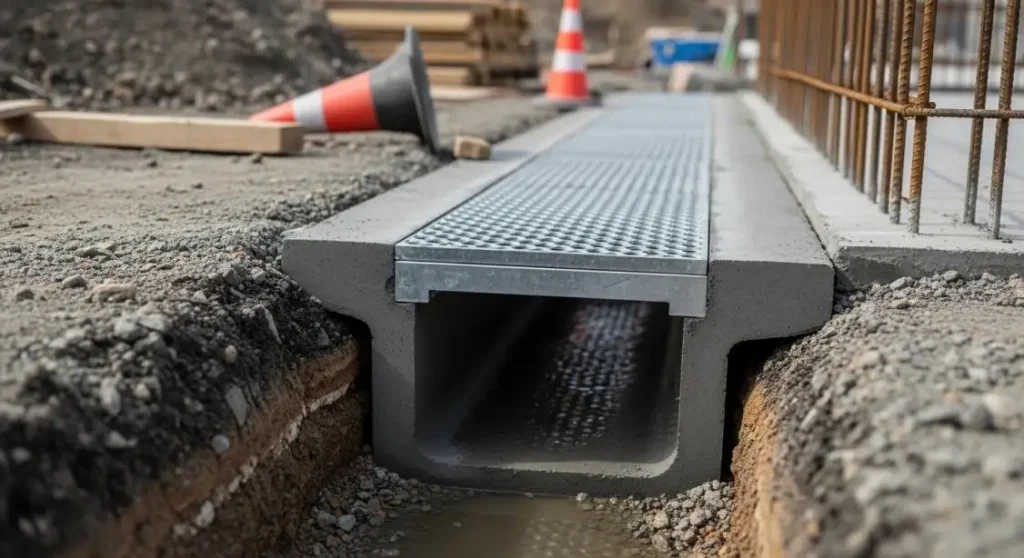
Polymer concrete drainage systems have gained greater importance in 2026 as buyers, specifiers, and contractors place more emphasis on hydraulic efficiency, construction productivity, environmental responsibility, and long-term system reliability. At CMSA, we see growing interest in solutions that offer value beyond the initial purchase cost. They now evaluate load resistance, flow stability, maintenance demands, and installation efficiency, making Polymer Concrete Drainage for Construction Projects a more strategic choice for heavy-duty infrastructure.
Why 2026 Projects Demand Better Drainage Design
In 2026, drainage design for transport and industrial infrastructure is shaped by several practical requirements. Water must be removed quickly, structural elements must remain protected, and the drainage channel itself must continue performing under difficult service conditions.
Current project priorities often include:
• Higher resistance to concentrated and repeated wheel loads
• Faster surface runoff control during intense rainfall events
• Lower risk of sediment accumulation within the channel body
• Greater resistance to corrosion and chemical exposure
• Improved protection for adjacent soil and groundwater
• More efficient installation planning for large-scale works
These requirements are especially important in airports, freight yards, logistics hubs, container terminals, and loading platforms. In these applications, surface water management is closely linked to more than drainage alone. It can play a role in vehicle safety, pavement service life, smooth operational performance, and the timing of repair or maintenance work. Consequently, buyers now expect drainage systems to offer greater overall project value instead of fulfilling only a basic drainage task.
This is one of the main reasons Polymer Concrete Drainage for Construction Projects continues to draw increased market focus. It addresses both structural and hydraulic requirements in a way that aligns with current infrastructure expectations.
How CMSA Evaluates Modern Drainage Performance
At CMSA, we believe professional buyers compare drainage systems by functional value rather than by material category alone. A channel system has to support the structure around it, keep the flow steady, and stay safe even when things get tough.
A common heavy-duty configuration on the market uses the following size system:
• Opening width: 300 mm
• Total width: 354 mm
• Total height: 490 mm
• Standard channel length: 1000 mm
These sizes are more than just information about the product. They affect how well the layout works together, how well the transportation plan works, how well the installation sequence works, and how easy it will be to replace in the future. Standardized modular sections can be very helpful for large projects because they help organize the site better and make it easier for the drainage system to work together.
At the same time, it is still important to classify loads. Systems that are built to EN 1433, Class F900, Type M are made for very tough environments, like places where planes take off and land and places where containers are stored. For buyers, this classification provides a stronger basis for technical selection where structural failure, instability, or premature damage would carry significant consequences.
Practical Advantages Of Polymer Concrete Drainage for Construction Projects
The technical value of Polymer Concrete Drainage for Construction Projects becomes more meaningful when each product feature is translated into a direct site benefit. Buyers do not invest in specifications for their own sake. They invest in risk reduction, service reliability, and easier operation over time.
Key advantages include:
• Lightweight Structural Composition
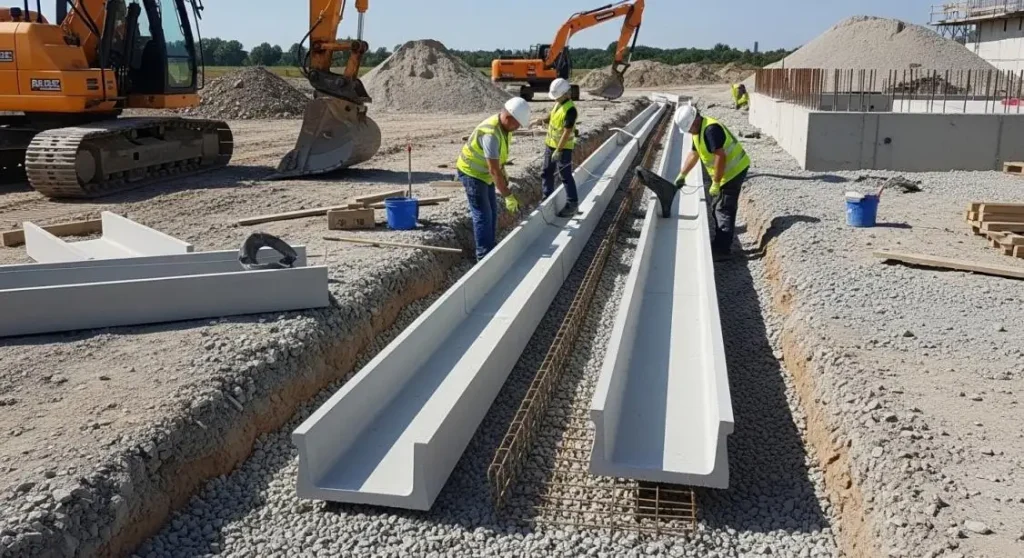
Compared with many conventional heavy concrete alternatives, polymer concrete channels are generally easier to handle during transport and placement. This can enhance installation productivity, lower handling demands, and support a more orderly workflow on site.
• Smooth Internal Surface
The smooth inner wall supports efficient water movement through the channel while helping prevent debris from remaining inside. For operators, this contributes to more dependable long-term flow conditions and lower cleaning frequency.
• Chemical And Corrosion Resistance
In demanding settings such as airports, ports, and industrial sites, drainage systems may come into contact with de-icing materials, fuel residue, polluted runoff, and other corrosive substances. Polymer concrete is well suited to these conditions and helps maintain structural integrity over the service life.
• High Load Capacity
When fitted with ductile iron gratings and robust fixing details, the channel system can perform consistently in environments subject to substantial dynamic traffic stress. This is particularly important in areas subject to braking forces, vibration, turning movements, and repeated wheel loads.
• Watertight System Integrity
The sealed body design helps minimize leakage into adjacent ground conditions and supports more dependable long-term drainage performance. In environmentally sensitive applications, this also helps protect groundwater and meet stricter regulatory or project compliance demands.
Why CMSA Offers Benefits Over Conventional Drainage Approaches
Conventional drainage systems still have value, yet they may come with compromises that are less suitable for today’s heavy-duty construction environments. Traditional concrete channels, in particular, can be difficult to install because their weight increases handling demands on site. Some metal-based alternatives may corrode more easily in environments with harsh chemicals. Channels with rougher inner surfaces may also contribute to slower water flow and increased sediment accumulation over time. Compared with these options, CMSA promotes Polymer Concrete Drainage for Construction Projects as a more advanced solution for high-demand sites, since the material and overall system design deliver broader practical value.
For buyers, these benefits may include:
• Faster installation coordination on site
• Lower handling burden during channel placement
• More stable hydraulic performance over the service life
• Better resistance to harsh operational exposure
• Reduced maintenance pressure caused by internal buildup
• Higher confidence in heavy-load applications
• Stronger compatibility with current infrastructure standards
The advantage is therefore not limited to the channel body itself. It extends to construction efficiency, operational reliability, and long-term asset protection.
Where Polymer Concrete Drainage Delivers the Greatest Value
Not all projects require the same drainage specification. However, Polymer Concrete Drainage for Construction Projects is particularly well suited to environments where drainage failure would affect safety, operations, or maintenance planning.
Representative applications include:
• Airport aprons and taxiway drainage locations
• Seaport facilities and container handling terminals
• Heavy logistics hubs and freight movement corridors
• Loading platforms and industrial transfer areas
• Transport infrastructure exposed to demanding service conditions
For these projects, drainage is required to do far more than channel surface water away. It must assist with vehicle safety, help safeguard nearby pavement structures, minimize operational interruption, and perform consistently under repeated use. Consequently, buyers in these industries are increasingly reviewing drainage from a long-term engineering and asset protection perspective.
A Stronger Choice For Long-Term Infrastructure Performance
At CMSA, we view drainage selection as a technical decision with direct implications for project durability and operating value. Polymer Concrete Drainage for Construction Projects offers a clear response to the needs of 2026 because it combines structural strength, hydraulic efficiency, corrosion resistance, environmental protection, and installation practicality within one integrated solution.
A drainage system that meets F900 load standards, adopts 1000 mm modular sections, enhances flow efficiency through smooth interior surfaces, and safeguards surrounding ground conditions through a sealed channel body creates benefits beyond immediate runoff control. It can strengthen the long-term service value of the overall project.
For buyers planning airports, logistics centers, ports, and similar high-load developments, reviewing drainage specifications in greater detail is increasingly important. Contact CMSA to discuss application needs, loading requirements, and channel options, and to select a drainage solution that supports safer infrastructure and consistent long-term performance.


