
Stainless Steel Drains Manufacturers Delivering Global Standards and FDA Compliance

The story of 2026 in hygienic infrastructure is simple: clean faster, install smarter, and prove performance over the long haul. From food and beverage plants to pharmaceutical suites and high-output kitchens, drainage has moved from a back-of-house detail to a frontline hygiene system. Leading Stainless Steel Drains Manufacturers are answering with designs that accelerate sanitation, minimize downtime, and stand up to audits without drama.
Why Drains Matter in Hygiene-Critical Facilities
A drain is more than a hole in the floor. It is a controlled pathway that collects, conveys, and removes water and cleaning fluids so operations remain safe and compliant. In production spaces, that function carries real consequences: fewer slip hazards, less cross-contamination risk, and faster returns to service after washdown. The right system is durable under heat and impact, simple to sanitize, and robust against chemicals. Increasingly, it also documents its own performance to streamline inspections and meet audit requirements.
Understanding Point Drains and Linear Channels
Most layouts use two families of fixtures:
- Point drains concentrate flow to a single inlet. They suit small rooms, localized washdown, or spaces that can be easily pitched toward a central point.
- Linear channels capture water along their length and move it to one or more outlets. They can run beside production lines, across thresholds, or along walls, making them ideal when floor slopes must be shallow or interrupted.
Neither option is just about capacity. Good drainage eliminates ponding, avoids debris traps, and provides a safe walking surface. In a lean plant, every minute saved during cleaning adds up to more hours of production.
Material Choices: Strengths and Trade-Offs
Different materials can convey water; not all excel in clean environments.
- Plastics (like PVC) are light and cost-effective, suitable for light-duty or low-temperature zones. Under hot washdowns or heavy carts, they deform or age prematurely.
- Polymer concrete thrives outdoors and in civil works thanks to chemical resistance. Indoors, its surface finish and cleanability lag behind true hygienic solutions.
- Galvanized steel is affordable up front but depends on a coating that degrades with repeated hot cleaning, exposing base metal and inviting corrosion.
- Cast iron is rugged yet heavy, harder to handle in fast-track builds, and prone to corrosion in aggressive wash cycles.
Stainless steel sits apart. Its strength-to-weight ratio, corrosion resistance, and smooth, stable surfaces make it the benchmark for hygiene-led design - a fact that the top Stainless Steel Drains Manufacturers incorporate into every product family.
Why Stainless Steel Sets the Standard
Grades 304 and 316L dominate in food, beverage, pharma, and clean manufacturing because they resist heat and chemicals, tolerate detergents, and are easy to sanitize. Grade 304 handles most kitchens and wet rooms with confidence. Where chlorides, brines, or aggressive cleaners are present, 316L's superior pitting resistance protects service life.
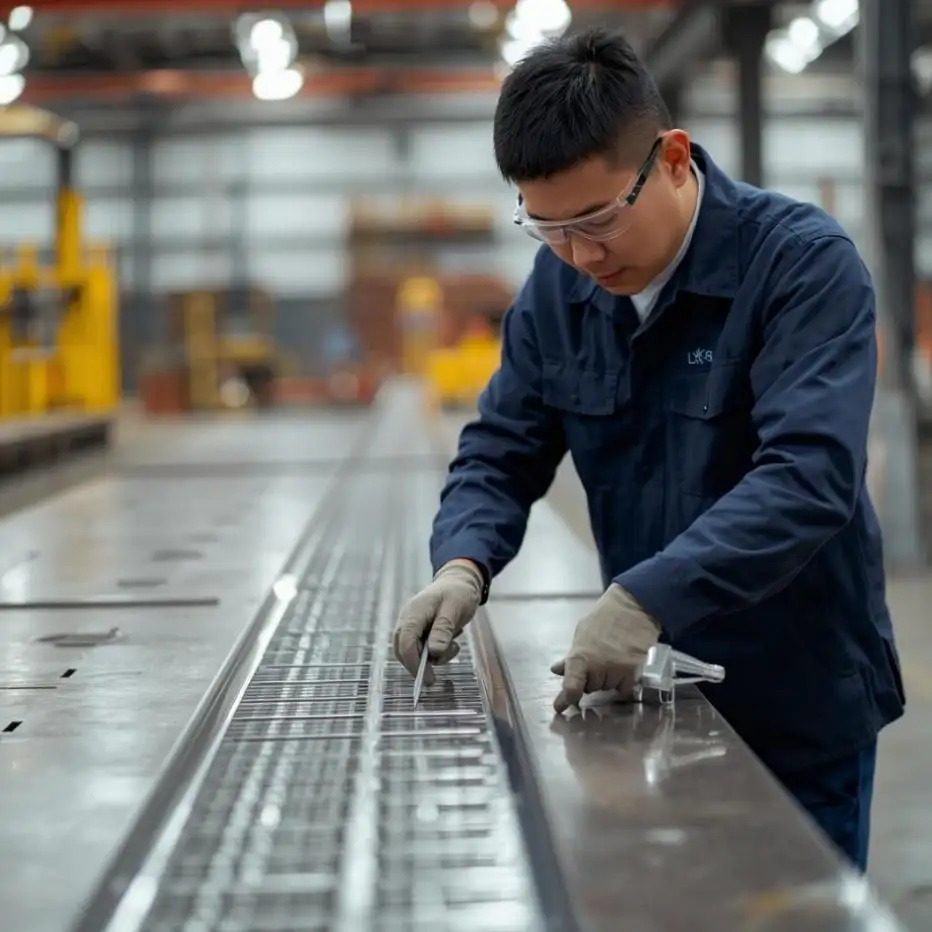
Stainless steel also enables hygienic geometry. Fabricators can deliver continuous welds, smooth internal radii that discourage buildup, and stable, coating-free surfaces that will not flake under heat. Compared with plastics, stainless carries higher loads and remains dimensionally stable under temperature swings. At end of life, it can be completely recycled - strengthening sustainability while preserving durability.
2026 Priorities from Best-in-Class Stainless Steel Drain Suppliers
Industry-wide, briefs for new builds are converging: minimize pathogen traps, simplify cleaning, and lower installation risk.
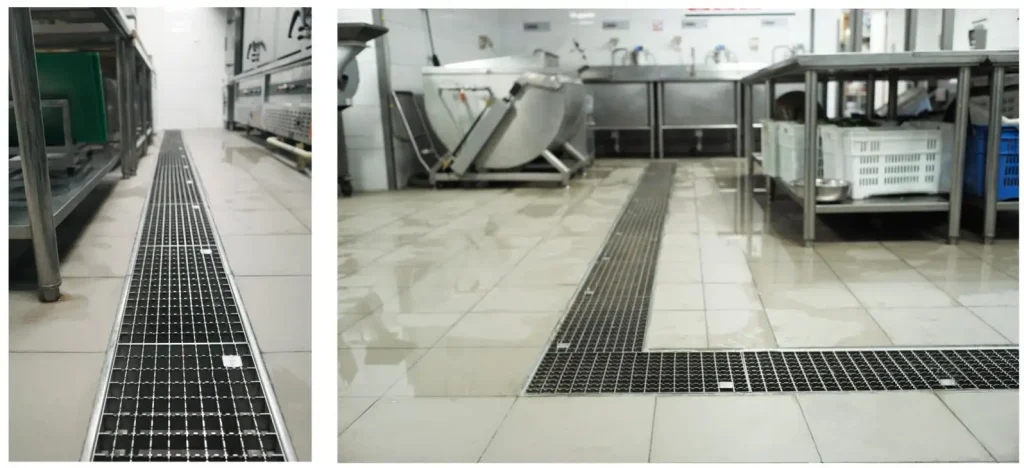
- Hygienic Flow Geometry: V-shaped or sloped channels that sustain flow, keeping residues from settling and reducing sanitation time.
- Modular, Leak-Tight Systems: Standard modules - corners, channels, and floor drains - using engineered seals to speed installation and curb rework.
- Safer Walking Surfaces: Slip-resistant grating designs that add traction without clogging, verified to EN 16165.
- BIM-Ready Coordination: Comprehensive digital models, clash detection assistance, and clear technical documentation to accelerate design.
- Configurable Fit: Custom lengths, widths, and outlet positions to match real floor falls and plant constraints without long lead times.
- Lifecycle Sustainability: Recyclable metals, robust construction, and designs that lower water, chemical, and labor use over years of service.
These shifts reflect a practical metric: cleanability is measured by how quickly you can sanitize and restart lines - without sacrificing safety or documentation.
CMSA + MEA: European Engineering With Local Delivery
Founded in 2000, CMSA is a fast-growing manufacturer and solutions partner for engineered construction products. Our international reach and local presence ensure seamless support from early design to commissioning. We proudly act as MEA hygienic stainless steel drainage's exclusive distributor in Southeast Asia. Established in 1886 and headquartered in Aichach, Bavaria, MEA brings more than 130 years of drainage and grating expertise. Together, we combine proven European engineering with regional stock, training, and support - so specifiers get compliant, high-performance systems backed by on-the-ground service.
Hygienic Modular System, Built for Outcomes
CMSA's system covers linear and box channels, corner pieces, and point drains tailored for food processing, breweries, bottling and canning, chemical and pharmaceutical zones, and commercial kitchens. Practical lengths cover 500 - 1000 mm, while profiles are commonly 50 - 91.5 mm to fit shallow construction. Choose center or end outlet configurations to suit your slope design and service layout. Core components are supplied in 304 or 316L stainless steel aligned to chemical exposure.
What You Gain With Our System
- Faster Cleaning, Shorter Downtime: Smooth internal radii and V-bottoms support self-scouring flow and reduce sanitation windows.
- Lower Leak Risk: Leak-tight construction with expansion compatibility that tolerates floor movement without compromising seals.
- Safer Floors: Slip-resistant gratings that provide dependable traction while avoiding dirt traps, validated by EN16165.
- Proven Compliance: CE marking and EN1253 performance to meet specifications and simplify audits.
- Quick, Clean Installation: Drop-in modular components and weld-free connections accelerate installation and help prevent contamination.
- End-To-End Support: Comprehensive support - hydraulic calculations, layouts, BIM content, on-site training, inspections, and acceptance - delivered by one team.
In everyday terms, that means a bottling hall that clears surface water in minutes, not hours; a pharma suite whose drains tolerate repeated hot disinfectant cycles without pitting; and a busy kitchen where staff get safer footing and simpler routines at the end of each shift.
How We Collaborate From Concept to Commissioning
Every facility has its own constraints. We begin with your flow rates, hygiene objectives, and maintenance strategy. Our engineers model performance in professional software and produce hydraulic calculation reports for transparency. From material grade (304 or 316L) to channel dimensions and outlet placement, we make decisions together and anchor them to floor falls and equipment footprints. Our BIM content improves clash detection and multi-trade coordination. Before installation, we train your contractors on best practices. During works, we carry out regular inspections and support quality checks through handover - so the system performs on day one and keeps doing so through the audit cycle.
FAQ: Specs, Standards, and Selection
- Which Grade Should I Choose - 304 Or 316L?
304 suits most kitchens and wet areas. 316L is the right choice near brines, salts, or aggressive cleaning chemistries - resisting pitting and extending service life.
- What Certifications Matter For Audits?
Seek CE marking, EN1253 for drainage performance, and EN16165 for slip resistance. These benchmarks help confirm hygiene, durability, and safety.
- Where Are These Systems Used?
Food processing lines, breweries, bottling/canning, chemical and pharmaceutical production, and commercial kitchens - where heat, cleaning agents, and hygiene standards are rigorous.
- Are Dimensions Customizable?
Yes. Our modular range offers practical lengths in the 500 - 1000 mm span, low profiles typically 50 - 91.5 mm, and configurable outlets tailored to your layout.
- Why This Matters For Stainless Steel Drains Manufacturers?
As compliance pressures rise and teams stay lean, success favors those who simplify sanitation, validate performance with hard data, and cut total cost of ownership. Specifiers and plant executives can accelerate delivery by partnering with established Stainless Steel Drains Manufacturers for compliant, resilient, and maintainable floors that keep lines running.
Next Steps: Plan Your 2026 Upgrade
New hygienic build or retrofit of legacy drainage? Contact CMSA to confirm layouts, receive a compliant specification pack, and tap BIM deliverables. We'll apply proven Stainless Steel Drains Manufacturers best practices - solutions that are cleaner, safer, and quicker to install, audit-ready now and in the future.


