
Environmentally Friendly Hygienic Drainage Systems: Integration, Design and Lifecycle Performance

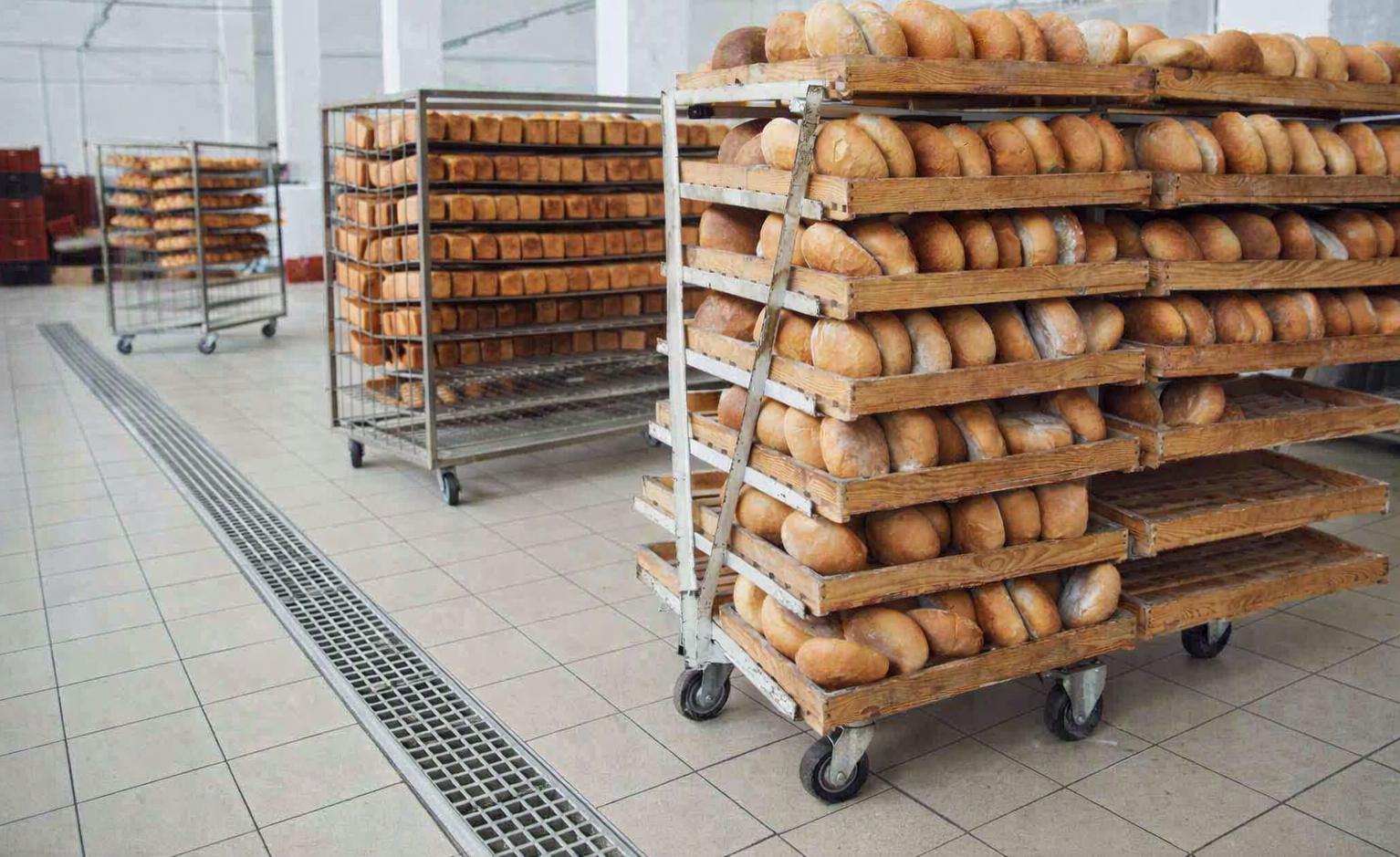
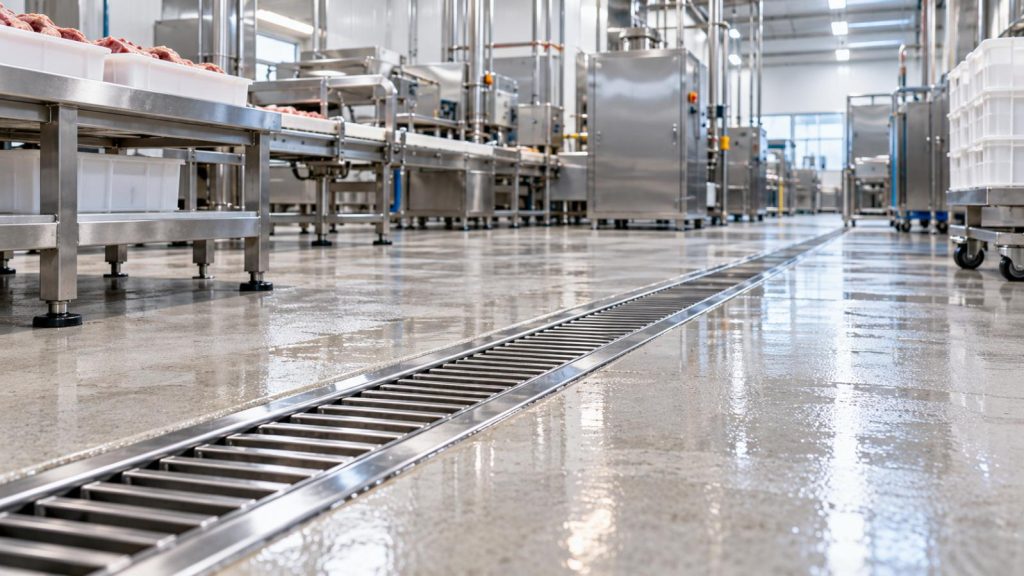
Environmentally friendly hygienic drainage systems must do more than collect floor washdown water. In food processing, beverage production, and commercial kitchens, an undersized channel, inaccessible trap, or poorly sealed floor junction can increase residue retention, cleaning effort, and maintenance requirements.
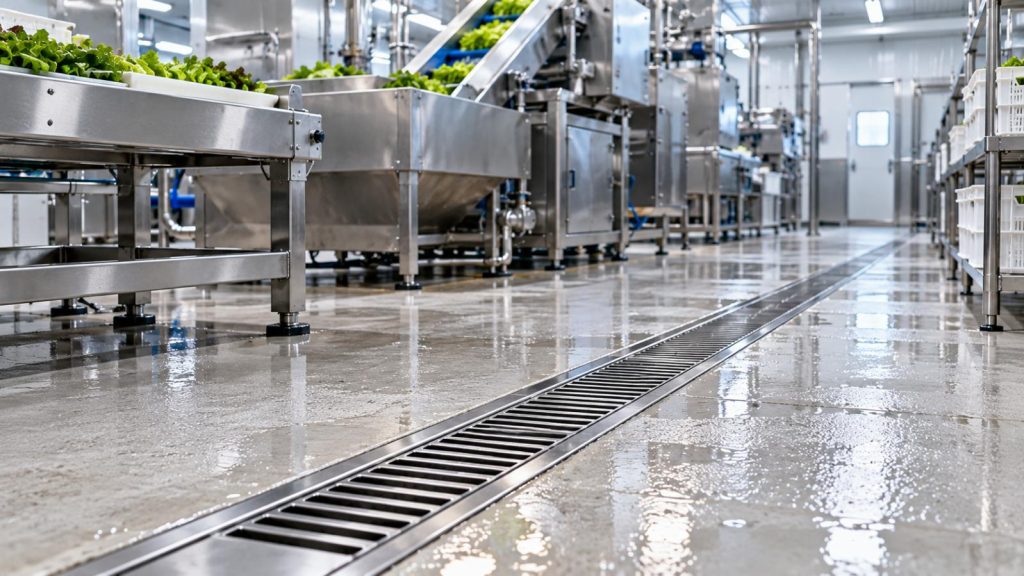
At CMSA, our team starts drainage assessment with actual discharge conditions and not with product specifications.
What Makes Hygienic Drainage Sustainable?
Hygienic drainage systems prevent pooling, and provide surfaces that are accessible for inspection. These systems should also be capable of withstanding repeated chemical cleaning. Environmental sustainability hinges on whether the systems minimize unnecessary cleaning, replacement of materials, and routine maintenance.
The MEA hygienic drainage systems employ the use of 304/316L stainless steel, and fully sealed assemblies and removable components. The key design features are as follows:
• Internal corner radii of 3 mm or greater which eliminate sharp recesses that can harbor biofilms.
• A bottom radius of 10 mm, which provides a surface for cleaning and helps contain any debris.
• A V-shaped drain channel, which helps funnel flow to the drain outlet.
• Passivation and electropolishing, which aid in increased surface cleanability.
• Removable traps and gratings, which aids in inspection of the drainage system.
Additional design features do improve the operation of the drainage system but providing evidence for water or carbon savings requires additional data.
Material and Drainage System Selection
Sustainable drainage systems integrate design features that address chloride exposure, sanitation chemicals, operating temperatures, mechanical loads and collection of wastewater.
Comparing Drainage Materials and Designs
| Design Option | Technical Consideration | Selection Guidance |
| 304 vs. 316L stainless steel | 316L has improved resistance to chloride-induced pitting | Consider the frequency and temperature of the washdown, as well as the chemical concentration. |
| Stainless steel vs. concrete | Different corrosion, joint integrity, and cleanability issues | Consider hygiene and repairs. |
| Point drains vs. linear channels | Localized vs. continuous drainage | Consider the slope of the floor and the layout of the equipment. |
| Modular vs. site-built channels | Standardized vs. flexible construction | Consider shutdown and installation constraints. |
Neither stainless steel grade is universally corrosion-proof. Materials must be assessed against the actual wastewater and the type and frequency of cleaning.
Organic solids interception may be of high importance in food processing, while grease pretreatment may be a higher concern for commercial kitchens. Hygienic zoning and contamination control may be of high concern for a pharmaceutical processing facility.
Desinging Drainage Systems to Accomodate Peak Demand
When it comes to eco-friendly systems, the design must factor in peak demand rather than average wastewater flow.
At CMSA, we recommend assessing four integrated factors:
• Peak flow: Estimate realistic peak overlapping discharges, e.g. from hose stations, equipment washing, tank emptying and CIP operations.
• Channel gradient: Assess potential flow and/or residual standing water, and sediment transport during low flow conditions.
• Outlet capacity: Ensure there are no restriction in the pipe work or outlets, and that the water seals are functional.
• Solid loading: Choose an accessible filter, and establish cleaning intervals based on the actual characteristics of the wastewater.
A channel which is oversized cannot compensate for an undersized outlet. The odor in a drain may be due to an inadequate water seal, retained organic material, or insufficient ventilation of the downstream piping rather than the channel material.
If grease separation is required, the pretreatment equipment must be designed to remove grease based on the characteristics of the expected wastewater and local discharge regulations.
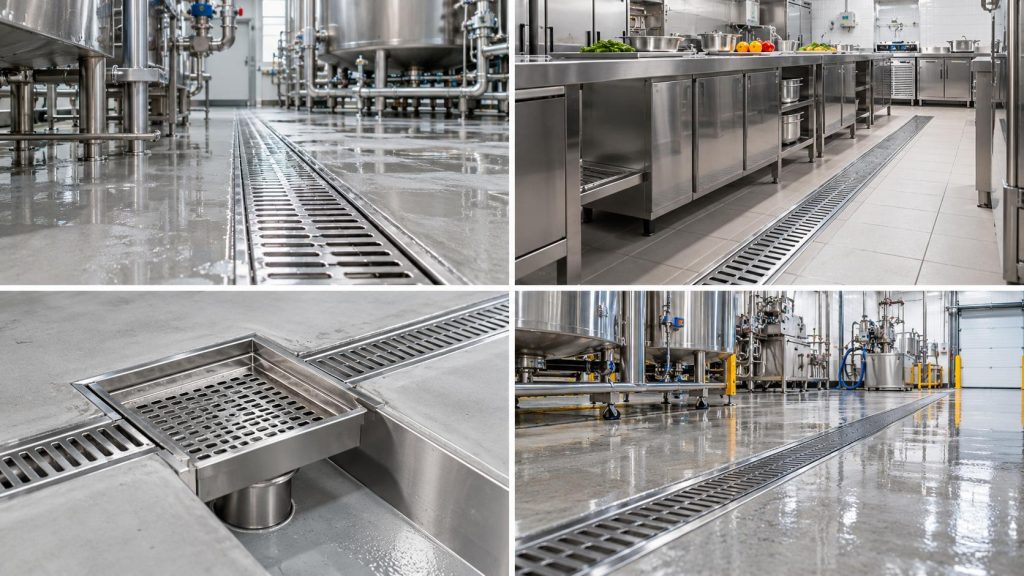
Drainage Systems in Existing Buildings
Integrating a new eco-friendly hygienic drainage system in an existing facility requires consideration of the existing finished floor level, slab thickness, water-proofing, outlet invert levels and production traffic.
CMSA Product Dimensions and Engineering Coordination
Our MEA Hygienic Channel Unit (MBC125.100.60B.L) has the following dimensions:
| Parameter | Specification |
| Channel Length | 1,000 mm |
| Channel widths (W1/W2/W3) | 153/97/125 mm |
| Channel heights (H1/H2) | 81.5/60 mm |
| Sheet thickness | 1.5 mm |
| Materials options | 304/316L stainless steel |
These define the nominal dimensions of the product and do not reflect the manufacturing tolerances.
Prior to purchasing fabricated products, engineers should verify the following:
• Dimensional tolerances and the straightness of channels.
• Position and type of outlets and connections.
• The thickness of sheet metal, joint construction, and surface finish.
• The capacity of gratings to support loads, and arrangements to support gratings.
Any inspection records for the project.
Installation and Commissioning
Interfaces between floors should be detailed to ensure continuity of waterproofing, and to prevent moisture migration to the sub floor.
- Account for the loading of the floor structure including the potential for support movement and the loading of equipment and materials.
- If the floor contains Drainage ways, ensure that these are protected, and the drainage systems are connected, during any required shutdowns.
- Residual water, leakage at joints, and overall performance of the system should be evaluated during commissioning.
- Modular construction does reduce on-site fabrication, however, alignment and water-tight connections are still required.
Hygiene Compliance and Environmental Performance Verification
Compliance with environmental and hygiene requirements is confirmed by performance verification.
Standards and guidance related to the subject include the following:
• EN 1253: Applicable requirements for building drains.
• EN 16165: Test methods for slip resistance of pedestrian surfaces.
• EN 1825: Requirements for application of grease separators.
• EHEDG guidance: Hygienic design principles for contamination control and cleanability.
Product compliance with European regulations EN 1253 and EN 16165 is available from CMSA. Teams should request appropriate documentation for the models they have chosen and check compliance to local regulations.
Measuring Lifecycle Performance
| Performance Indicator | Recommended Evaluation |
| Cleaning water consumption | Litres per cleaning cycle |
| Sanitation labor | Minutes per cleaning cycle |
| Blockage frequency | Incidents per quarter |
| Maintenance downtime | Hours of operational interruption |
| Component durability | Repair and replacement records |
Compare these indicators against a pre-installation baseline under equivalent operating conditions. Material recyclability alone does not establish a lower overall environmental footprint.
Lifecycle Costs and Procurement Decisions
Beyond first cost, what is the total ownership cost? This includes costs of installation, sanitation labor, the cost of chemicals and their compatibility, repairs and replacement of components, and loss of production.
Ask for hydraulic calculations, load ratings, material specifications, dimensional tolerances, test evidence, and instructions for use and maintenance.
At CMSA, we have the capability to perform project-specific hydraulic calculations and offer drainage system design as part of the BIM/CAD/Revit models. We offer support during system installations.
Hygienic drainage systems can help businesses achieve sustainability goals. Businesses can contact CMSA for drainage system solutions and determine if our hygienic drainage systems are suited for their business.
FAQs
Q1. What hygienic drainage solutions does CMSA offer?
CMSA supplies MEA stainless steel drainage systems, including modular channels, hygienic floor drains, box channels, and customizable drainage components.
Q2. Which industries can use CMSA hygienic drainage systems?
CMSA solutions serve food processing, beverage production, commercial kitchens, pharmaceutical facilities, and other hygiene-sensitive industrial environments.
Q3. What stainless steel grades are available in CMSA drainage systems?
CMSA offers 304 and 316L stainless steel options. Selection depends on wastewater chemistry, chloride exposure, cleaning agents, and operating conditions.
Q4. What hygienic design dimensions does CMSA specify?
CMSA lists internal corner radii of at least 3 mm and bottom radii of at least 10 mm to support accessible cleaning and residue removal.
Q5. Does CMSA provide precise channel dimensions?
Yes. For example, CMSA’s MBC125.100.60B.L channel lists a 1,000 mm length and 1.5 mm sheet thickness. Manufacturing tolerances should be confirmed separately.


