
Dairy Facility Drainage Solutions for Safe, Clean Production
Introduction to Dairy Facility Drainage
In a modern dairy plant, drainage is not an afterthought - it is part of the hygiene system. From raw milk intake and pasteurisation halls to cheese and yogurt rooms, CIP areas and heavy washdown zones, effective Dairy Facility Drainage keeps contaminated liquids moving in the right direction and away from product contact areas. When drains are undersized or poorly detailed, water lingers around equipment, floors become slippery, traps harbour biofilm, odours appear, and hygiene auditors quickly notice the non-compliances.
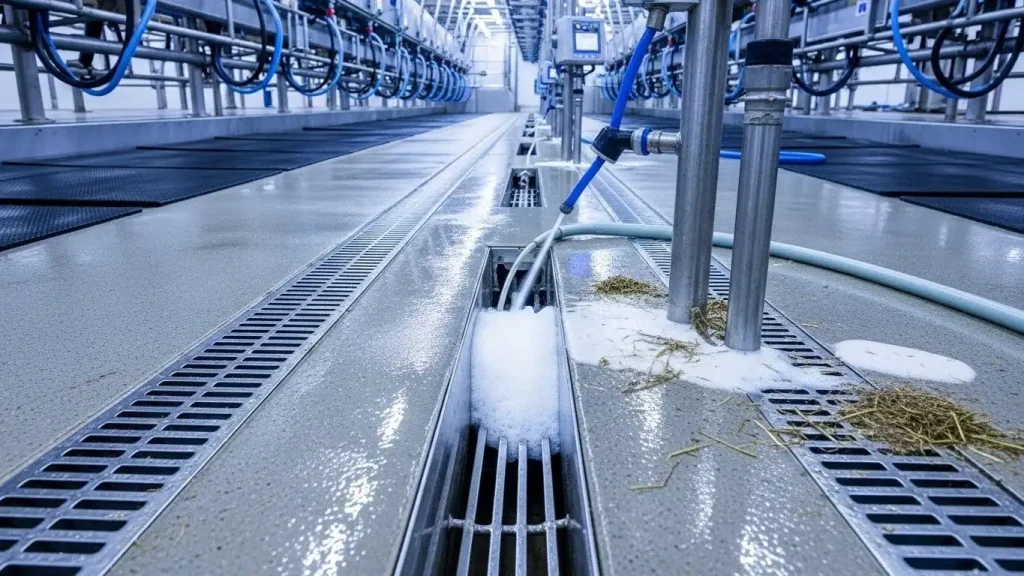
Specialist dairy processing drainage systems are designed to prevent exactly these problems. By combining hygienic materials, robust hydraulic performance and details that are easy for cleaning teams to access, they support safer day-to-day operation. CMSA delivers engineered Dairy Facility Drainage solutions built around fully welded stainless steel, watertight interfaces to the floor build-up, optimised falls and anti-slip walking surfaces. In practice, this helps dairies shorten cleaning windows, improve audit scores and extend the service life of both their floors and their drainage assets.
What Is Dairy Facility Drainage?
A Dairy Facility Drainage system is a coordinated network of drains, channels and sumps purpose-designed for milk and dairy environments rather than generic industrial use. The main elements typically include:
•Drain body or channel - stainless steel channels and sumps that collect surface water, washdown water and spilled milk or whey.
•Grate or cover - anti-slip profiles that provide secure footing while allowing high flow rates.
•Trap or water seal - components that block odours, insects and pests from entering production areas.
•Outlet and pipework interface - durable, leak-tight transitions into the site's underground drainage network.
Within a plant, these components are arranged to suit the process:
•Point drains and floor gullies at equipment islands, under mixers, fillers and valves.
•Linear or channel drains following production lines, along walls and across corridor thresholds to collect sheet flow.
•Standard and customised details at tanks, pasteurisers, CIP rooms and packing areas, where layout or cleaning patterns demand special solutions.
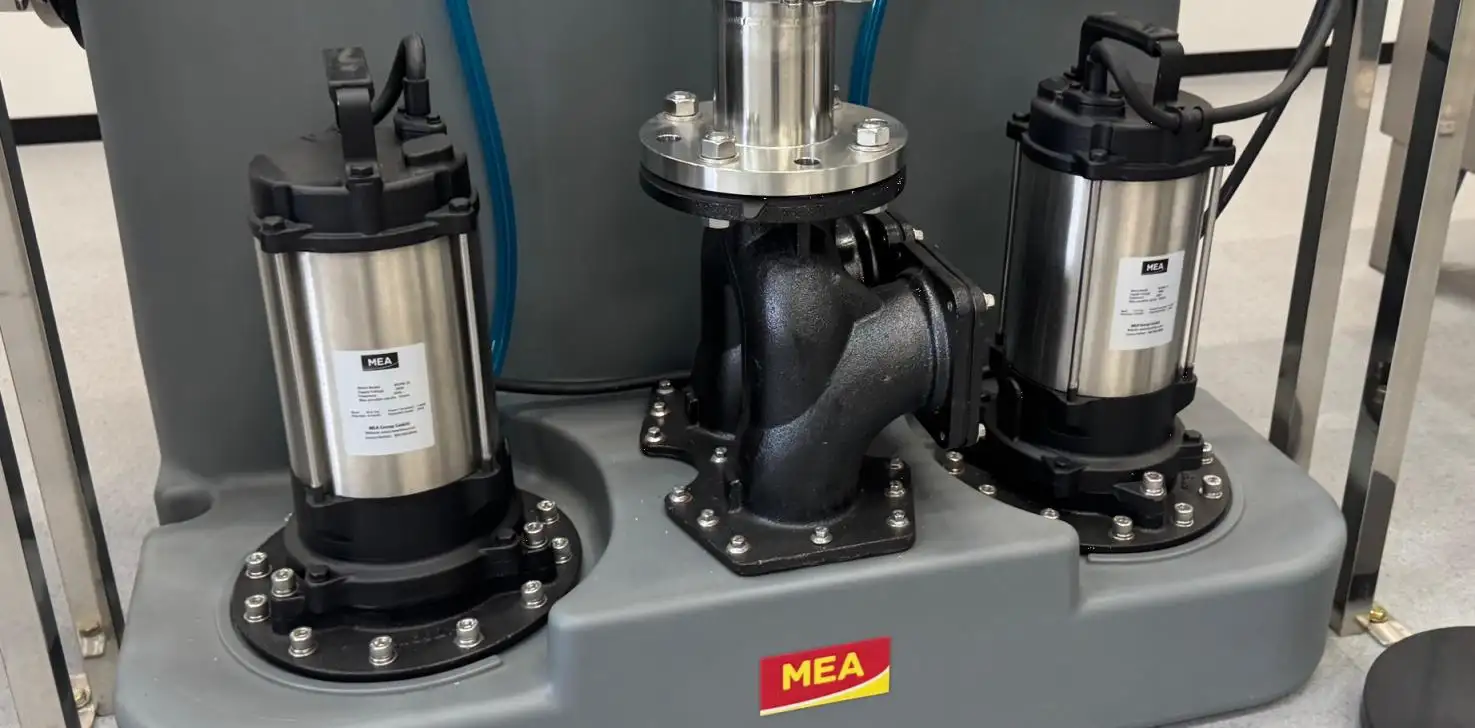
For hygienic dairy drainage, food-grade stainless steel - usually AISI 304 or 316/316L - is the preferred choice. It offers high corrosion resistance, copes well with hot water on chilled floors and can be fabricated with smooth surfaces and generous corner radii. MEA hygienic channels used by CMSA are fully welded and finely finished, resulting in stainless steel dairy drains that are easier to clean and far less likely to trap residues.
Why Dedicated Dairy Facility Drainage Matters
1. Reliable Hydraulic Performance
Dairy plants generate large, intermittent flows: hose-down water, CIP discharge, tank rinses and occasional product spills all reach the floor. A well-designed hygienic system anticipates these loads.
•Channels are sized for combined flows of wash water, milk, whey and cleaning chemicals.
•Built-in falls within the channel promote self-scouring velocities and minimise sediment build-up.
•Outlets are positioned at real low points and spaced so that pipe runs remain accessible for cleaning.
The outcome is less ponding, fewer incidents of water tracking beneath equipment, and better control of flow paths during intensive washdown.
2. Hygiene and Food Safety
In dairies, drainage is closely linked to microbiological risk. Poorly configured drains are a common hidden source of contamination.
•Smooth internal radii and continuous welds reduce crevices where fats, proteins and biofilms can establish.
•Removable grates, strainers and baskets provide direct access for visual inspection and routine cleaning.
•Odour traps and sealed interfaces support HACCP plans, retailer standards and local regulatory requirements.
By treating Dairy Facility Drainage as part of the hygiene programme rather than a simple utility, plants make it easier to maintain cleanable surfaces from wall to wall.
3. Worker Safety, Cleaning Efficiency and Durability
Dairy facilities are typically wet, cool and busy - a challenging combination for both staff safety and equipment durability.
•Anti-slip grates help keep walkways safer during continuous or foam washdown.
•Open, accessible channel designs reduce the time needed for daily and weekly cleaning routines.
•Stainless steel 304/316L tolerates thermal shock from hot water on cold floors and resists both alkaline detergents and organic acids from milk residues.
•Robust edges and grates withstand trolleys, mobile tanks and occasional forklift traffic without bending or breaking.
Instead of being a constant maintenance headache, a well-chosen drainage network becomes a long-term asset that supports uptime.
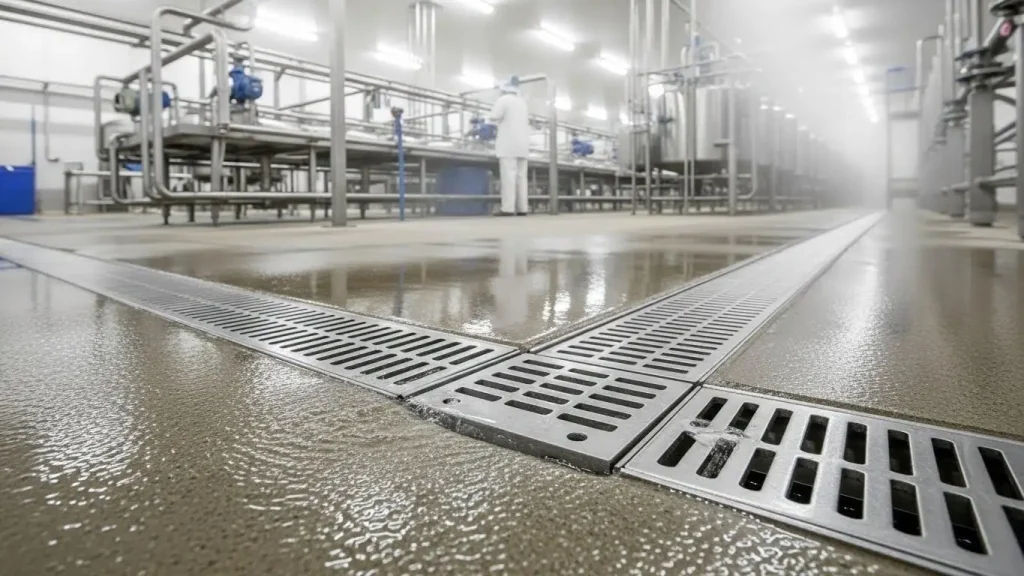
CMSA Dairy Facility Drainage Solutions
CMSA engineers and supplies MEA hygienic stainless steel systems that are tailored to the specific layout, hygiene zoning and washdown strategy of each plant.
By material selection
•Stainless steel 304 - for general production, packing and storage areas with standard chemical exposure.
•Stainless steel 316/316L - for CIP rooms, brine areas and locations with higher chloride or chemical loads.
•Polymer concrete channels (external) - for tanker bays, external yards and heavy-traffic zones where structural strength • and impact resistance are paramount.
All systems are designed in line with relevant European standards such as EN 1253 and EN 16165, helping dairies satisfy both drainage performance and slip-resistance benchmarks.
By layout and grate style
CMSA combines linear channels along process lines with point drains beneath equipment, sumps in true low points and slim slot channels through corridors or cold stores. Grate and cover options can be matched to specific zones:
•Ladder and mesh grates for high flow routes where staff need secure footing.
•Fine slot grates in premium hygiene areas where squeegee cleaning is used.
•Solid covers in technical spaces and plantrooms where access is occasional.
This modular approach allows CMSA to configure custom Dairy Facility Drainage solutions for every step in the process - from raw milk reception and pasteurisation to cheese maturation, yogurt filling and tanker washing.
Choosing the Right Dairy Facility Drainage System
Specifying hygienic systems is about more than picking a channel profile from a catalogue. Several technical and operational factors must align with the risk profile of the plant.
Hydraulic and layout design
•Estimate flows using washdown schedules, CIP sequences and plausible spill volumes.
•Place outlets at genuine low points and coordinate invert levels with the site drainage network to avoid backfalls.
•Provide maintenance access - such as catch pits and inspection points - at intervals that make cleaning practical.
Hygiene and structural performance
•Select stainless steel grade and thickness to suit chemical exposure, temperature cycles and traffic loads.
•Specify internal corner radii, continuous welds, in-built falls, removable strainers and odour traps that match current dairy hygiene expectations.
•Confirm load classes are appropriate for pallet trucks, IBCs, mobile tanks and forklifts around loading docks, tank farms and cold storage.
nIntegration and compliance
Drainage must lock into epoxy or PU screeds, tiles or concrete without creating weak points or cracks at the floor-to-drain junction. CMSA supports designers in choosing a hygienic system that ties in with local food safety law and the audit protocols of major retailers and brand owners, reducing the risk of drainage-related non-conformances.
Maintenance and Cleaning of Dairy Facility Drainage
Even the most hygienic system will only perform as designed if it is properly maintained. To keep Dairy Facility Drainage performing as designed, maintenance should be structured rather than reactive:
•Planned cleaning - build the removal of covers, baskets and strainers, plus flushing of channels and water seals, into daily and weekly sanitation schedules.
•Proactive blockage control - where curd, fat and protein accumulation is expected, such as around cheese production and whey transfer, fit suitable strainers and interceptors and service them frequently.
•Regular condition surveys - check drains for signs of corrosion, worn or missing seals, loose fastenings and cracks at floor-to-drain interfaces.
•Prompt fault-finding - treat slow-running drains, unpleasant odours and repeated blockages as early warning signs and investigate them before they turn into hygiene incidents or regulatory issues.
With planned Dairy Facility Drainage maintenance, plants retain the original hydraulic capacity of the system and avoid surprises during inspections.
Dairy Facility Drainage vs. Generic Industrial Drainage
In some projects, there is pressure to install generic industrial drains as a cost-saving measure. In dairies, this is usually a false economy.
•Sharp internal corners and rough surfaces make generic drains harder to clean and more prone to harbouring residues.
•Materials not chosen for hot water and aggressive cleaning chemicals can corrode quickly, flake or crack.
•Limited hydraulic capacity and poorly thought-out layouts increase the chance of ponding, odours and hygiene incidents.
Purpose-designed hygienic systems deliver better long-term value. CMSA's specialist systems reduce cleaning effort, help avoid unplanned shutdowns, support better audit outcomes and improve the working environment for staff. While the initial investment may be higher than a basic industrial alternative, the reduction in risk, downtime and hygiene failures makes dedicated dairy drainage the sensible choice for serious processors.
Ready to Upgrade Your Dairy Facility Drainage?
If your site is struggling with standing water, odours, cleaning challenges or repeated audit findings linked to drains, it may be time to rethink your drainage network strategy. CMSA's engineers can review your process layout, hygiene zoning and washdown regime, then translate them into an integrated stainless steel drainage scheme.
From hydraulic calculations and product selection to layout recommendations and detailing around floor finishes, CMSA supports you in delivering a robust, compliant and future-ready drainage system for safe, clean dairy production.


