
Sanitary Requirements for Drainage Solutions for Hospitals: An Essential Overview

While your design specifications for a medical facility may accommodate drainage systems, there are a number of important considerations which may be overlooked. Drainage systems serve to channel medical facility wastewater, but they also help to mitigate the spread of healthcare-associated infections and other contaminants. The primary purpose of a hospital drainage system design is to protect the safety of staff, patients, and the surrounding community. This white paper will outline the sanitary requirements of hospital drainage systems and explain the new age solutions available from CMSA.
What is the Significance of Hospital Drainage Solutions?
Hospitals produce complex waste streams such as biological fluids, chemicals, medicines, and even radioactive materials. These waste streams can be dangerous due to insufficient drainage solutions. Examples of these dangers include:
•Healthcare associated infections (HAIs)
•Backflow of sewage
•Release of pathogens into the surrounding environment
•Noncompliance with regulations which leads to lawsuits
The challenges and risks listed above explain why the sanitary drainage system needs of healthcare facilities are much more advanced than those of other facilities.
Fundamentals of Designing Hospital Sanitary Drainage Systems
A hospital drainage system must adhere to the following fundamental principles:
1. Waste Stream Management
The drainage of different waste types must be separated and remain segregated. Drainage systems must include:
•Soil (toilet and urinal) – feces and urine.
•Foul (sinks, shower, and floor drains) – greywater.
•Chemical – laboratory and pathology wastes (solvents, fixatives, and acids).
•Radioactive – short-lived isotopes from nuclear medicine.
•Food service – kitchen wastes.
2. Backflow & Cross Contamination Prevention
Hospital drainage systems must include several measures to prevent backflow.
•An air gap - a vertical space of at least 25 mm - or 2 times the diameter of the pipe - must be present between fixture drainage outlets and drain inlets
•Backflow prevention valves are needed on branch lines to all critical areas (ICUs, Operating Theatres)
•Vacuum breakers are needed on any equipment that discharges to the drain system
These devices help ensure that drainage water cannot be sucked back into sinks, medical equipment, or potable water supplies.
3. Pipe Accessibility
•Drain pipes must be designed so that they do not have any lip or step upon which biofilm can accumulate.
•Drain pipes must maintain at least a 1-2 percent slope (1-2 cm per meter) in the horizontal direction to provide a sufficient velocity for self cleaning.
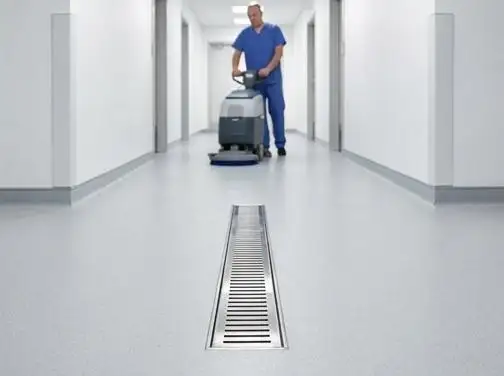
•Access points (cleanouts) every 15 meters and at every change of direction – essential for mechanical cleaning.
Material Requirements for Hospital Drainage
The choice of materials directly impacts sanitary performance. Approved drainage solutions for hospitals use:
| Material | Application | Sanitary Advantage |
| Borosilicate glass (e.g., DURAN, Kimax) | Chemical waste lines | Inert, non-porous, smooth, resistant to all acids/alkalis |
| Polypropylene (PP) | General foul drainage | Excellent chemical resistance, lighter than metal |
| Stainless steel (316L) | Food service, autopsy, morgue drains | Non-corrosive, easy to sanitize, withstands hot water |
| Cast iron with epoxy lining | Soil stacks | Durable, quiet, fire-resistant |
⚠️ Prohibited materials: PVC (for chemical waste – degrades over time), galvanized steel (rusts internally), lead (toxic).
Infection Control Measures in Drainage Solutions for Hospitals
Every drain is a potential source of aerosolized pathogens (e.g., Pseudomonas aeruginosa, C. difficile, Legionella). Sanitary requirements include:
Trap Seal Protection
•All floor drains must have deep-seal traps (75 mm water seal minimum) – double the standard residential 50 mm.
•Trap primers (automatic water refill devices) must be installed on infrequently used drains to prevent seal evaporation. Dry traps allow sewer gas and insects to enter patient rooms.
Antimicrobial Components
•Silver-ion or copper-infused drain inserts – proven to reduce biofilm formation.
•UV-C disinfection chambers can be integrated into high-risk area drains (isolation wards, burn units).
Sealed Connections
• No open gaps around pipes penetrating floors or walls – must be fire-stopped with sanitary-grade silicone or epoxy.
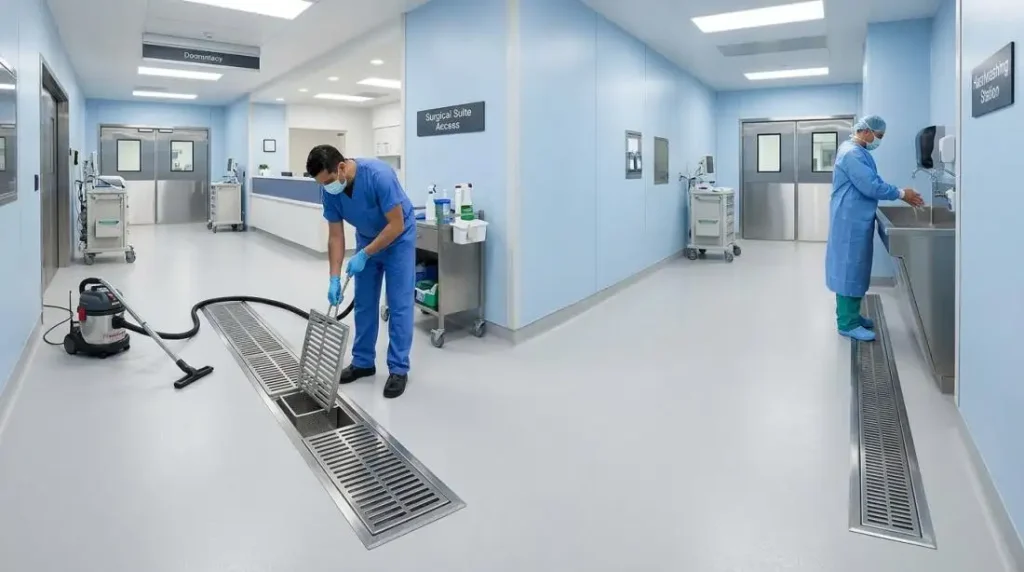
• Floor drains in operating theaters require flush-to-floor gratings with gasketed covers to eliminate crevices.
Wastewater Treatment Requirements Before Discharge
Certain effluents require on-site pretreatment as part of drainage solutions for hospitals.
•Laboratory wastes that are either acidic or basic require on-site chemical neutralization to ensure that the effluents are within the pH range of 6.5 to 8.5 before discharge into the public sewers.
•Degreasing traps in kitchens and laundries – oil and grease content below 100 mg/L.
•Sedimentation basins for radiology developer/fixer solutions (silver recovery).
•Disinfection contact tanks for wastewater from infectious disease wards – chlorine or UV treatment to achieve >99.99% pathogen reduction.
�� Note: Some cytotoxic drug waste cannot be drained at all – it requires collection and incineration.
Maintenance and Cleaning Protocols
Even the best-designed system fails without rigorous upkeep. Sanitation requirements specify:
•Visual inspections of all available traps, cleanouts, and manholes must be done monthly and recorded on a checklist.
•Biofilms on the surface of drains in designated areas must be sampled quarterly and grown to test for coliform, Pseudomonas, and Legionella.
•Horizontal drain lines must be cleared once a year using the hydro-jetting process.
•An immediate response is required for any decrease in the rate of drain flow due to partial clogs which are a breeding habitat for slow-moving drain system microorganisms.
Cleaning, inspection, and maintenance of each hospital system's drainage must be recorded in a log and kept on hospital property. Hospitals are advised to contract with a plumbing company that specializes in drainage system solutions for hospitals.
Requirements for Compliance with International Standards
Hospital drainage systems must be designed in accordance with:
•ASHRAE Standard 170 (Ventilation and drainage systems of healthcare facilities)
•Facility Guidelines Institute (FGI) Guidelines
•CDC Guidelines for Environmental Infection Control
•National plumbing codes (i.e., IPC, UPC or country equivalents)
Routine, unannounced assessments are done to ensure that each company is compliant.
CMSA: Engineered for Hygiene, Built for Healthcare
CMSA is a company that designs and builds drainage products from hygienic stainless steel to comply with the most rigorous drainage solutions for hospitals that are designed on the principles of modular drainage systems. Below we break down their key technical advantages.
1. Advanced Design for Flawless Hygiene
| Feature | Sanitary Benefit |
| Large internal corner radii | Eliminate sharp angles where debris and bacteria accumulate; enable full water jet cleaning without scrubbing |
| Sealed, leak-proof construction | Prevents any wastewater leakage into subfloors or ceiling voids—critical for infection control |
| Smooth internal surfaces | No ridges, grooves, or welds that could retain organic matter |
| Anti-slip covers | Optional safety covers with R10–R13 slip resistance ratings, reducing fall risks in wet hospital zones |
These design elements directly address the sanitary requirement for “easy to clean” and “no stagnant zones.” CMSA's hygienic drains are used in operating theatres, intensive care units, sterile processing departments, and hospital kitchens.
2. Premium Stainless Steel – 304 and 316L Grades
304 and 316L stainless steel form the basis of our products and provide the following beneficial features:
•Corrosion resistant - Able to withstand cleaning agents and bodily fluids that are chlorinated, saline and acidic.
•Heat resistant - Able to withstand high steam cleaning temperatures (316L is good to 150°C with constant exposure).
•Non-porous: Stainless steel will not allow bacteria to grow and persist.
•100% recyclable: This will allow sustainable practices within your hospital.
For highly corrosive even challenging situations like laboratories and oncology wards which use cytotoxic drugs, we will recommend using 316L with electropolish finish for maximal passivation.
3. Certified Standards: EU CE, EN1253, EN16165
CMSA's hospital drainage systems are certified by independent bodies which guarantee durability and hygienic safety:
•EU CE marking - Compliance with European regulations for construction products.
•EN1253 – Requirements for gullies and floor drains for buildings (Includes load and sealing tests).
•EN16165 – Requirements for hygienic drainage in food and health sectors.
Each of these standards covers specific drainage safety and hospital approval requirements (leak-proof, chemically resistant, and cleanable products) which validates every CMSA product.
Modular and Customisable Solutions for Every Hospital Zone
Not all hospital zones are alike and neither are their drainage needs. CMSA's modular system allows for the greatest flexibility.
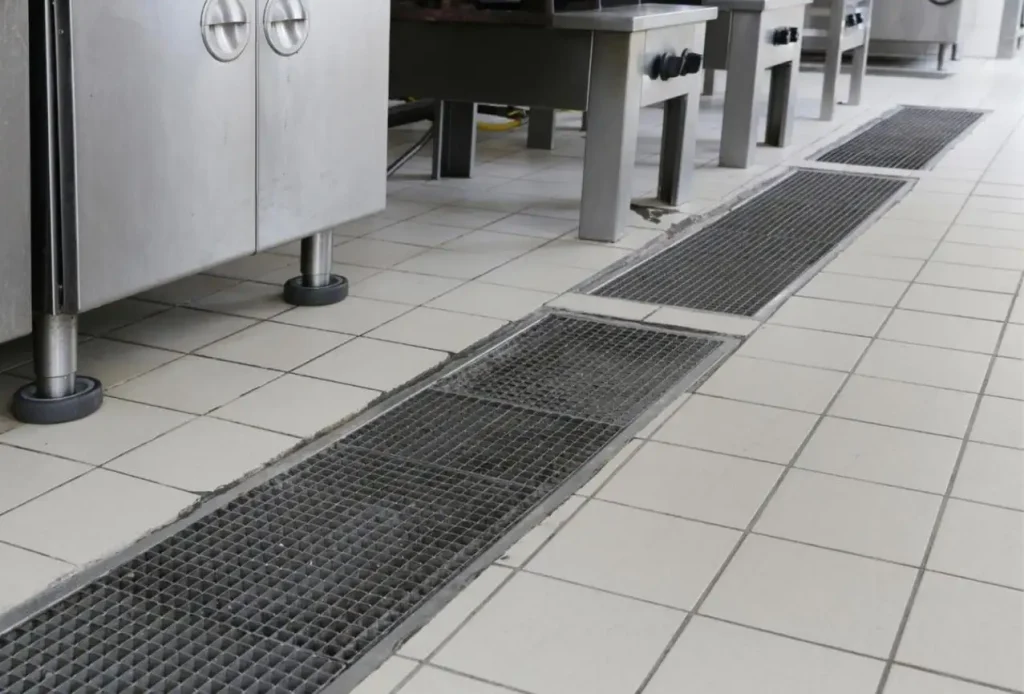
•Modular drainage channels – Ideal for large-volume areas like emergency room decontamination bays and central sterile supply departments. Available in lengths from 500mm to 2000mm, which can be joined without leakage.
•Hygienic drains (point drains) – For operating rooms, ICUs, and patient bathrooms. Features include removable, tool-free gratings and deep water seals to prevent odour backflow.
•Box channels – Compact solution for retrofitting into existing concrete slabs without major demolition.
All components integrate seamlessly with concrete expansion fits and surface treatments (e.g., brushed, polished, or anti-microbial coated) upon request.
Conclusion
Sanitary drainage is as vital to hospitals as sterile air systems. Generic drains are not an option—solutions must be purpose-engineered for hygiene, durability, and cleanability. Hygienic stainless steel drainage systems from CMSA exhibit large internal radii, leak-proof constructions, certified materials (EN1253, EN16165, CE), and offer full technical support. Whether it's a new wing or a new surgical suite, CMSA provides the modern healthcare industry with the professional and dependable drainage systems they require.
Frequently Asked Questions (FAQs)
Q1: Why can't you use standard drainage systems in hospitals?
Standard drains feature sharp corners, rough surfaces, and joints that leak. Because of this, they capture debris and promote the growth of bacteria and are therefore unacceptable for infection control.
Q2: Why are CMSA drainage solutions so hygienic?
They feature large internal radii, are sealed leak-proof with smooth surfaces in stainless steel (304/316L), and anti-slip covers that are easy to clean and disinfect.
Q3: What certifications do CMSA hospital drains carry?
CMSA hospital drains carry the EU CE mark and EN1253 (floor drains) and EN16165 (hygienic channels) certifications.
Q4: Can CMSA drains cope with hot water and chemistry?
Yes, 316L stainless steel can cope with elevated temperatures (up to 150°C) as well as aggressive disinfectants and pharmaceutical residues.
Q5: Are CMSA products customizable for the various hospital zones?Yes, modular channels as well as point drains and box channels can be configured for the operating rooms, ICUs, sterile processing, kitchens, and bathrooms.


