
Industrial Wastewater Filtration Systems: The Role of Water Traps in Preventing Backflow Odors
When facility managers evaluate industrial wastewater filtration systems, they usually focus on flow rates, chemical dosing, and clog resistance. However, in hygiene-sensitive sites, the real “pass or fail” test for the facility's plumbing infrastructure is usually odor.
If a drain smells, people assume the entire system is dirty. In many cases, the wastewater itself is not the main issue. The real cause is backflow gases moving upstream through the drainage line from the main treatment tanks. That is why understanding the battle between Water Traps and Backflow Odors matters: one is a controlled seal, the other is an uncontrolled pressure event.
Before effluent ever reaches your main industrial wastewater filtration systems, it must pass through the floor drains. CMSA explains how to secure this critical point-of-entry below.
What Backflow Odors Really Are (And Why They Travel Fast)
Backflow odors are not “bad air trapped in the drain.” They are sewer or process gases that move backward through pipes when pressure conditions change. This can happen during peak discharge, pump start/stop cycles, temperature shifts, or when the building drainage ventilation is not balanced.
Once gases find a path upward, they rise into rooms through the drain opening. Odor spreads quickly because airflow carries it across the floor and into HVAC return paths. In food plants, commercial kitchens, laboratories, and healthcare zones, this is more than discomfort. Odor can suggest hygiene risk, disrupt operations, and trigger customer or audit complaints.
While the heavy lifting is done by your downstream industrial wastewater filtration systems, solids filtration at the floor level is essential. However, filtration alone does not block gas. Odor control requires a physical seal.
Water Traps: The Simplest Odor Barrier With the Biggest Impact
A water trap is a controlled “liquid plug.” It holds a stable column of water that blocks gases from traveling from the pipe into the room. When the seal is intact, gases cannot pass through the water barrier.
This is why water traps remain a core component in hygienic drainage design. They do not rely on chemicals, fans, or masking sprays. They rely on physics.
In many hygiene-focused drainage designs, the water trap is specified with a seal depth such as ≥50 mm to improve blocking reliability. The reason is practical: deeper seals are less likely to break due to small pressure fluctuations, vibration, or splash-out during washdown.
So when we discuss Water Traps vs Backflow Odors, the key point is this:
• Backflow odors happen because gases have a continuous open path.
• A water trap stops odors by breaking that path with a stable seal.
Why Odor Problems Happen Even When a Trap Exists
Many sites already have traps, yet odors still appear. That does not mean traps “do not work.” It usually means the trap seal is being lost.
Common reasons include:
• Seal Evaporation: Low-use drains dry out, especially in warm rooms or dry climates.
• Pressure Imbalance: Rapid discharge can create suction that pulls water out of the trap (self-siphoning).
• Splash-Out During Cleaning: Strong washdowns can disturb the seal if the drain design is shallow.
• Poor Fit Or Leaky Interfaces: Gaps around covers or baskets create bypass paths.
For Industrial Wastewater Filtration Systems, this is a critical lesson: odor control is not only about having a trap—it is about keeping the trap sealed under real operating conditions.
How Point-of-Entry Filtration Supports Water Traps
Filtration is sometimes marketed as a solution to odor. It can help indirectly, but it cannot replace a trap.
Here is the real relationship:
• Filtration removes solids that cause buildup and biofilm. This reduces “local odor generation” in the drain body.
• A water trap blocks “remote odor migration” from the downstream pipe network.
In other words, filtration reduces what is produced near the inlet, while the trap blocks what travels back from the line.
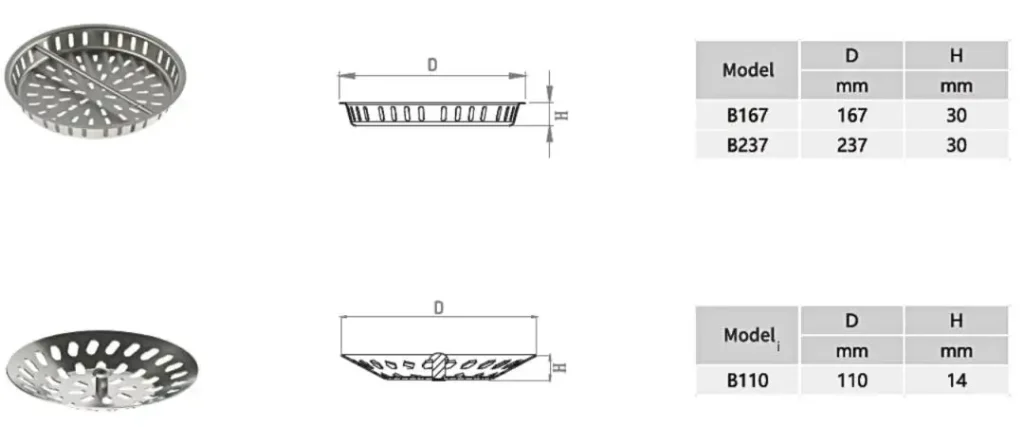
CMSA’s design approach combines both functions. A removable basket captures debris larger than 6 mm, protecting downstream industrial wastewater filtration systems from clogging. At the same time, the integrated water trap maintains an odor-blocking seal so the room stays clean.
Choosing the Right Trap Performance for Your Site
A trap that works in a residential bathroom is not enough for a food plant or lab. Hygiene zones experience frequent chemical cleaning, high water usage, and strict contamination control. Focus on three practical checks:
• Seal Reliability: A consistent seal depth (commonly ≥50 mm) helps resist pressure changes.
• Material Resistance: 304/316L stainless steel tolerates corrosive agents and intensive cleaning.
• Cleanability: Polished surfaces rinse clean with less effort, reducing microbial risk.
If your site uses strong detergents and high-frequency washdowns, the surface finish and material choice matter almost as much as the trap itself. A trap that blocks gas but is hard to clean will still create hygiene headaches.
A Simple Troubleshooting Checklist for Odor Complaints
If you are facing repeated odor events, use this quick logic before replacing the entire drain system:
• Does the odor appear after long idle periods? Likely cause: dry trap seal.
• Occurrence during peak discharge or pump cycling points to pressure-driven backflow.
• Do you see frequent debris buildup? Degraded filtration may be allowing odor formation at the source.
• Cleaning taking longer than before? Surface features may trap residue and boost risk.
This “Water Traps vs Backflow Odors” view helps you avoid guessing. It separates gas-blocking issues from solids-management issues—both are important, but they require different fixes.
CTA (For CMSA Buyers and Project Owners)
If you are upgrading a hygiene zone and want fewer odor complaints with lower maintenance time, CMSA can recommend a hygienic drainage filter configuration that combines debris retention and an integrated water trap for stable odor control. Share your drain type (linear/point), outlet direction (vertical/horizontal), and cleaning frequency, and we will suggest a matching solution for your Industrial Wastewater Filtration Systems layout.
Share on Social:


