
What Grade Of Stainless Steel Drainage Channel Do You Need?
Selecting a stainless steel drainage channel often looks simple on paper—until the site starts running. At CMSA, we build hygienic drainage systems for environments where cleaning is frequent and hygiene standards are strict. In our experience, most drainage problems do not happen because the channel "cannot drain." They happen because the grade of stainless steel was chosen without matching the real conditions: chemical exposure, salt risk, wash-down frequency, and long-term surface maintenance.
This guide explains stainless steel grades in clear language and shows how to choose the right option for your project—without overbuying, and without leaving corrosion risk to chance.
1) Why Stainless Steel Grade Dictates Service Life
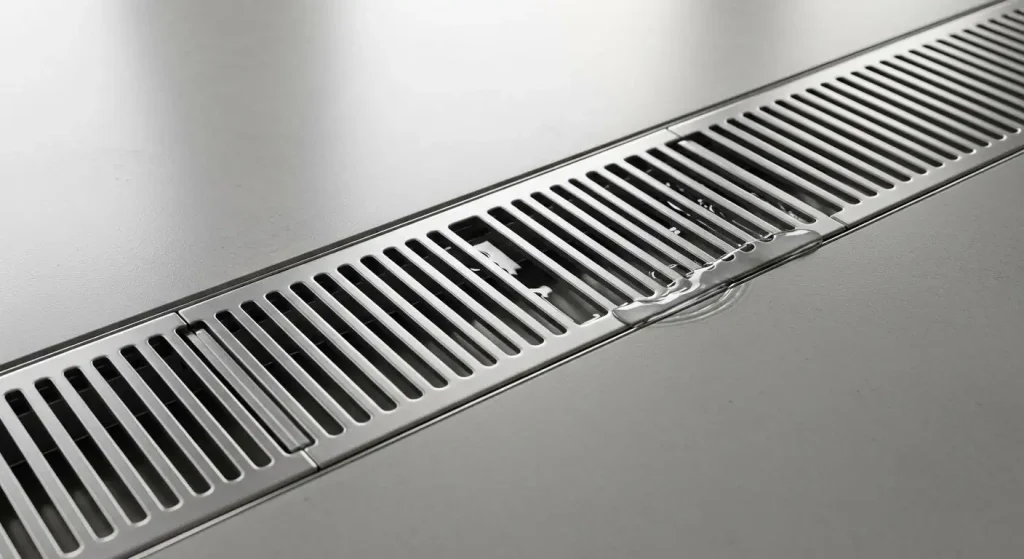
A Stainless Steel Drainage Channel lives in a harsh zone. It sits at the lowest point of the floor, where water, detergents, grease, food residues, and fine particles naturally collect. In some facilities, it also sees hot water, rapid temperature shifts, and repeated disinfection.
Over time, corrosion does not always appear as "obvious rust." Early warning signs are usually subtle:
• Tea staining or brown marks near edges
• Dull areas that no longer clean up easily
• Tiny pits that trap residue
• Surface changes around welds or joints
These are not just appearance issues. Once the surface becomes rougher, cleaning takes longer and becomes less consistent. In hygiene-sensitive spaces, that can affect daily sanitation results and increase maintenance cost.
Grade selection is therefore a practical decision: you are choosing how stable the surface stays after years of cleaning, traffic, and exposure—not just what the product looks like at installation.
2) 304 vs. 316L: The Difference in Practical Terms
For most hygienic drainage projects, the decision is between 304 and 316L stainless steel. Both are proven materials. The difference is how they handle corrosion pressure over time.
304 Stainless Steel: The Everyday Workhorse
304 is widely used because it performs well in normal indoor environments. It handles routine moisture, standard detergents, and typical daily cleaning without issues when the site conditions are moderate.
A 304 Stainless Steel Drainage Channel is usually a good match when the environment is controlled and salt exposure is low.
316L Stainless Steel: Extra Insurance For Tougher Conditions
316L is commonly selected when corrosion risk rises—especially with salt exposure or stronger chemical routines. The "L" grade is often specified in hygienic projects because consistent performance matters in fabrication and long-term stability.
A 316L Stainless Steel Drainage Channel is chosen to reduce the chance of pitting and surface degradation when the facility has aggressive cleaning cycles or a more corrosive atmosphere.
The key point is this: the "right" grade is not always the highest grade. It is the grade that fits your real exposure profile.
3) When 304 Stainless Steel Is the Best Fit
Many buyers assume 316L is always safer. In reality, 304 is often the smartest, most cost-efficient specification—especially for indoor projects with disciplined but not extreme cleaning.
Choose a 304 Stainless Steel Drainage Channel when:
• The drain is mainly indoors (commercial kitchens, labs, service areas)
• There is no constant salt in the environment
• Cleaning chemicals are mild to moderate
• The facility wants dependable hygiene performance without over-spec cost
For many renovation projects, 304 also makes installation planning simpler. It provides strong corrosion resistance under typical conditions, while keeping the procurement process streamlined.
At CMSA, we often recommend 304 when the site’s corrosion pressure is clearly controlled. The result is a stable channel surface that remains easy to maintain with standard cleaning routines.
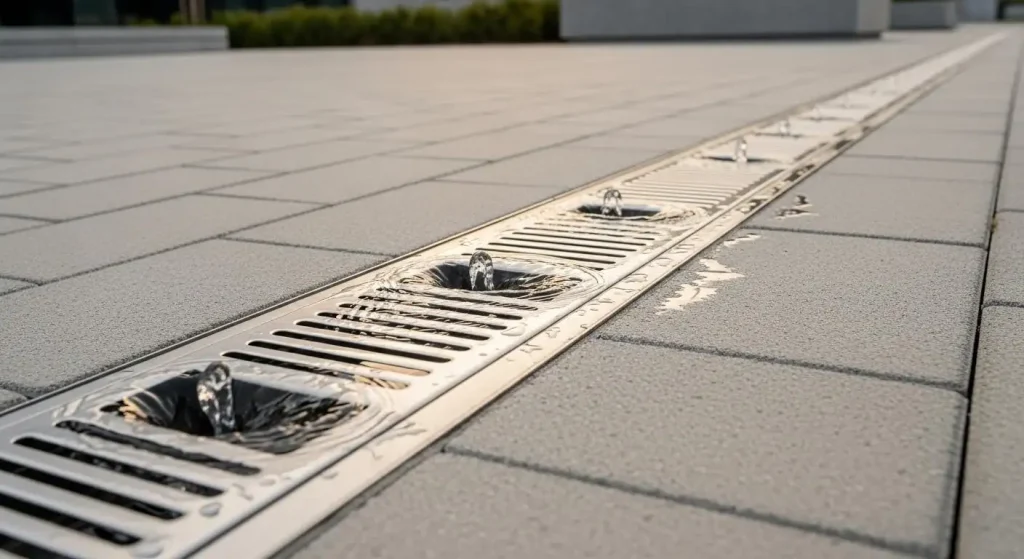
4) When 316L Stainless Steel Is the Safer Long-Term Choice
Some environments quietly destroy "standard" stainless steel over time—especially where salt or stronger disinfection is part of normal operations. This is where 316L becomes the better investment, not because it is trendy, but because it reduces long-term risk.
Choose a 316L Stainless Steel Drainage Channel when:
• The site is coastal or exposed to salt mist
• The drain sees frequent disinfection or stronger cleaning agents
• You want the surface to remain smooth and stable under high hygiene demands
• The facility aims to minimize downtime and long-term replacement risk
In hygiene-focused industries, surface integrity is more than a technical detail. Once micro-pitting begins, residue can cling more easily, cleaning becomes less predictable, and inspection outcomes can become harder to control. 316L is often selected to keep the surface easier to clean year after year.
5) Choose Grade By "Corrosion Pressure," Not By Building Type
A common beginner mistake is selecting grade by labels like "kitchen" or "laboratory." Two kitchens can have completely different corrosion pressure depending on process, cleaning habits, and water quality. The better method is to evaluate exposure.
Here is a simple "corrosion pressure" checklist you can use before you choose the grade:
• Wash-Down Frequency: Is it occasional, daily, or multiple times per shift?
• Chemical Strength: Are cleaners mild, or is disinfection frequent and strong?
• Salt Exposure: Coastal air, salty ingredients, brine, or salty process water?
• Residue Type: Grease, proteins, fine powders, or mixed solids?
• Cleaning Standard: Do you need fast, repeatable cleaning with minimal buildup?
If most answers point to higher pressure, 316L becomes more reasonable. If pressure is moderate and well-controlled, 304 is often sufficient and more cost-effective.
At CMSA, we encourage customers to define corrosion pressure first, then select grade. It prevents under-spec problems later and helps avoid unnecessary budget inflation from over-specification.
6) How CMSA Turns Grade Into Hygienic Performance
A Stainless Steel Drainage Channel should not be judged by grade alone. In real operation, hygiene depends on how well the system prevents odor, controls solids, and stays easy to clean. Pick the right grade to keep every hygiene feature performing consistently.
CMSA drains pair material selection with details proven to aid daily cleaning and safety:
• Removable Trap with >50 mm Seal
50 mm water seal reduces odor/siphon blowback in kitchens, labs, clean areas.
• Integrated >6 mm Solids Screen
Stops >6 mm particles, protecting downstream lines and reducing emergency clogs.
• Slip-Resistant Grates
Engineered traction improves safety in wet, high-traffic corridors.
• Smooth, Cleanable Interiors
Smooth interiors limit buildup and shorten sanitation cycles.
• Leak-Tight Seals and Stable Edge Geometry
Leak-tight seals protect subfloors; stable edges hold position under traffic.
• Anchor Plates For Secure Installation
Anchor plates help prevent displacement during and after installation, supporting long-term structural stability.
These features are not "extra." They are the practical difference between a drain that stays cleanable and stable—and a drain that becomes a maintenance problem.
CTA: If you are specifying a Stainless Steel Drainage Channel for a commercial kitchen, laboratory, cleanroom, or food-processing zone, share your site conditions with CMSA (indoor/outdoor, coastal exposure, cleaning frequency, chemical type). We will help you decide whether 304 or 316L fits best and recommend a configuration that supports long-term hygiene, odor control, and efficient maintenance.


