
Shower Drainage Channels For Hotel And Residential: 2026 Buyer's Guide
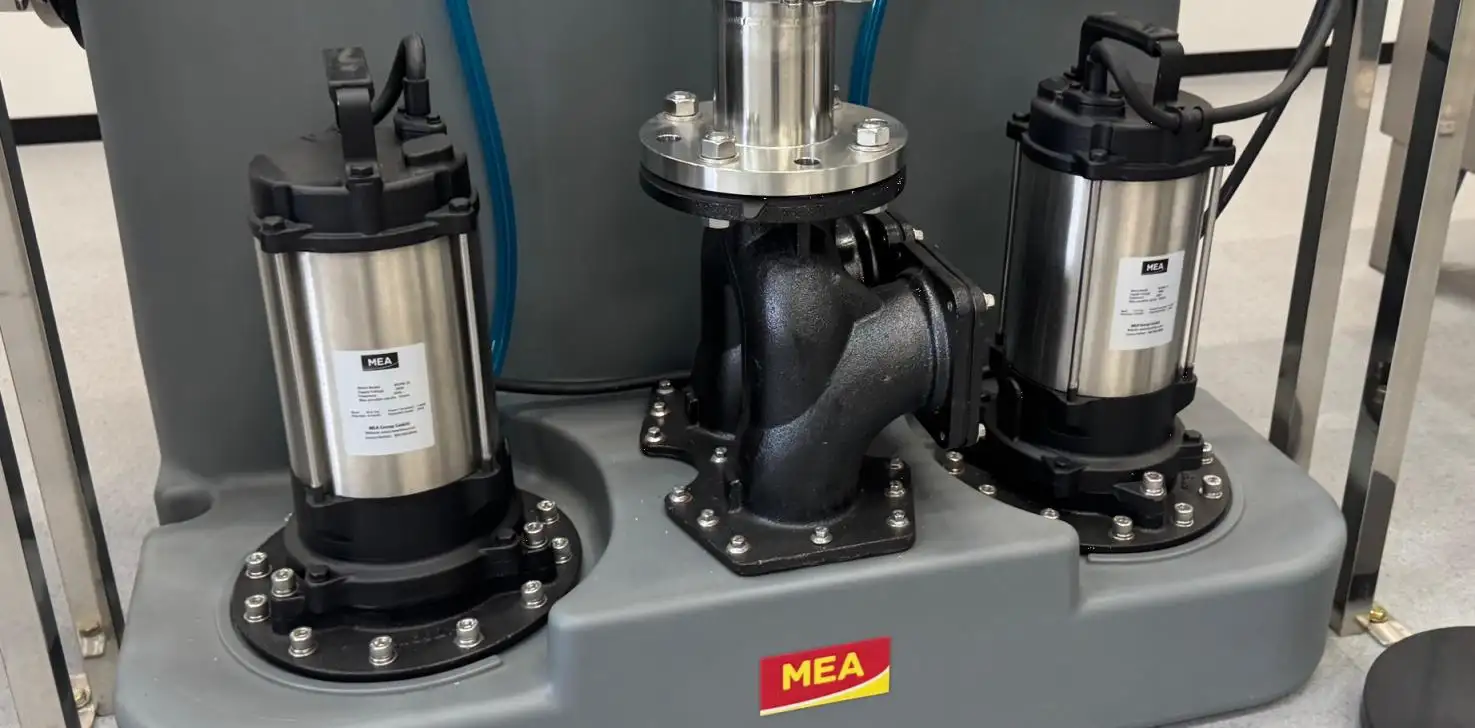


When specifying Shower Drainage Channels For Hotel And Residential projects, success or failure comes down to small details: how fast water exits, how clean the channel stays, and how well the drain "disappears" into the finished floor. At CMSA, we manufacture hygienic drainage systems for demanding sites, and this 2026 buyer's guide is written for developers, architects, and contractors who want to choose their bathroom drainage with confidence.
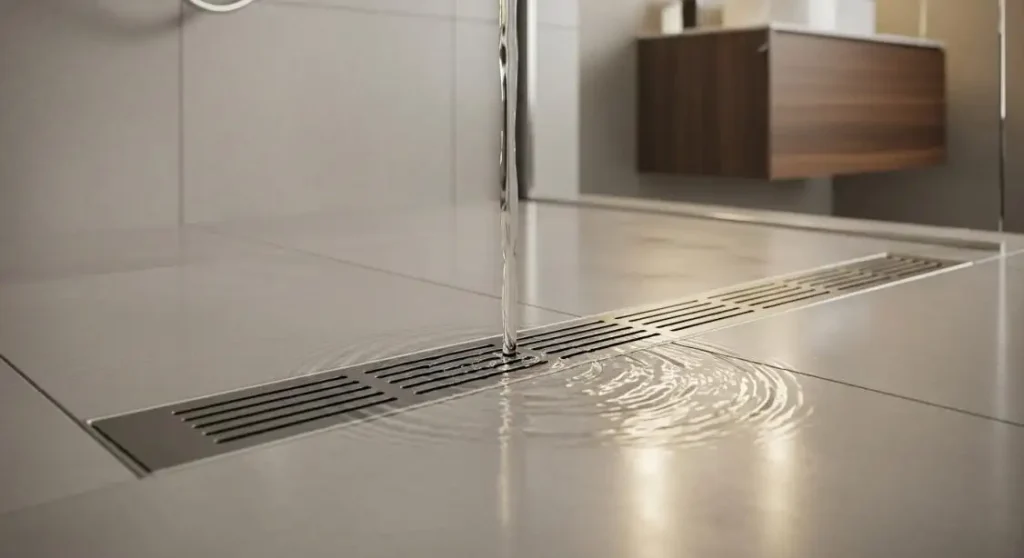
1) Start With the Real Problem: Water Volume and Everyday Use
Most people choose a shower channel by looks first. That is understandable. But performance starts with flow rate and usage pattern. In the U.S., standard showerheads are commonly capped at 2.5 gpm (about 9.5 L/min), and many showers run around 7.9 L/min on average.
That means your drain must handle steady flow, plus short "surge moments" when water hits the floor at once (rain shower heads, body jets, or multiple users in hotel peaks).
For Shower Drainage Channels For Hotel And Residential, ask one simple question before you compare designs: Will the channel and outlet clear water faster than your shower can deliver it? If not, you will see pooling, slippery floors, and faster soap scum buildup.
2) Understand Flow Rate Numbers: What "Good Drainage" Looks Like
Drainage products often list performance in L/s (liters per second). In many EN 1253 contexts, a typical benchmark you will see is DN 50 with 0.8 L/s (48 L/min) under certain test conditions.
That is far above most single-shower demand, which is good. But practical reality matters: installation height, grating design, and water trap choice can reduce real flow.
Here is the practical way to read the numbers:
• Match outlet size to the building logic (many shower setups use DN 50 / 2-inch class outlets; verify with your plumber)
• System numbers: Treat published flow rates as "system numbers"—the channel, outlet, trap, and build-up height all affect the final result.
• Plan for margins: Hotels need more margin because guest behavior is less predictable (longer showers, higher spray, more hair and soap load).
3) Linear Channel or Point Drain: Choose By Bathroom Layout
A linear shower channel is not automatically "better." It is better when the bathroom layout benefits from it.
When to Choose a Linear Channel
• You want a cleaner visual line (especially in hotel suites and premium residential)
• You prefer single-plane floor slopes (often easier tile planning than four-way slopes around a center point)
• You want flexible placement (wall-side, entrance-side, or across the shower zone)
H3: When to Choose a Point Drain
• The shower space is compact and centered
• The tile layout favors a central fall
• Cost control is the highest priority
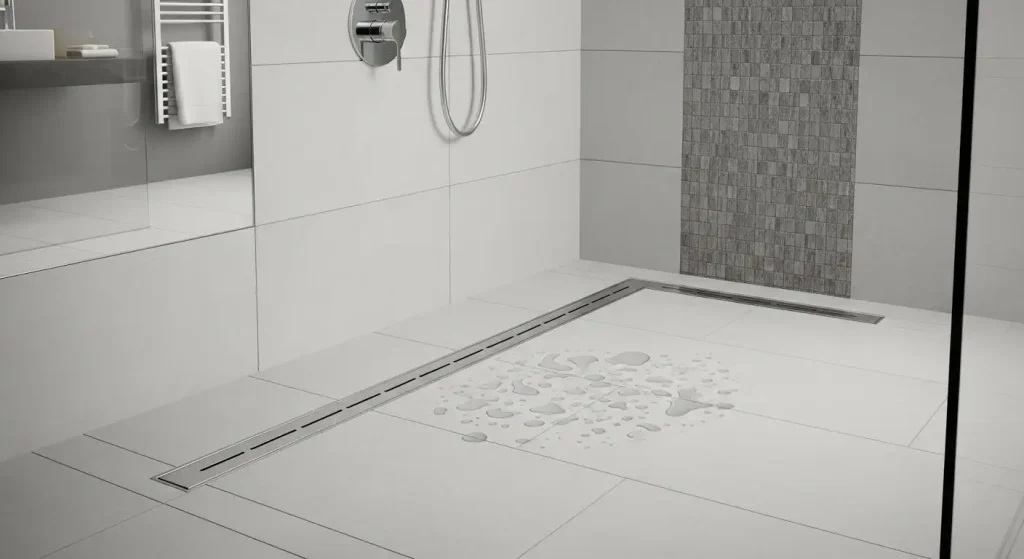
4) Slope, Waterproofing, and Odor Control: The Hidden System
Many drainage complaints are not "bad drain" problems. They are floor geometry and waterproofing execution problems.
For wet-room style showers, many installers target a slope around 1.5–2% so water naturally runs toward the drainage line without creating an uncomfortable "tilted" floor.
Our Hygienic Stainless Steel Drainage System uses large internal corner radii. This is not a design detail for engineers only. It means fewer sharp corners where residue can collect. Water and cleaning solution rinse through more smoothly, and daily housekeeping can finish faster.
We also use a sealed construction to help prevent leakage. In shower zones, even small leaks can migrate into the floor build-up, weaken adhesives, damage nearby rooms, and create odor issues. Finally, anti-slip covers reduce slip risks at the transition area—a clear advantage for hotels and senior-friendly residences.
5) Choose the Right Material: 304 vs 316L Stainless Steel
For shower areas, stainless steel is popular because it is hygienic and easy to clean. Our components are made in 304/316L stainless steel, which is corrosion-resistant, heat-resistant, and fully recyclable.
How do you decide between the two?
• 304 Stainless Steel: A strong "default" for most standard hotel and residential shower environments with routine cleaning.
• 316L Stainless Steel: Suits higher corrosion loads—such as aggressive sanitation schedules, coastal chloride exposure, or when durability needs are boosted.
Buyer takeaway: The environment beats the budget line. Choosing the right grade early avoids surface defects and mid-cycle replacements—key where hotel room closures cost real money.
6) Modular Design: Faster Installation and Flexible Layouts
Modularization accelerates site work, clarifies quality control, and smooths future servicing. The MEA system includes modular channels, hygienic drains, and box channels.
The MEA system includes modular channels, hygienic drains, and box channels. For buyers, modular design turns into real project benefits:
• Quick Installation: modular channel sections reduce cutting and onsite fabrication work.
• Flexible Layout: corner units and outlet choices keep lines clean across complex stalls.
• Simpler Maintenance: standardization streamlines inspection, replacement, and QA.
Concrete planning pieces: Hygienic Channel Unit (L: 1000 mm, H2: 60 mm) for straight runs; Center Outlet Drain Channel with Outlet Box (L: 900 mm, H1: 81.5 mm) when drawing flow to a central outlet. These kinds of sizes help designers and contractors coordinate floor build-up and slopes earlier, reducing last-minute site changes.
When Shower Drainage Channels For Hotel And Residential are selected as a modular system, the project team gains speed and predictability—two things that matter greatly in hotel schedules and multi-unit residential delivery.
7) How CMSA Supports Your Project From Design to Site Success
A drainage product is only as good as the plan behind it. Many failures come from the same avoidable issue: the system was selected without drainage calculation, layout planning, or installation guidance.
CMSA provides professional drainage technology support, including:
• Drainage calculation and hydraulic reports
• Product selection based on project needs
• Layout plans and detailed drawings.
• BIM support with product family libraries.
• Installation guidance, including onsite training and regular inspections
This support is especially valuable for hotels and residential developers who want fewer surprises on site. When the slope, outlet position, and maintenance access are planned early, the shower zone performs better and the contractor's work becomes easier.
CTA (From CMSA): If you are comparing options right now, send us your shower layout (length, wall-side or entrance-side placement, tile thickness, and outlet direction). CMSA can recommend a channel configuration, material grade, and installation notes that match your site conditions—so you avoid the two most common failures: slow drainage and hard-to-clean design.


