
Rail Track Drainage Systems Guide: Smarter Tramway Design for 2026
Rail Track Drainage Systems are becoming a more important part of tramway design in 2026, because buyers now expect safer operation, cleaner rail grooves, faster installation, and longer service life from every urban rail project. Current rail guidance continues to treat drainage as a core infrastructure issue rather than a minor accessory. Network Rail states that effective water control is essential to the safe and economic management of railway infrastructure, while modern light rail design criteria require surface water to drain away from the track and call for track drains to prevent standing water.
Why 2026 Tramway Projects Need Better Drainage
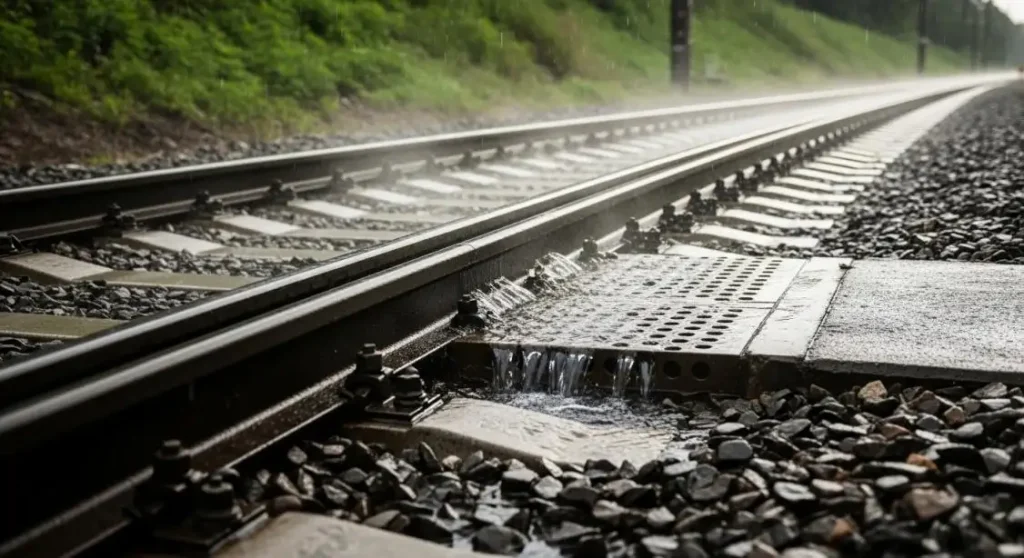
In older tramway layouts, drainage was often treated as a secondary detail. That approach no longer fits today's project expectations. Cities want rail systems that remain dependable under heavier rainfall, more demanding maintenance targets, and tighter public safety requirements. Water that remains around the rail groove can contribute to dirt accumulation, blocked flange paths, and more difficult maintenance cycles. CMSA's tramrail drainage literature also highlights insufficient wheel-rim drainage as a cause of dirt particle build-up.
For buyers, a modern drainage system should do more than move water away.
•It should help keep the rail groove cleaner
•It should support stable tram movement in urban traffic areas
• It should reduce maintenance interruptions over time
• It should fit standard rail geometry without complex adaptation
This is why Rail Track Drainage Systems are now being evaluated as part of broader tramway performance, not only as a drainage accessory. In roadway tram alignments, design guidance may even specify pavement crossfall controls to promote drainage near the rails, such as the 2.0% maximum pavement crown referenced in DC Streetcar design criteria.
What Buyers Should Look for in Rail Track Drainage Systems
When buyers compare systems for 2026 projects, several design points matter more than before.
Compatibility should be considered first. When a drainage unit aligns with standard tramrail profiles, it can simplify project design and support a smoother installation process. Second, material performance matters because tram corridors face water, dirt, road chemicals, and repeated loading. Third, modularity matters because city rail work often takes place under tight construction windows. Industry standards for drainage channels used in pedestrian and vehicular areas also emphasize classification, design, testing, and conformity, which is why buyers increasingly pay attention to engineered system performance rather than appearance alone.
How CMSA Rail Track Drainage Systems Create Practical Value
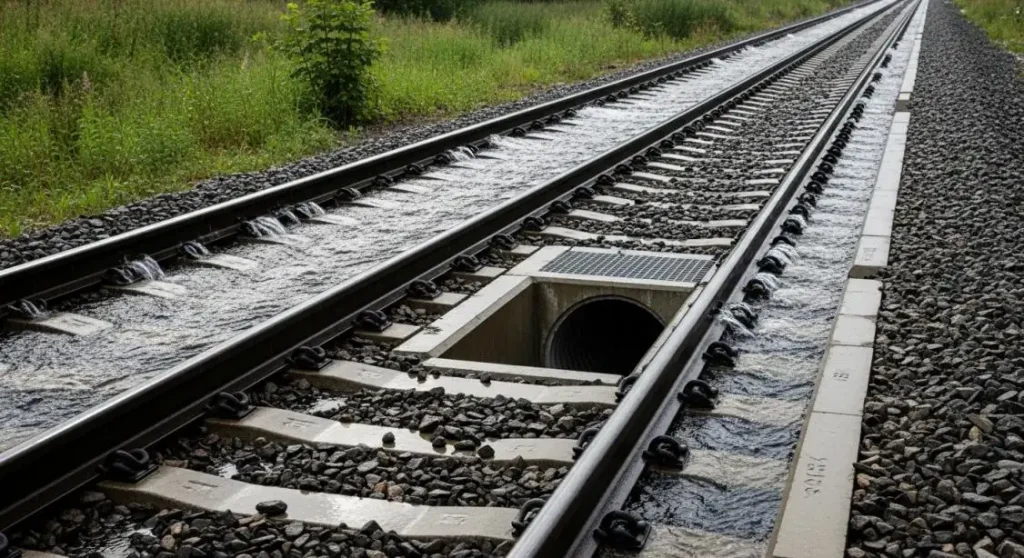
From the CMSA product range, the Rail Track Drainage Systems solution is built around polymer concrete and developed for safe drainage in tramrails. The system comes in 1000 mm, 1500 mm, and 2000 mm modular sections and is developed for use with Ri 53, Ri 54, Ri 59, and Ri 60 tramrail profiles. CMSA presents it as a corrosion-resistant solution that is easier to handle and capable of supporting high load demands.
For buyers, these features create CMSAningful practical benefits:
•The polymer concrete body delivers strong mechanical properties together with chemical resistance, helping the system perform reliably over time in urban rail environments.
•Matching Ri 53, 54, 59, and 60 tramrail profiles helps lower the risk of design inconsistency and enables more seamless use in tramway construction.
•Modular lengths support faster installation workflows and make on-site layout planning easier to manage.
•Fast Water And Dirt Removal helps keep the rail area dry and cleaner, which supports lower maintenance pressure.
CMSA Versus Traditional Rail Track Drainage Systems
Traditional site-built or less specialized drainage details may solve only part of the problem. They may remove some water, but they do not always match tramrail profiles well, and they can create more installation adjustment on site. In contrast, a purpose-designed system gives buyers a more controlled solution.
With CMSA's approach, the value is not only in the product body itself. It is also in the system logic.
•Better fit with tram geometry
•Cleaner drainage path near the flange area
•Easier installation through factory-molded connection elements
•Better resistance to corrosion and long-term degradation
•Lower chance of avoidable maintenance caused by trapped water or sediment
For municipal buyers, this comparison matters because drainage failures rarely stay isolated. Rail authorities and rail design criteria consistently connect water management with infrastructure condition, maintenance demand, and operating reliability.
Where This System Fits Best
CMSA Rail Track Drainage Systems are especially suitable for tramways, light rail systems, and urban rail corridors where public safety, cleanliness, and service continuity all matter. In projects that include embedded track, road-running tram sections, stations, or dense municipal streetscapes, a specialized drainage system can support both engineering performance and long-term asset value. CMSA notes that its tram drainage solutions are intended for tram applications and are designed to support the technical standards required in modern tram networks.
A Smarter 2026 Choice for Buyers
For buyers in 2026, Rail Track Drainage Systems should be seen as more than a drainage detail; they should be treated as a performance-driven project decision. A well-designed system helps control water, limits dirt build-up, supports safer tram operation, and protects infrastructure value across the full service cycle. CMSA's modular polymer concrete solution offers a practical answer for buyers who want reliable tramway drainage with stronger fit, stronger material performance, and more efficient installation logic.
CTA: If you are planning a tramway or light rail project, this is the right time to evaluate whether your drainage design is only removing water, or whether it is also improving safety, maintenance efficiency, and long-term infrastructure performance. Review the CMSA rail drainage solution and compare it against your project's rail profile, loading demand, and installation schedule.


