
Types of Airport Drainage: A Complete Guide to Runway Safety Systems
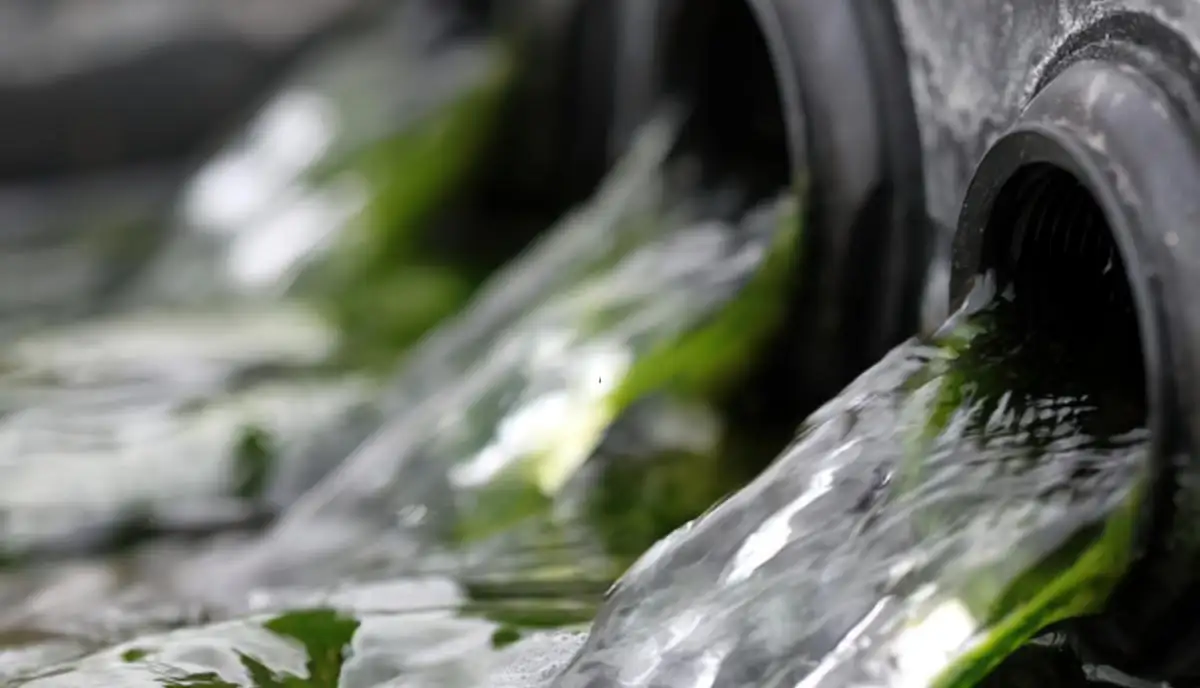
Understanding the different types of airport drainage is essential for keeping runways safe and flights on schedule. In the case of heavy rains, snowmelt, and flash floods, proper drainage becomes even more vital. Standing water poses a number of problems on runways. This water could cause Hydroplaning, degrades runway surfaces, and reduce the efficiency of the pavement. This paper will explain the major airport drainage systems used in modern day airports for taxiway, runway, apron and terminal drainage.
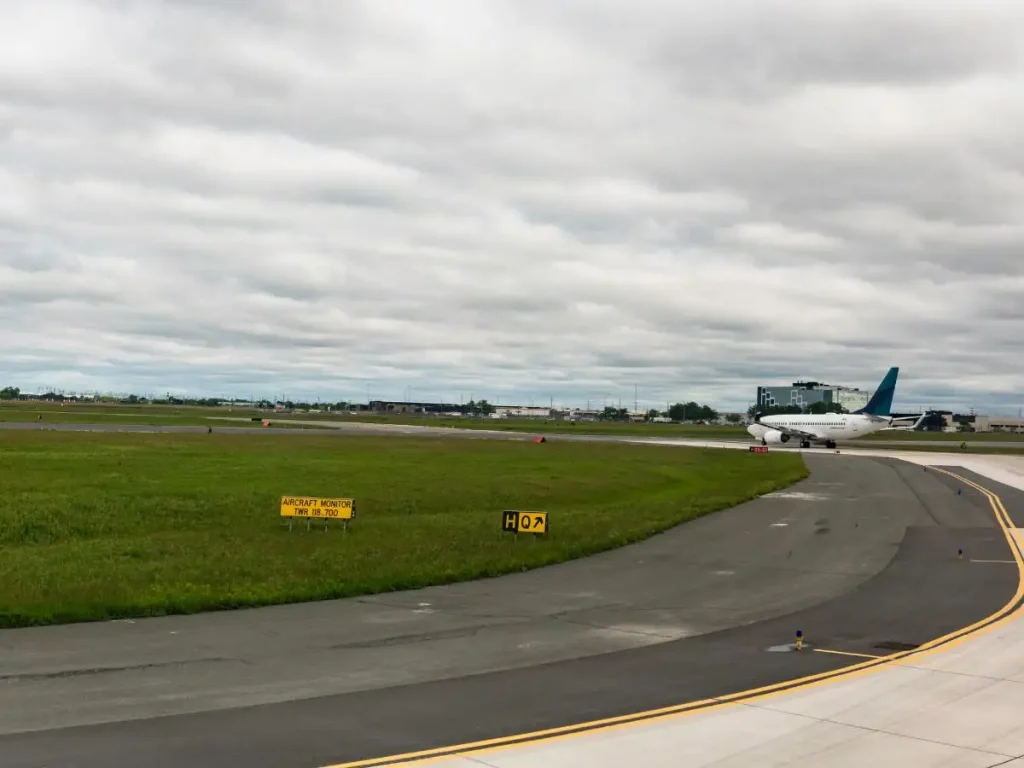
Why Airport Drainage Matters More Than You Think
Airports cover vast impermeable surfaces—asphalt, concrete, and compacted soil. When it rains, it is crucial that the water is removed within a few minutes, or else it will pool because of poor drainage.
When an airport's drainage system is undersized or poorly maintained, the consequences are immediate:
- Aircraft Hydroplaning: Increased risk of tires losing contact with the runway during takeoff and landing.
- Infrastructure Damage: Premature cracking, frost heave, and potholes in the pavement.
- Erosion: Degradation of embankments and upper subsoils.
- Operational Delays: Grounded flights and closed taxiways due to surface flooding.
To prevent this, professional airport engineers divide water management into several distinct categories.
The Main Types of Airport Drainage
Here is a breakdown of the primary drainage systems that work together to keep modern airfields safe.
1. Surface Drainage Systems
Surface drainage systems employ slopes or channels to facilitate the diversion of water from pavements. These systems primarily remove standing water from a surface.
- Runway Crowning: Runways and taxiways are constructed with a slight vertical rise (1-2%) at the centerline so water sheds to the sides.
- Longitudinal Grading: A subtle slope (0.5%) is applied to move water down the length of the pavement.
- Vegetated Swales: Open, grassy ditches that run parallel to the runway, directing runoff toward larger management basins without causing soil erosion.
2. Subsurface Drainage Systems
Water doesn't just sit on top of the runway; it infiltrates joints, cracks, and shoulders. Subsurface drainage prevents the base layers from saturating, which is the primary cause of frost heave.
- Underdrains: Gravel-filled trenches containing perforated pipes that intercept groundwater before it permeates the pavement's subgrade.
- Perforated Edge Drains: Wrapped in geotextile fabric, these pipes sit at the base of the subgrade to continuously remove seepage.
- Interceptor Drains: Linear drains positioned on the uphill side of a runway to catch lateral groundwater flow from adjacent high ground.
3. Heavy-Duty Trench Drains
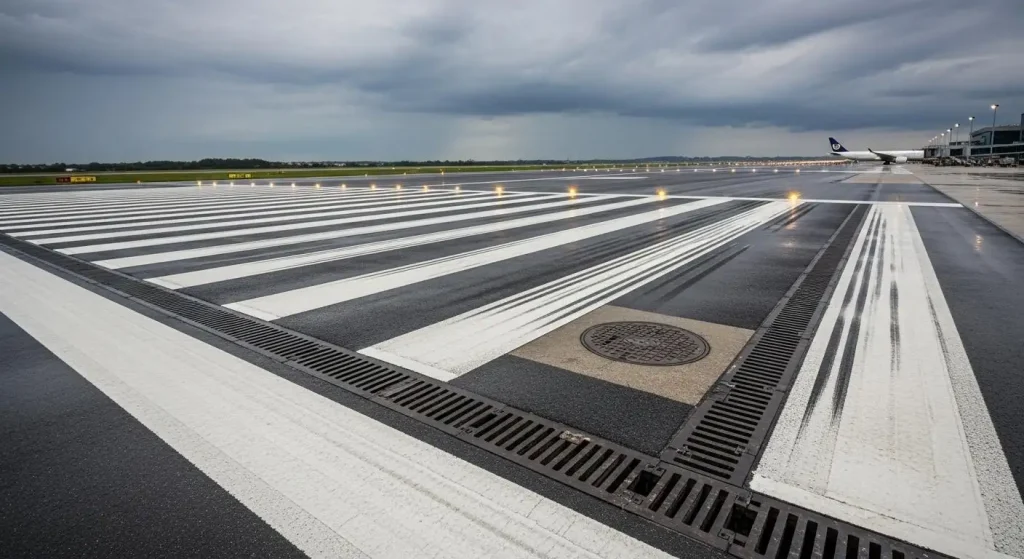
Trench drains are high-capacity, continuous channels mounted flush with the concrete. Installed on taxiways, aprons, and turnaround pads, they are designed to capture massive amounts of sheet flow.
- High-Capacity Collection: They rapidly divert large volumes of water from wide paved surfaces into underground piping.
- Aircraft-Rated Grates: In aviation, these grates must withstand point loads from massive aircraft like the Boeing 747 or Airbus A380 (Class F900) without cracking or deforming.
4. Catch Basins and Stormwater Inlets
Catch basins are excavated vertical structures with a grate on the yielding surface and a sedimentation sump below that connects to buried storm pipes.
- Point Collection: Ideal for capturing water that gathers at specific low points in the pavement gradient.
• Debris trapping: The sump collects debris and residues such as sand and de-icing fluids, in addition to foreign object debris (FOD). Collecting these materials prevents downstream pipes from becoming clogged.
5. Edge Drains for Pavement Shoulders
Runway shoulders are usually grass or asphalt strips. Edge drains prevent lateral water flow from softening these critical transition zones.
• Geocomposite wick drains: Prefabricated vertical wick drains that are made of composites are installed in the edge drains below the pavement to rapidly drain the shoulder and also keeps the shoulder soils from becoming too soft or unstable.
• Slotted collector pipes : These capture water moving off impacted runway shoulders, preventing intrusion beneath the main runway slabs.
Advanced Stormwater Management and Climate Control
6. Stormwater Management Systems
Airports must meet environmental regulations before letting water be drained off site (EPA Clean Water Act). Stormwater management integrates drainage and water quality control.
- Detention Basins: Porous stone ponds or grassy areas that temporarily hold and slowly release stormwater to prevent downstream flooding.
- Oil-Water Separators: Essential for hangar areas and fueling aprons to strip jet fuel, hydraulic fluid, and oil from the water before discharge.
- Constructed Wetlands: Engineered habitats that use substrates and vegetation to naturally filter out heavy metals and de-icing chemicals.
7. Specialized Drainage for Cold Climates
Northern airports face the added challenge of ice. Water that leaves the runway can quickly freeze, blocking outlets.
- Heated Pavement Systems: Electric heating or circulating glycol keeps drain outlets free of ice year-round.
- Snowmelt Channels: Deep trenches injected with steam or hot water to safely carry slushy snow to sumps.
- Low-Temperature Grates: Cast iron grates treated with anti-icing coatings that remain functional down to -40°C.
How Engineers Choose the Right Drainage System
Selecting the right drainage setup depends on a matrix of site-specific factors:
- Pavement Type: Concrete (rigid) requires different edge drainage strategies than asphalt (flexible).
- Rainfall Volume: Airports in monsoon regions require trench drains with massively higher hydraulic capacity than those in arid climates.
- Aircraft Size: Code F airports (A380-compatible) require F900 reinforced grates and deeper sumps.
CMSA: Custom Engineered Drainage for Aviation
Modern airfields require infrastructure that can handle immense weight and aggressive chemicals. CMSA specializes in manufacturing high-performance polymer concrete drainage systems designed specifically for airports, logistics yards, and highways.
Our custom linear trench drains are adaptable to your exact project parameters:
- The Polymer Concrete Advantage: Polymer concrete offers massive compressive strength and absorbs the heavy vibrations of landing aircraft. It also shares a similar thermal expansion rate to the surrounding tarmac, preventing edge-cracking and prolonging the life of the runway.
- Extreme Load Capacity: Engineered for critical aircraft zones, our systems are fully compliant with Class F900 crash loading, easily supporting the 150,000+ pound wheel loads of a Boeing 747 or Airbus A380.
- Total Chemical Resilience: Polymer concrete is naturally impermeable. It easily shrugs off aviation fuels, hydraulic fluids, and harsh winter de-icing salts that would rapidly degrade standard concrete or corrode lesser materials.
- Durable Grating: Instead of lightweight stainless steel, our polymer concrete channels are paired with ultra-heavy-duty ductile iron gratings featuring custom anti-slip surfacing. This creates an immovable, fail-safe system that will not warp or buckle under heavy transit.
- Optimized Hydraulics: Internal clear widths ranging from 100 to 500 mm to meet the strict hydraulic demands of massive, flat runway catchments.
By specifying CMSA's polymer concrete drainage systems, airport planners get a solution that is structurally superior to metal alternatives, highly resistant to aviation chemicals, and built to keep runways safe for decades.
Final Thoughts
Different Types of Airport Drainage Systems educates users on creating safer and stronger airfields. CMSAs Ultimate Drainage Solutions provide and uphold airport performance standards. CMSAs flexible designs, extreme load bearing and chemical durability substantiate drain systems that keep pace with what the needs of airport systems of 2026 and beyond.
Free to contact CMSA about forthcoming airport projects to see how greatly CMSAs polymer concrete systems can increase safety and operational efficiency.
Frequently Asked Questions (FAQ)
Q1: What happens if the airport drainage system fails in heavy rain?
A: Runway flooding can lead to dangerous hydroplaning, brake failure, flight delays, and destruction of the runway. As a last resort, the airport may close the runway until the flooding can be dealt with.
Q2: What is the frequency of inspections of the airport drainage system?
A: Majority of the airports do visual inspections on a monthly basis. On an annual or semi annual basis there are detailed surveys with the help of a closed circuit camera to inspect the underground drainage systems. Finally, after a significant storm, it is standard to carry out an additional inspection.
Q3: Are aircraft able to services a runway that has water on the surface?
A: The surface water levels are less than 1/8 of an inch (3 mm) or below are generally considered safe for service. Higher water levels require closed runways and are labeled "contaminated," necessitating a recalculation of the stopping and landing distances.
Q4: Are all the airport drainage systems the same?
A: No. In small general aviation airports, most construction methods of surface sub grading and surface swales are relied on. Large international airports use a combination of trench drains, underdrains, and surface or catch basins integrated with stormwater treatment systems.
Q5: What is the most demanding part of airport drainage maintenance?
A: It is the build-up of the sediment and debris, especially when it is combined with an airfield's de-icing fluids, rubber, and foreign object debris. It is a must to regularly vacuum clean the sumps and oil-water separators otherwise they will become the clogging point.


