Hygienic Drainage Systems for Industrial Use: A Guide to Audit-Ready Performance
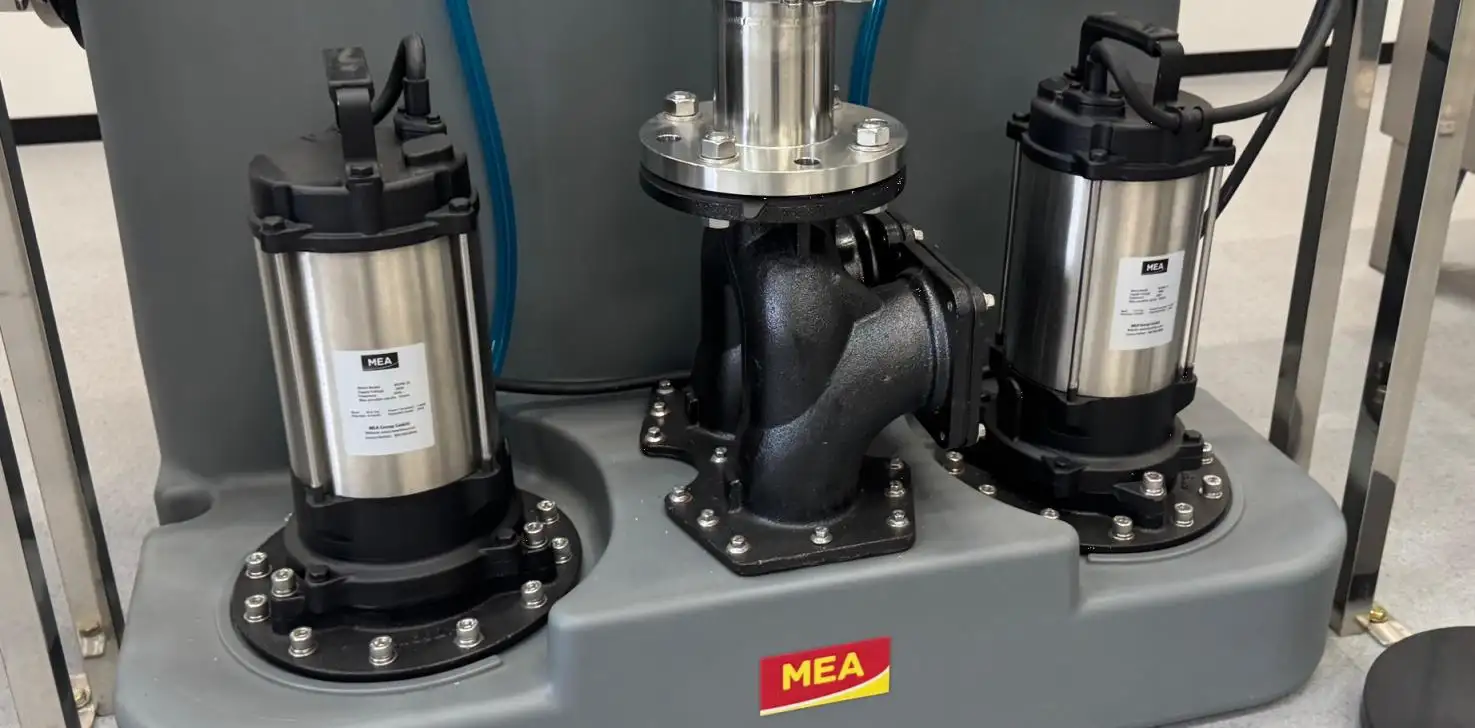
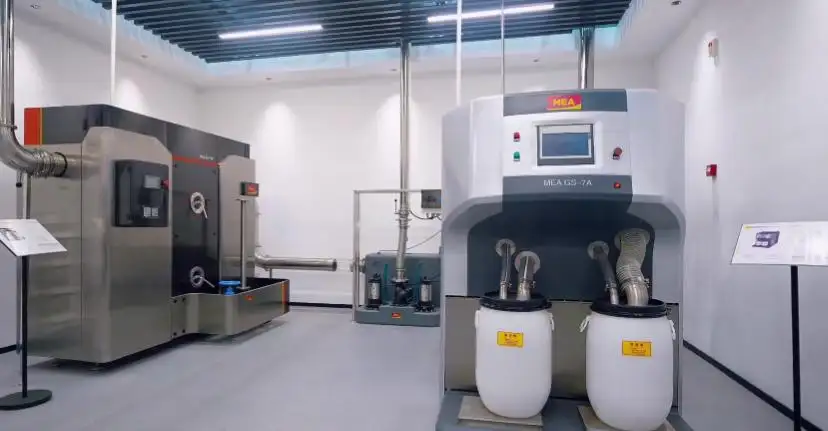

Today, installing hygienic drainage systems for industrial use is absolutely necessary to pass audits without the fear of recalls in food, beverage, and pharmaceutical plants. As stricter EN standards and third-party certifications (like BRCGS, IFS, and FSSC 22000) become the norm, no facility manager can afford to install the wrong drainage system.
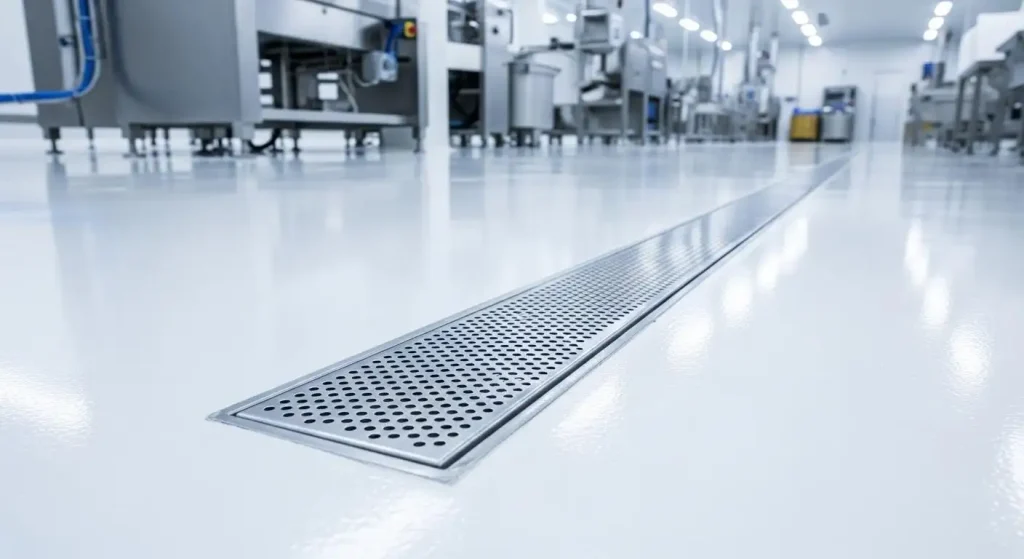
CMSA's solution—the Hygienic Stainless Steel Drainage System—utilizes 304/316L steel, modular channels, and full EN 1253/EN 16165 compliance. We prove that high-performance drainage can be both audit-ready and easy to install.
Here is how CMSA's design meets the rigorous demands of modern industry.
The Wake-Up Call: Why Old Drains Fail Audits
Concrete trench drains, sealed only with a surface coating, hide a silent problem: bacterial harbourage. Over time, standing water, organic residue, and micro-cracks create permanent biofilms that no cleaning chemical can fully remove. Regulators now specifically look for:
Modern regulators and auditors now specifically look for:
- Smooth, cleanable internal surfaces without hidden crevices.
- Leak-proof construction that prevents soiled water from seeping into subfloors.
- Materials that resist corrosion from aggressive CIP (Clean-in-Place) chemicals and hot water.
Modern hygienic drainage systems for industrial use address every single one of these points. CMSA's sealed stainless steel channels eliminate porous concrete contact entirely, while large internal radii remove the sharp 90-degree corners that trap bacteria.
Core Design Features That Define a Truly Hygienic Drain
What separates a genuine hygienic drain from a standard drain with a stainless steel cover? CMSA has five key design principles:
- Large Corner Radii: Cleaning agents and water flow smoothly through corners with large radii, ensuring that even the finest dirt, debris, and grime are washed away rather than collected.
- Fully Sealed, Leak-Proof Construction: All channels are welded and extensively leak-tested. This protects the structural integrity of your building and eliminates the source of deep, structural odors.
- Anti-Slip Safety Covers: Slip-resistant safety covers are engineered to maintain high drainage capacity while protecting workers in wet environments.
- Impact-Resistant Edge Infill: Reinforced edges prevent chipping and cracking under heavy forklift traffic, preserving the hygienic envelope of the floor.
- Optional Surface Treatments: Processes like passivation, electropolishing, or shot blasting deliver the exact surface roughness (Ra value) required by your hygiene standard (e.g., <0.8µm for dairy).
All these features come as standard options within CMSA's Hygienic Drainage Systems for Industrial Use portfolio.
Material Selection: 304 vs 316L Stainless Steel
Not all stainless steel is created equal. The right choice depends on your facility's specific chemical exposure.
304 Stainless Steel
This is the material of choice for most food preparation areas and commercial kitchens. It is cost-effective, easy to clean, and highly heat-resistant up to extreme washdown temperatures.
316L Stainless Steel
For areas that are particularly high in chlorides—such as breweries with caustic cleaning, seafood processing plants, and pharmaceutical cleanrooms—grade 316L is required. It features added molybdenum for exceptional resistance to salt, acids, and chlorine-based sanitizers, preventing pitting corrosion.
Using either grade, CMSA ensures that Hygienic Drainage Systems for Industrial Use maintain their structural integrity and smooth surfaces for decades, not just years.

Certified Standards That Survive Any Audit
In industrial facilities, compliance is not optional. When an auditor asks for proof, you need to have it immediately. CMSA provides third-party certification documents with every system to guarantee:
• EN1253 certified : Guarantees mechanical strength and hydraulic performance.
• EN16165 compliant : Verifies anti-slip properties under real-world conditions.
• CE marked : Confirms full alignment with EU regulations, simplifying market access.
CMSA provides third-party certification documents with every system. When an auditor asks for proof, you have it immediately.
Modular Design Saves Time and Money On Installation
Traditional cast-in-place drains require wet trades, extended curing times, and rigid layouts. Hygienic Drainage Systems for Industrial Use from CMSA take a different path: modular components that lock together quickly.
- Lightweight Modular Channels: Standard 1000mm lengths are light enough for two workers to handle but strong enough for load class F900.
- Pre-Fabricated Corners and Outlets: Eliminates messy, imprecise on-site cutting and welding.
- Quick-Join Sealing System: Each connection uses a factory-fitted gasket and stainless steel coupler—no special tools required.
The result is up to 50% faster installation compared to poured concrete systems. For a greenfield project or a retrofitted production hall, that speed translates directly into lower labour costs and earlier operational startup.
Professional Support That Reduces Project Risk
CMSA does not just sell products; we provide complete engineering support to turn a pile of stainless steel components into an audit-ready drainage infrastructure. Our services include:
- Drainage Calculations: Using professional hydraulic software to verify your system can handle peak flow events.
- BIM Families & Layouts: Fully compatible with Revit to ensure seamless integration into your facility's digital twin.
- On-Site Training & Inspections: Our technicians teach your crew correct assembly methods and perform alignment and slope checks during installation.
- Acceptance Assistance: We help with final testing and documentation handover.
Where Industrial Drainage Is Headed Next
Several regulatory and technological trends are shaping the next generation of drainage. More processors are demanding alignment with EHEDG (hygienic design principles), while upcoming updates to 3-A SSI Standards will explicitly require leak-detection paths. Additionally, GMP revisions for pharma are tightening cleanability requirements.
CMSA is already aligned. The welded construction, large radii, and certified cleanability of the MEA system meet both current and emerging guidelines—future-proofing your investment.
Conclusion: Why CMSA Should Be Your Drainage Partner
When you choose CMSA's hygienic drainage systems for industrial use, you are investing in materials that never harbor bacteria, a modular ecosystem that installs rapidly, and direct technical support from calculation through to final acceptance.
• Materials that never rust, corrode, or harbour bacteria.
• Certified compliance with EN1253, EN16165, and CE marking.
• A modular ecosystem that installs fast and adapts to any layout.
• Direct technical support from calculation through to final acceptance.
The question is no longer “Should we upgrade our drainage?” but “How quickly can we install a truly hygienic system?”
Contact CMSA today to request a hydraulic calculation, a sample of our modular channel, or a consultation with our hygienic design engineers. Your next auditor will thank you.
FAQs
Q: Which industries require hygienic drainage systems?
A: Food processing, breweries, bottling plants, pharmaceutical cleanrooms, commercial kitchens, and chemical processing plants.
Q: Why use stainless steel (304/316L) and not concrete or plastic?
A: Stainless steel systems will not corrode and takes the heat and the harsh cleaning agents. No porosity, no micro cracks, no places to harbor bacteria.
Q: What certification is obligatory?
A: EN1253 (drainage performance), EN16165 (anti-slip performance) and CE mark. All said certifications are smooth and audit-compliant.
Q: What is the CMSA modular channels installation rate?
A: Up to 50% faster than conventional concrete drains due to pre-fabricated parts and a self-sealing system.
Q: How does CMSA handle customer service?
A: Yes, from hydrological predictions, BIM families, to on-site installations and final acceptance.


