
Designing the Best Hygienic Drainage Component Washdown Areas for Food Processing
In food processing facilities, a single poorly designed drain can ruin an entire sanitation protocol. Washdown areas—where high-pressure hoses, hot water, caustic cleaners, and organic waste converge—demand nothing less than the Best Hygienic Drainage Component Washdown Areas. But what does that actually mean in practice? This step-by-step guide walks you through the engineering logic behind truly hygienic drainage, while highlighting how CMSA's stainless steel systems deliver excellence at every stage.
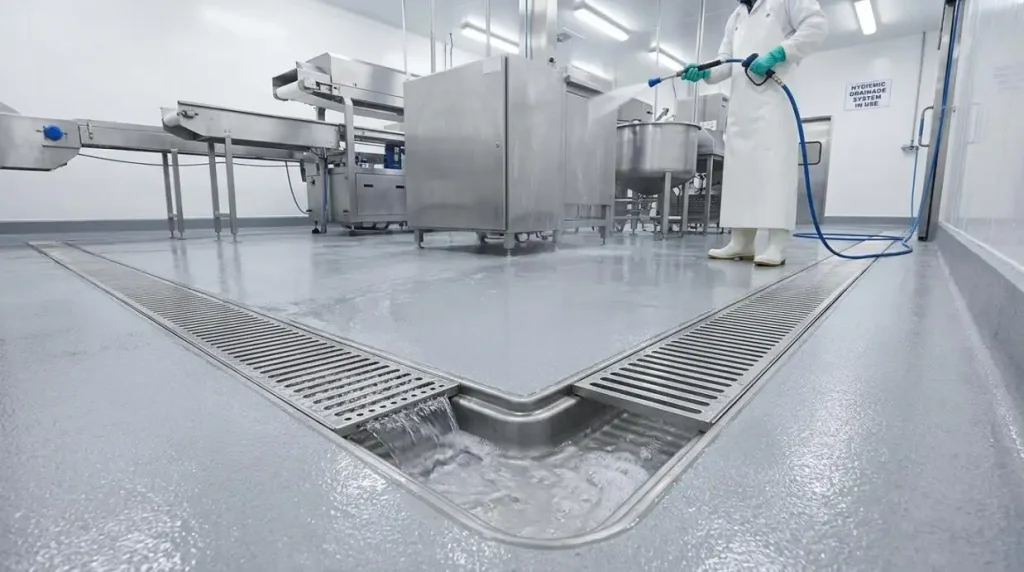
Why Washdown Areas Demand Specialized Drainage
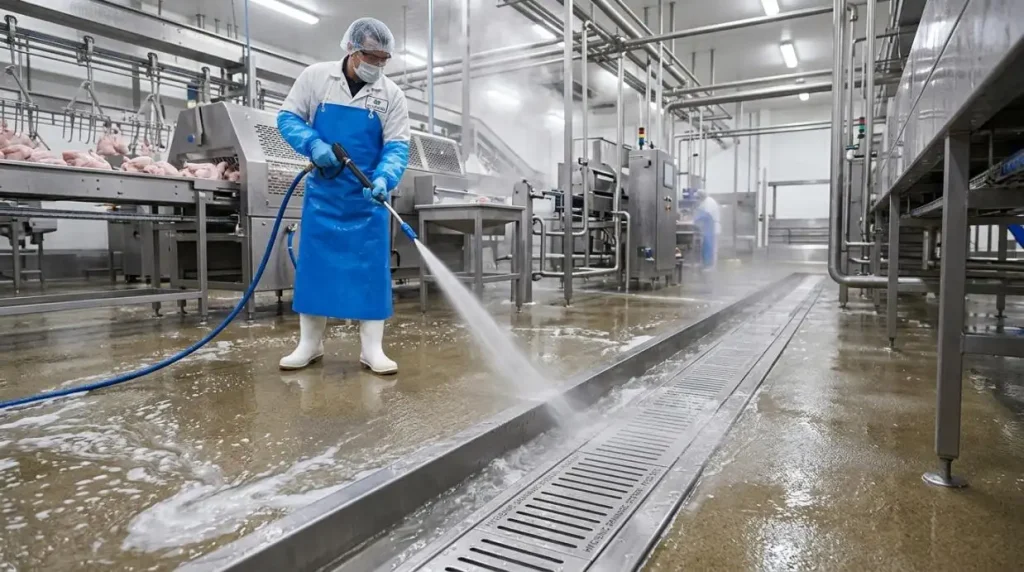
Washdown areas in food plants experience high-pressure cleaning, hot water, chemicals, and organic waste. Conventional drains with sharp corners, crevices, and porous materials trap residue, leading to biofilm formation. To facilitate the optimum solution for conscientious washdown areas, contemporary design ideas and materials, combined with modular flexibility, offer a range of options that will address your cleaning and maintenance worries.
Core Principles for Hygienic Drainage Design
There are several principles that can be applied to define a hygienic drainage system. Before we look at different products, let's quickly examine some of these.
1. Internal corners that are smooth and radiused.
2. There cannot be any leaks. The drainage system installed beneath the floor is to remain entirely contained. Waste water cannot be permitted to leave the system.
3. Resistance to corrosion. Acids, salts, and corrosive substances should be able to pass through without damaging the drainage system.
4. Disassembly and cleaning should be straightforward and should not require the use of any tools.
5. Drainage covers should be slip-resistant for the safety of the workers.
STEP 1 – Assess the Washdown Environment & Define Hygiene Requirements
Product selection should come well after step 1. You have to identify the specific requirements of the washdown zones. Each food sector (such as meat, dairy, and even brewing and pharmaceutical manufacturing) is unique in the waste they generate, how often the washdown occurs, and the levels of hygiene that can be reasonably expected.
Key Assessment Factors
Flow volume and peak discharge. How many liters per second can be expected during simultaneous hose cleaning?
• Waste type – Solid particles, fats/oils, acidic residues, or caustic chemicals?
• Temperature range – Intermittent boiling water? Freezer washdowns?
• Traffic load – Light foot traffic, pallet jacks, or heavy forklifts?
• Cleaning protocol – Daily foam cleaning, hourly rinses, or CIP (clean-in-place)?
CMSA's Role in Step 1
CMSA provides professional drainage technology support including hydraulic calculations and drainage simulations. Their team helps you determine the exact channel depth, outlet size, and slope needed for your Best Hygienic Drainage Component Washdown Areas. No guesswork—just data-driven decisions.
Why this step matters: Oversizing wastes money; undersizing leads to standing water and bacterial growth. CMSA's engineering support ensures you start right.
STEP 2 – Select the Right Stainless Steel Components & Modular Configuration
Once the requirements are clear, it's time to build your drainage system from CMSA's comprehensive modular range. The Best Hygienic Drainage Component Washdown Areas rely on three core design principles: smooth radii, leak-proof seals, and corrosion-resistant materials.
1. Choose the Material Grade
• 304 Stainless Steel – Ideal for most food processing environments (excellent corrosion resistance).
• 316L Stainless Steel – Required for high-chloride or salt-laden washdowns (e.g., seafood, pickling).
Both grades are non-porous, heat resistant, and fully recyclable—essential for hygienic design.
2. Select the Modular Channel Type
CMSA offers a variety of pre-engineered units that click together without special tools:
• Hygienic Channel Unit (1000mm length, 60mm height) – The workhorse of linear floor drains. Features large internal corner radii for debris-free cleaning.
• Corner Channel Unit (514mm length) – Seamlessly changes direction around equipment legs or walls.
• Center Outlet Drain Channel with Outlet Box (900mm length) – Perfect for island workstations where water needs to drain centrally.
• End Outlet Modular Drainage Channel – Connects directly to vertical waste pipes.
3. Choose the Correct Grating for Safety and Hygiene.
• Mesh or Wedge Mesh Grating – Allows fast drainage while being a barrier for larger waste debris from getting into the drainage system.
• Ladder Grating – For heavy-duty areas requiring maximum drainage openness.
• Anti-Slip Surface – All CMSA gratings are available with slip-resistant patterns, meeting workplace safety standards.
CMSA's Key Advantages in Step 2
• Modular Quick Installation – No welding, no cutting. Units lock together with integrated sealing gaskets.
• Leak-Proof Sealing – The sealed construction prevents any wastewater from escaping into the concrete subfloor, eliminating biofilm reservoirs.
• Smooth Internal Radii – Every CMSA channel has large radius corners (no 90° angles), so bacteria have nowhere to hide.
• Customizable Solutions – Need a non-standard length, outlet position, or depth? CMSA manufactures bespoke components for your Best Hygienic Drainage Component Washdown Areas.
�� Example: A brewery using caustic CIP solutions chose CMSA 316L corner channels with wedge mesh gratings. Result: zero corrosion after 3 years, and cleaning time cut by 40%.
STEP 3 – Install, Seal & Maintain for Long-Term Hygiene
Even the best components fail if installed incorrectly or maintained poorly. Step 3 ensures your investment delivers decades of reliable performance.
1. Leak-Proof Installation Method
• Concrete expansion matching – CMSA channels are designed to move slightly with thermal expansion, preventing cracks in the seal.
• Pre-cast or cast-in options – The modular system can be embedded directly into wet concrete or placed into pre-formed recesses.
• Integrated gasket seals – Each joint between channel units has a factory-installed EPDM gasket—no on-site sealants needed.
2. Simplified Maintenance Protocols
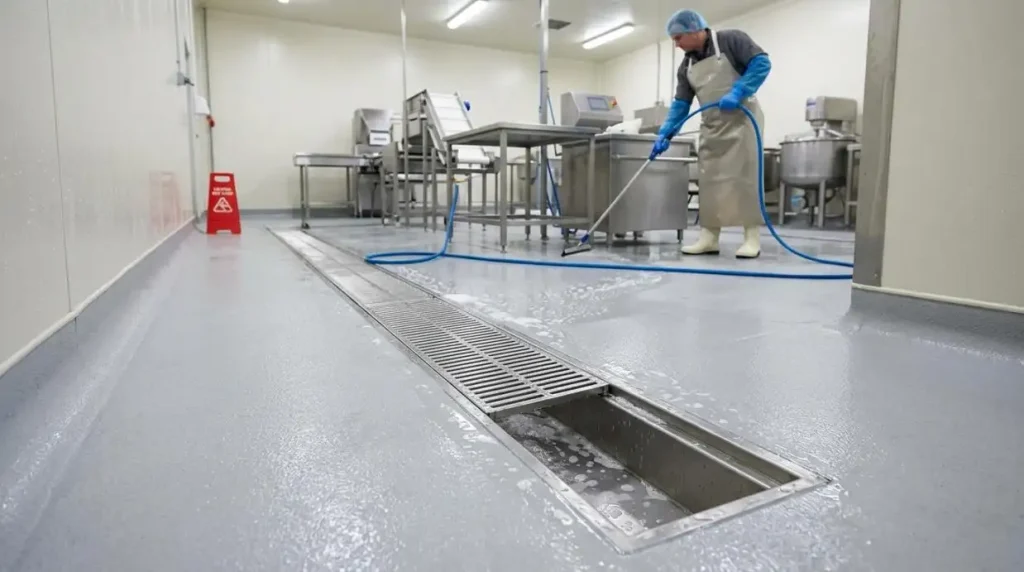
The Best Hygienic Drainage Component Washdown Areas must be easy to clean daily. CMSA makes this possible:
• Tool-free grating removal – Lift the grating by hand for full channel access.
• Hose-cleanable surfaces – Smooth internal radii mean a single washdown flushes everything to the outlet.
• Inspection and acceptance support – CMSA engineers provide on-site training before start, conduct regular inspections during construction, and assist with final acceptance testing.
CMSA's Technical Support Throughout Step 3
• BIM Support – Complete product family library with LOD 350 models for clash detection.
• Installation Guidance – Professional engineers offer on-site construction training and periodic quality checks.
• Post-completion Assistance – Help with inspection reports and regulatory documentation.
�� Pro tip: Schedule a quarterly maintenance audit. With CMSA's sealed, radiused design, you'll spend less than 10 minutes per drain per week on cleaning.
Conclusion: Why CMSA Defines the Best Hygienic Drainage Component Washdown Areas
From initial hydraulic calculation (Step 1) through modular component selection (Step 2) to leak-proof installation and easy maintenance (Step 3), CMSA delivers every element required for the Best Hygienic Drainage Component Washdown Areas. Their advanced design—large internal radii, sealed construction, anti-slip covers—combined with premium 304/316L stainless steel and certified standards (EN1253, EN16165), ensures your food processing washdown areas remain safe, compliant, and efficient for decades.
Ready to build your own step-by-step hygienic drainage solution? Contact CMSA for professional drainage technology support—including calculations, BIM families, and on-site installation guidance—and turn your washdown area into a benchmark of food safety.
FAQ: Best Hygienic Drainage Component Washdown Areas
Q1: Why is stainless steel essential for food processing washdown areas?
A: Stainless steel (304 or 316L) is non porous, corrosion resistant, and very easy to sanitize. It can stand hot water, caustic cleaners, and acidic food residue, unlike concrete or plastic drains that corrode, harbor bacteria, and need to be replaced.
Q2: What differentiates CMSA from traditional trench drains?
A: CMSA utilizes features like rounded internal corners, leak proof sealed construction, modular stainless steel components in 304/316L. Because of these features, biofilm traps are not created, and wastewater will not migrate beneath the floors.
Q3: What is the criterion for selecting 304 and 316L stainless steel?
A: For most food processing 304. 316L must be used with washdown waters with high chlorides (with seafood, pickle, and saline cleaning agents) for best corrosion resistance.
Q4: Can CMSA drains be used in the existing concrete floors?
A: Yes. The modular channels can be retrofitted into cut-out floor trenches or embedded during new construction. CMSA provides on-site installation guidance to ensure proper sealing and slope.
Q5: How often should I clean a CMSA hygienic drain?
A: Daily washdown with a hose is usually sufficient. The smooth internal radii allow complete flushing. For heavy debris areas, lift the grating (tool-free) and rinse weekly. Quarterly professional inspection is recommended.


