
Cost-Efficiency of an Outdoor Drainage System

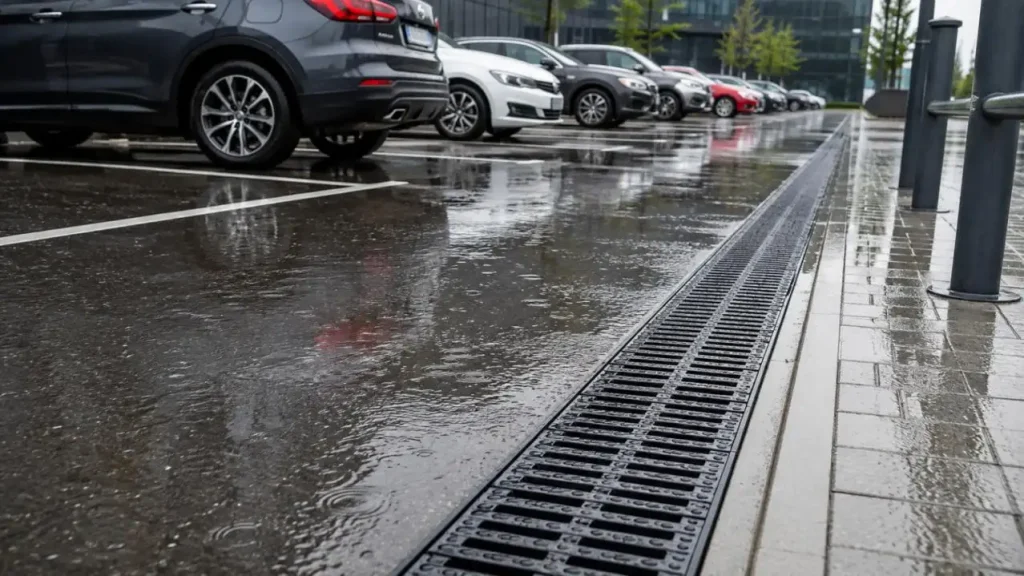
The purchase price is not the primary consideration when measuring the Cost-Efficiency of an Outdoor Drainage System for outdoor infrastructure projects. A drainage channel is a component of long-standing infrastructure that requires the management of surface water while being able to withstand the effects of traffic, exposure to the elements, and chemical and mechanical attacks.
For engineers and project owners, the real economic evaluation should focus on total cost of ownership (TCO):
TCO = Initial Material Cost + Installation Cost + Maintenance Cost + Repair Risk + Replacement Cost
A drainage system with a slightly higher initial investment can deliver better cost efficiency when it provides longer service life, fewer maintenance interventions, and stable hydraulic performance.
Why Lifecycle Performance Defines the Cost-Efficiency of an Outdoor Drainage System
Most drainage issues aren't caused by insufficient water capacity but are rather the result of inadequate material selection and incorrect load classification.
Poorly designed drainage systems can cause a range of issues, including:
• Damage from repeated vehicle loading
• Water penetration and freeze-thaw
• Chemical corrosion or damage
• Increased cleaning frequency due to poor hydraulic performance
• Damage to the surrounding pavement from drainage failure
The Cost-Efficiency of an Outdoor Drainage System should be assessed based on the performance of the system after 10, 20, or even 30 years, as the pricing of the product is only one small part of the cost consideration.
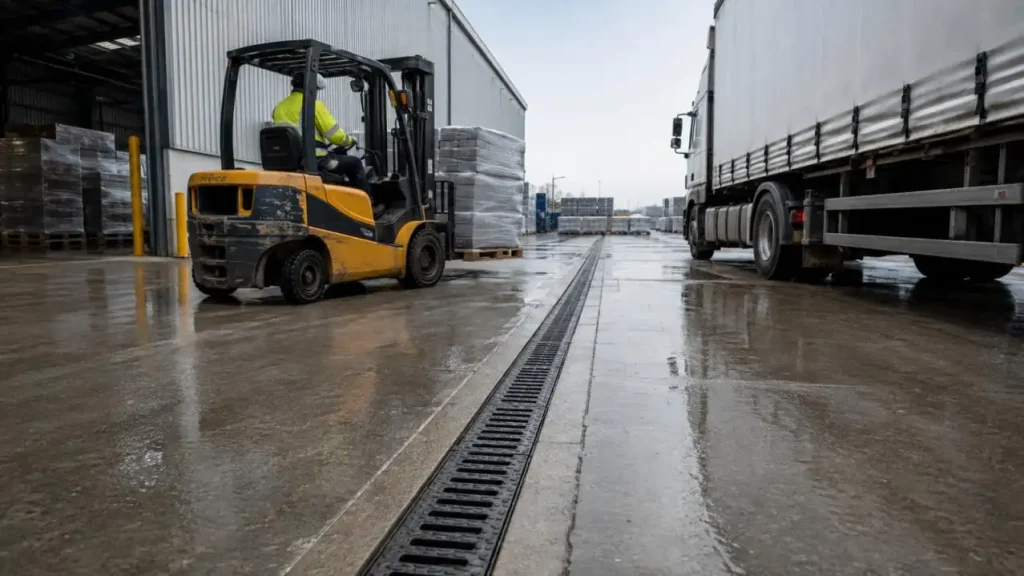
For instance, drainage failure in the industrial yards or logistics centers of a facility can affect the movement of vehicles, the pavement life, and the safety of operations. The cost to repair the surrounding infrastructure could exceed the difference in cost between basic drainage systems and more advanced drainage systems.
Polymer Concrete: A Material Approach for Improving Drainage System Economics
The selection of long-term drainage material is vitally important to reducing long-term drainage cost.
Polymer concrete drainage channels are made of mineral aggregates and polymer binders instead of a traditional cement-based binder system and offer:
• High compressive strength
• Low water absorption
• Resistance to chemicals
• Internal surface smoothness
• Long-term dimensional stability
CMSA's polymer concrete drainage systems are designed for applications in industrial areas, transportation infrastructure, and other areas of heavy industrial use.
Polymer Concrete Drainage Systems vs. Conventional Concrete Systems
| Performance Factor | Polymer Concrete Drainage System | Traditional Concrete Drainage System |
| Compressive Strength | Varies based on polymer matrix stability and state of cure | Varies with mix design and curing practices of the concrete |
| Water Absorption | Low, but not zero | Varies based on curing and mix practices, greater concern for moisture penetrating throughout without drying out the system |
| Chemical Resistance | Oils, brines, and various chemicals | Aggressive environmental conditions will degrade |
| Surface Finish | Internal surface is smooth | Causes increased hydraulic resistance |
| Maintenance Requirement | Requires less maintenance over extended service time | More likely to require repair and cleaning |
The main cost benefit of polymer concrete is the ability to maintain performance due to the reduced degradation. Lower water absorption and chemical resistance limits the degradation of the system.
How Engineering Parameters Affect Cost-Efficiency
Technical performance must meet the site conditions to determine the cost-effectiveness of an outdoor drainage system.
Load Capacity: Avoidance of Structural Replacements
The location of the drainage channels defines the mechanical loads to which they could be exposed.
EN 1433 standard-classified channels are used from pedestrian to heavy-duty vehicle use. Load classes are from A15 for pedestrian use to F900 for heavy use in airports, ports, and industrial zones.
| Load Class | Typical Application | Cost Impact |
| A15 | Pedestrian zones, gardens | Lower structural requirement |
| B125 | Residential driveways | Moderate traffic resistance |
| C250 | Commercial areas | Increased vehicle durability |
| D400 | Roads and parking areas | Heavy traffic protection |
| E600/F900 | Industrial and airport applications | Maximum Load Protection |
Selecting a load class which is too low may result in a lower initial cost, but increases the risk of structural failure and costly replacement.
CMSA offers heavy-duty polymer concrete drainage systems designed in accordance with EN 1433 F900 load class for use in areas such as airports and container terminals, and logistics and industrial zones, where there are continuously high loads.
Hydraulic Performance: Maintenance Reduction through the Optimization of Flow Design
A drainage system needs to perform a number of loads functions and be able to transport water effectively.
Impact on hydraulic performance:
• Catchment Area
• Rainfall Intensity
• Cross-sectional Area
• Slope
• Surface Roughness
• Outlet capacity
Often, drainage channels are chosen based on their visible width only. This is not the best way to ensure good drainage performance.
The large-scale drainage designs should be done in conjunction with rainfall, runoff, channel dimensions, slope, and inlet/outlet capacity.
Reduced shear resistance from smooth polymer concrete surfaces minimizes sedimentation and helps counteract the accumulation of sediment, thus reducing cleaning frequency and the cost of maintenance.
Installation Efficiency: Another Important Component of Total Cost
Installation labor is often a sizeable element of the cost of drainage works.
Prefabricated polymer concrete drainage channels offer improved cost efficiency due to:
• Precise dimensions
• Easy installation
• Building site modifications
• Scheduling consistency
Compared to cast-in-place drainage systems, prefabricated units need less reliance on weather and a higher level of site workmanship.
| Factor | Prefabricated Polymer Concrete System | Cast-in-place System |
| Installation Speed | Faster | Slower |
| Quality Control | Factory controlled | Site dependent |
| Labor Requirement | Lower | Higher |
| Construction Risk | Reduced | Higher |
Large infrastructure projects are highly sensitive to both labor costs and delays. Consequently, reducing installation time is a priority.
Selecting the Right Drainage Solution for Different Applications
The most cost-efficient drainage solution is not the most robust; it is the solution that best complements the working environment.
Commercial and Parking Areas
Concerns include:
• Approximate vehicle loading
• Volume of surface water
• Long-term protection of paved surfaces
Concerns:
• Load class
• Maintenance access
Industrial Facilities and Logistics Areas
Increased demands involve:
• Heavy vehicles
• Fork lift use
• Constant use
• Chemical exposure
Polymer concrete drainage systems offer systems of high load and chemical resistance.
Urban Infrastructure Projects
• Hydraulic capacity
• Aesthetic integration
• Service life
• Required maintenance
Choosing a Cost-Optimized Outdoor Drainage System Through Engineering Value
Cost efficiency of an outdoor drainage system comes from an optimal balance of the following:
• Durability of materials
• Hydraulic performance
• Load carrying capacity of the structure
• Ease of installation
• Expected future needs of maintenance
An evaluation of the system should be done based on the service life and consistency of performance, instead of just based on cost.
Polymer concrete drainage systems offered by CMSA for use in the commercial, industrial, and infrastructure segments combine material technology, load classification, and drainage design. CMSA takes a lifecycle perspective to drainage. This enables engineers and contractors to develop reliable surface water management systems that provide long-term value. CMSA MEA Drainage Solutions
FAQs
Q1. What makes CMSA polymer concrete drainage systems more cost efficient than traditional systems?
Lower life cycle costs and maintenance costs are the key contributing factors. CMSA polymer systems increase cost efficiency with their high resistant nature, low water absorption, low maintenance, and strength.
Q2. For what applications do CMSA outdoor drainage systems provide a solution?
CMSA drainage systems provide solutions for the following:
• Industrial
• Commercial infrastructure
• Parking
• Roadways
• Highway systems
• Transportation infrastructure
Solution selection is dependent on load capacity, hydraulic flow requirements, and exposure to the surrounding environment.
Q3. Why does CMSA use polymer concrete for drainage channels?
The selection of polymer concrete for drainage channels comes from the following attributes:
• High strength
• Low water absorption
• Chemical resistance
• Smooth internal finish
These traits aid in maintaining performance and drainage in outdoor environments.
Q4. What load classes do CMSA drainage systems provide?
CMSA drainage systems are constructed to the requirements of EN 1433 load classes from light pedestrian areas to heavy industry, including airport environments.
Typical load classes of areas include:
• A15 – Pedestrian
• B125 – Light vehicle
• C250 – Commercial
• D400 – Road and parking
• E600 – Heavy industry
• F900 – Industrial airport
Q5. How do CMSA drainage systems decrease maintenance needs and costs?
CMSA drainage systems effectuate lower maintenance costs and needs through:
• High strength polymer concrete
• Low water absorption
• Long service life
• Environmental resistance
• Hydraulic flow efficiency
These attributes facilitate efficient drainage and reduce the risk of service failure.


