
Ductile Iron Grating Load Class Guide for Commercial and Industrial Projects

Ductile iron grating's unique combination of strength, durability, and corrosion resistance puts it at the forefront of surface drainage cover materials in commercial and industrial applications. Compared to traditional cast iron, ductile iron grating has superior tarmacs and congested road systems. With elevated impact resistance and tensile strength, along with a better weight-to-performance ratio, ductile iron grating is the ideal solution for cast iron alternatives.
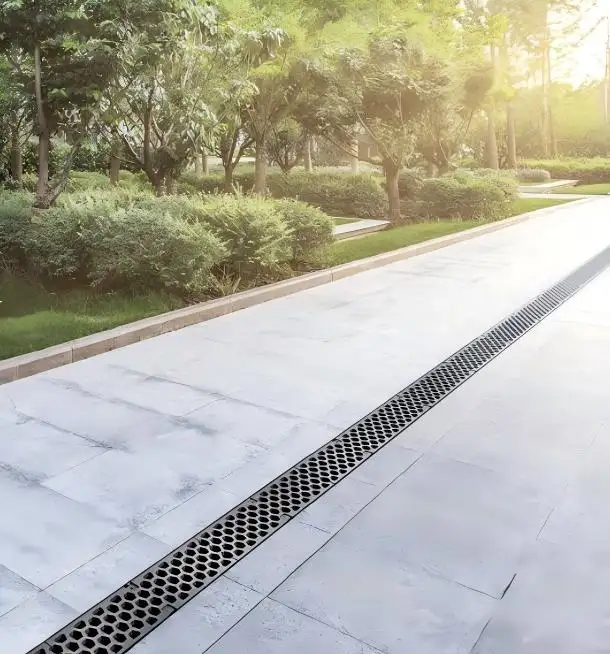
The purpose of this guide is to help engineers, contractors, and facility managers with grating selection for drainage systems by providing insight into ductile iron grating, its the material properties, and load classifications, and selection considerations.
Ductile Iron Grating
Ductile iron grating is a surface cover with high strength made of spheroidal graphite cast iron, which is the result of a specialized iron casting that alters the structure of the graphite from a flake structure to a spheroidal one (contrasted with gray cast iron). This results in several mechanical advantages, which include:
•A tensile strength that exceeds 500 MPa: Allows the loading of gratings with high traffic and large concentrated loads.
•An elongation of 7% or more: Provides cast grating with a measure of flexibility and a reduction of the potential for brittle failure, which commonly occurs with cast iron grating.
•50% lower weight than gray cast iron: Transportation costs are reduced, and grating installation simplifies. Strength is not compromised.
Ductile iron grating is the best choice for drainage systems in tough conditions which require decades of reliable service due to its strength to weight ratio and corrosion resistance.
Fully covered in the following pages is the load class system.
The load classes in the European Standard EN 1433:2002 provide a system for classifying drainage channel gratings based on systems handling purely pedestrian traffic, or those handling the most intense industrial traffic. These classes must be understood when specifying a project involving ductile iron grating.
| Load Class | Test Load | Typical Applications |
| A15 | 15 kN | Pedestrian areas, cycle paths, gardens |
| B125 | 125 kN | Private driveways, parking areas, sidewalks |
| C250 | 250 kN | City roads, roadside drainage, parking lots |
| D400 | 400 kN | Highways, industrial zones, logistics centers |
| E600 | 600 kN | Commercial areas with fork-lift and solid tire traffic |
| F900 | 900 kN | Airports, aircraft pavements, heavy industrial yards |
F900: The Highest Standard of Load Class
The F900 class is the highest standard of drainage gratings. Ductile iron grating that is rated to F900 can withstand a test load of 900 kN (approximately 90 tons or 202,320 lbs). This class is for the highest traffic areas, which would be:
•Pavements and aprons of aircraft: Bearing the weight of large commercial and military aircraft.
•Docks and freight terminals: Having continual heavy traffic of containers and industrial loading.
•Military bases: Areas that need to have a high level of verified performance for military vehicles that are tactical in nature.
•Heavy industrial areas: Grating that is required for large industrial activities and large equipment for material handling.
Ductile iron grating that is F900 certified will have gone through the strict testing requirements of EN1433, will have a CE mark and a Declaration of Performance (DoP). Grating manufacturers, such as CMSA, have ductile iron grating in their range of products which have been designed to meet this highest industrial standard.
Material Advantages: Why Ductile Iron Is the Best Grating Material
Strength-to-Weight Ratio
Ductile iron grating outperforms in numerous facets against traditional materials:
•Better impact strength (40% above cast iron): The graphite particles in a spherical shape absorb and disperse energy more evenly, and the probability of sudden impact fracturing is dramatically decreased.
•Higher tensile strength (over 2 times that of standard cast iron): Allows for a much lighter overall grating design while keeping the structural integrity needed to support the loads.
•Reversible deformation: It can be stretched and will return to its original form, and can continue to do this for decades while maintaining the same function.
Corrosion and Rust Resistance
Modern ductile iron grating has an advanced anti-rust coating that increases the service life of the grating. The CMSA grating is layered multiple times to be protective against:
•Exposure to water: Keeps the grating from oxidizing and rusting in wet environments.
•Attacks from chemicals: Keeps the grating from breaking down due to contact with acids, alkalis, oils, and industrial chemicals.
•Corrosion in the air: Keeps the grating from breaking down in coastal, high humidity, and industrial areas.
Depending on the expected environment and the requirements of the project, surface treatments can be asphalt paint, epoxy resin, and hot-dip galvanizing. The best ductile iron grating can remain rust-free for 480 hours in a salt spray test, proving its resistance to the most corrosive conditions.
Value Over Time
Ductile iron grating can be expected to last over 30 years with normal maintenance and design grating that is over 50% of the life expectancy of gray cast iron. Minimal maintenance and long life provide great value for integrated commercial and industrial infrastructure.
System Compatibility and Design Adaptability
Configurations of Slots for Different Drainage Solutions
Ductile iron grating has different slot widths and patterns:
•Wider slots: For fast drainage of high volumes of stormwater.
•Thinner openings: Ensure drainage while still keeping most debris out.
•Variations in surface texture: Enhance skid resistance, increasing safety for both pedestrians and vehicles.
Compatibility with Channel Systems
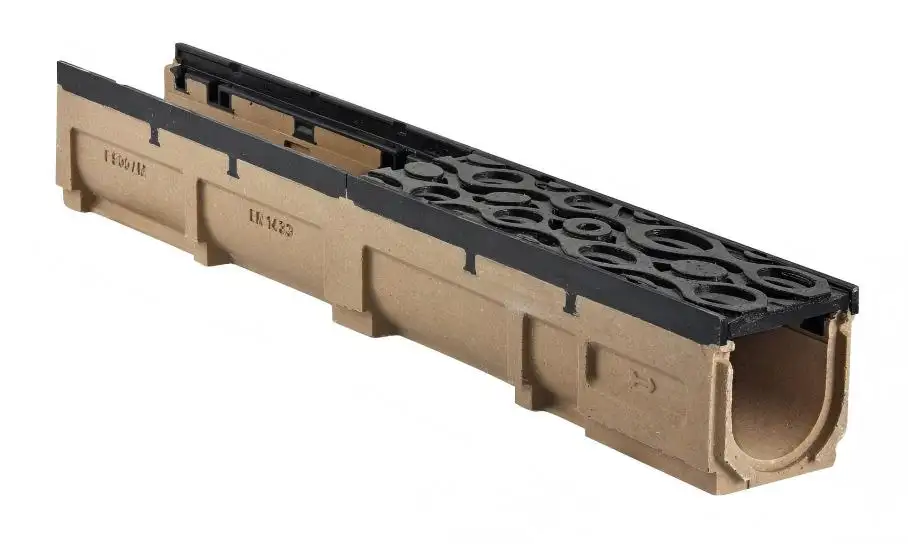
Channel Ductile Iron Grating is compatible with virtually all major drain channel systems. Ductile Iron Grating is compatible with EN1000, U1000, Z1000, LZ1000/80 channel systems, and many others. This affords:
•Modular Systems: Systems can be designed to drain in a straight or curved fashion.
•Simplified Designs: A nominal width of 122 mm fits the majority of standard channel systems.
•Certainty of Design: Security and locking systems that are theft, vibration, and load resistant are available.
Applications in the Commercial and Industrial Sectors
1. Urban Infrastructure
Ductile Iron Grating is the optimal solution for all roadways, pavements, and public squares. Gratings D400 and F900 have been designed specifically for this application.
2. Transport Terminals
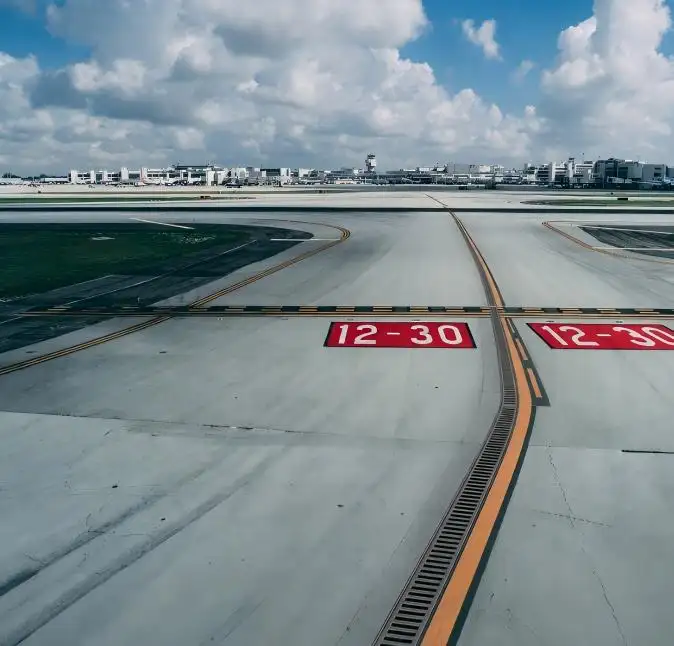
In airports and bus and train terminals, Ductile Iron Grating must accommodate both pedestrian traffic and service vehicles. For all operations of aircraft and baggage, Ductile Iron Grating F900 is the standard.
3. Warehouses and Other Industrial Buildings
Ductile Iron Grating is the preferred solution for warehouses and manufacturing and packing facilities. Ductile Iron Grating of classes E600 and F900 is preferred due to their easy accommodation of pallet jacks and forklifts, high traffic, and the chemical resistance of the systems.
Why Use Ductile Iron Grating?
Ductile iron gratings can be used in distribution centers, parking lots, and shopping malls. It has high strength and safety characteristics. It can also be made in different styles and patterns to meet customers' architectural demands.
Installation & Maintenance
Ductile Iron Grating Installation Guide
Ductile iron grating is applicable for both new and existing construction for the following reasons.
•Standardized widths and systems: Permit easy incorporation to existing channels.
•Modular design: Simplifies extension.
•Secure fitment: Ensures no movement while load is applied and no considerable vibration occurs.
Maintenance of Ductile Iron Grating
Ductile iron grating has a long life cycle and is very low maintenance.
•Routine inspections: Should be carried out monthly for damage and loosening. Grating should not have debris covered.
•Routine maintenance and cleaning: Should be done at the changing of the seasons for potentially falling debris and creating blockage.
•Coating Check: Should be done in severe environments to ensure the rust prevention coating is in place.
Choosing Ductile Iron Grating
While choosing Ductile iron grating in the case of commercial and industrial use, keep in mind the following:
•Traffic load: Should determine the level of load class required (A15 to F900) based on the expected weight and frequency of vehicles.
•Environmental exposure: should dictate which rust prevention and exposure (coastal, chemical, high humidity) protection should be selected.
•Capacity: should be designed with consideration of the debris and water.
•System fit: should ensure alignment with drainage channel systems.
•Security: should consider the necessity of a locking system to deter tampering, theft, or removal.
Closing Words
Ductile iron grating provides strength, corrosion resistance, and durability for commercial and industrial drainage systems. Ductile iron grating can be rated to F900 for use at airports, while other systems fit major drainage channel systems. State of the art rust prevention and coatings, along with precision manufacturing, give assurance of long life. Ductile iron systems can be used throughout urban road ways, transport terminals and industrial systems.
Frequently Asked Questions
Q: What is the highest load class for ductile iron grating?
A: Extreme classes of traffic (heavy industries, airports, etc.) fall under class F900, where the rated load is 900 kN.
Q: How does ductile iron grating compare to cast iron?
A: Cast iron is less optimal than ductile iron in terms of tensile strength, impact, and elongation.
Q: Which anti-rust coatings are typically applied?
A: Depending on the setting and the level of the requested protection, an Epoxy, zinc-rich, or polymer coating may be applied.
Q: Is ductile iron grating suitable for coastal or chemical environments?
A: Yes, provided it is supplied with high performance, corrosion resistant coatings for salt water and moisture and chemicals.
Q: Can I retrofit ductile iron grating into existing drainage channels?
A: Yes, it has been made compatible with standard channel systems with minimal modification.


