
Why a Grease Separator Is Essential for Restaurants and Food Manufacturing Plants
Introduction: The Risks Posed by Commercial Kitchen Wastewater
Wastewater from all commercial kitchens and food processing plants contains fats, oils, and grease (FOG). While FOG is a byproduct from cooking and food processing, releasing it into a plumbing system creates huge operational, environmental, and compliance headaches. A grease separator is the first line to combat these headaches by providing a critical step in pretreatment to protect plumbing systems and the municipal sewer system.
The Science Behind Grease Separation
How a Grease Separator Works
A grease separator relies on the principle of gravity separation. Wastewater may be treated to allow FOG to settle by rising to the top. On the flip side, sediment that has a lower density than water, such as debris, food waste, etc., tends to float on the surface.
This is mostly done in two stages:
•Stage One: Removal of Sludge. Wastewater slows down in the separator allowing denser materials (i.e., sludge greater than 1.5mm) to settle.
•Second Stage: Grease Separation. In the next stage, as the wastewater moves through the separator, FOG rise to the top and are drawn into a dedicated collection chamber, while the partially clarified wastewater exits through the outlet.
This two stage process removes both solid waste and grease that may be floating on the wastewater.
Why Every Foodservice Operation Needs a Grease Separator
1. Preventing Costly Pipeline Blockages
When wastewater containing fats, oils, and grease (FOG) enters plumbing systems and is not treated, the grease cools and begins to stick to the pipe walls. This layer of grease increases in thickness and will eventually completely close the pipeline. This can cause the following problems:
•Sanitary sewer overflows (SSOs): Clogged pathways and overflowing wastewater can back up into the streets and create waste and sewage overflow onto the streets and/or wastewater and moldy water may be overflowing onto the streets.
•Emergency repairs that are expensive: Grease-clogged pipes may require the use of some costly tools in order to clear the grease-clogged pipes.
•Interrupted business operations: Backed up drains can cause the kitchen to close at the most inconvenient times.
2. Corrosion of Pipelines and Other Systems
FOG creates the additional problem of the corrosion of the piping systems. The decomposition of grease can even cause a more acidic condition which will further corrode pipes. The proper functioning of a grease separator will prevent this buildup and help the plumbing systems last even longer.
3. Eliminating Odors in the Kitchen Environment
Standard grease traps can bring unpleasant odors and further degrade the kitchen environment. Modern systems of grease separators can trap odors through fully sealed systems.
4. Ensuring Regulatory Compliance
Many municipalities are increasing the limitations of FOG discharge. Many jurisdictions can require foodservice businesses to install and maintain grease pretreatment systems. This can lead to large fines.
•Operational Shutdowns: Authorities are able to halt business operations until standards are met as part of a compliance decree.
•Legal Liability: Businesses can be held liable for grease blockages damaging public sewer systems.
Limitations of Conventional Grease Traps
Traditional grease traps are superior to having no pretreatment, but they still have significant issues:
| Challenge | Impact |
| Frequent manual cleaning | Expensive and interrupt business operation. |
| Limited separation efficiency | Problems caused by incomplete FOG removal. |
| Odor issues | creates unpleasant working conditions. |
| Space issues | Designs are too bulky and hard to fit in more compact kitchens. |
| Corrosion issues | Shortens the lifespan of equipment. |
| Sludge build up | Poor efficiency and creates issues for maintenance. |
Because of all these issues, ways to improve grease separation have been developed to decrease the amount of maintenance required.
Benefits of CMSA Grease Separation Systems
1. Stainless Steel = Durability
High quality grease separators made of stainless steel (SS304 or SS316) offer:
•Resistance to corrosion: Because they can withstand the acidic and corrosive nature of grease-laden wastewater.
•Resistance to High Temperatures: Stainless Steel holds up against hot wastewater discharged from commercial dishwashers and other cooking equipment.
•Easy Maintenance: Stainless Steel has a smooth interior surface and fouling is less likely to occur.
•Reduced Replacement Costs: Because of the durability of the construction, a longer the reliable service are ensured.
2. Self-Cleaning Features
Manual maintenance is becoming a thing of the past as new grease separation systems with self-cleaning features include the following:
•Self-cleaning brush systems: These systems use brushes to remove debris that collect on the surface within the tank. Manual cleanup is not required.
•Automated grease removal: Employees no longer need to empty the grease collection unit as it now empties itself at designated time intervals.
•Reduced maintenance needs: Maintenance of trap systems draws staff away from their primary duty of food preparation less often than previous systems.
3. Intelligent Control and Monitoring
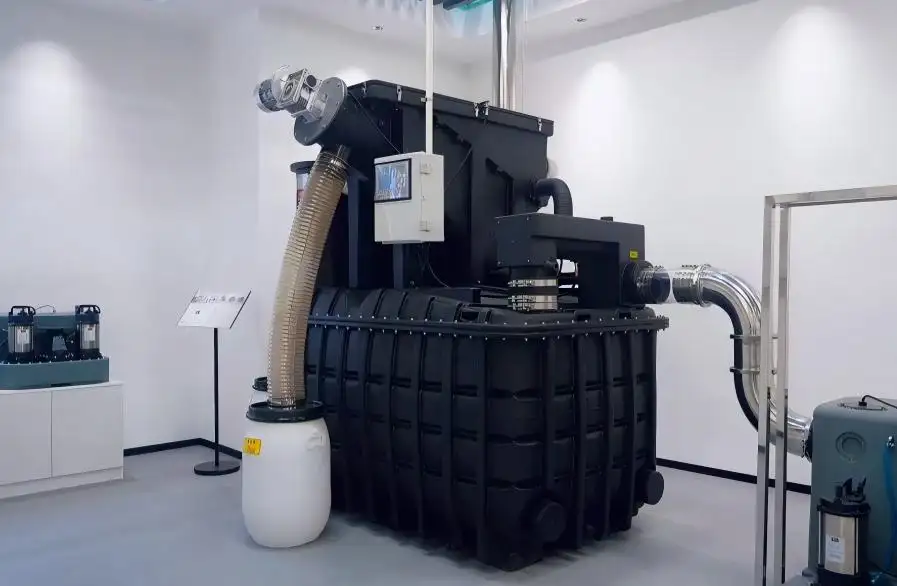
The CMSA grease separators have more advanced controls:
•Microcomputer control: These systems can be operated and controlled very easily by staff due to the advanced interface and are able to provide real-time status.
•Automated monitoring and alarms: Systems can automate the monitoring of grease layer thickness and can provide alerts when maintenance is required.
•Adjustable discharge schedules: The timing of grease trap discharge can be set to accommodate staff workflows.
•Sight-based operation: The systems operate via a touch interface and provide relevant information as well as a built-in user manual.
4. Reliable Operational Heating Systems
A key obstacle to hauling system efficiency is that grease solidifies at lower temperatures, which affects flow separation. Integrated heating can resolve this:
•Grease fluidity is maintained: Ensures that fats and oils remain easily separable.
•System can operate at constant temperature: This is an optional system mode, which will ensure performance is not affected by changing ambient conditions.
•Cold weather separation blockage is eliminated: Ensures solidification of grease does not occur in the separation tank.
5. Two-Stage Separation Using Large Sludge Chambers
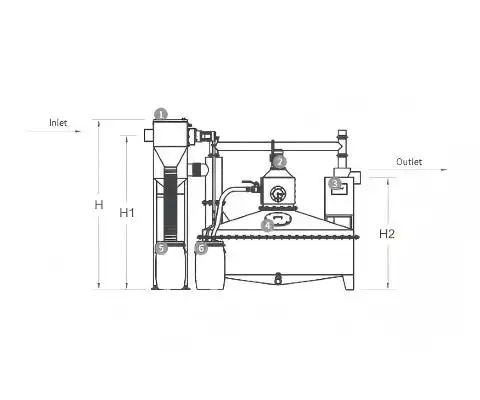
With the latest grease separators using a two-stage separation process, both solid waste and floating grease can be thoroughly removed. The features include:
•Large Sludge Chamber: This allows a large volume of sludge to collect and allows longer operational periods between maintenance intervals.
•Sludge that can be easily removed: Large particles ( > 1.5 mm) are removed in Stage 1.
•Grease Collection Chamber with Heating: Helps in better grease collection and grease separation.
•Large sight glass: Visual determination of grease accumulation levels, no need to open the tank.
Flexible Design and Optimization of Space
CMSA grease separation systems feature design flexibility for optimal placement and space usage:
•Detachable design: Components can be removed to allow passage through sections of the system that may be less than 850mm, i.e., narrow spaces.
•Adjustable inlet and outlet: Positions may be interchanged to meet the plumbing needs and system design.
•Compact design: Systems can be placed under kitchen sinks.
•Designed for new and retrofit projects: Systems are compatible with both new constructions and existing systems.
Uses in the Food Service Sector
Let's look at some of the spaces grease separators are found:
•Commercial Kitchens: The primary customer for grease separators.
•Food Manufacturing: Grease separators handle large amounts of grease in food manufacturing.
•Central Kitchens: Designed for large-scale food operations, such as large catering operations.
•Catering Facilities: Catering services that turn out a high volume of meals.
•Hotels: Food and Beverage service operations which produce mass quantity meal service.
•Healthcare: Services of institutional kitchens that have specialized requirements of services for sanitation and hygiene.
•Education: Institutional kitchens that produce mass quantity meal service for educational institutions.
Social and Environmental Benefits
In addition to the benefits to your business from GS, the community and the environment also enjoy benefits.
•Conserve Water Resources: Reduces pollution and overflowing sewers and streams.
•Less Burden on Treatment Plants: FOG will not be discharged down the sewer and will reduce the demands of municipal wastewater treatment.
•Encouraging Sustainable Systems: Frees up the never-ending maintenance of the sewer system.
•Promoting Public Health: Sewage does not cause public health or environmental concerns.
Conclusion: A Strategic Investment
Grease separators are a strategic investment. They do far more than prevent blockages and odors, and reduce labor and the risk of regulatory noncompliance. They are a modern, reliable, low maintenance system of protection for plumbing and the environment. For restaurants and food processors, having a high quality grease separator will allow them to manage their costs, extend the life of their equipment, and allow them to maintain the efficiency of their operations.
FAQs
Q: What is a grease separator?
A: It is a device that traps fats, oils, and grease (FOG) found in wastewater.
Q: What is the importance of grease separators in the restaurant?
A: They prevent plumbing clogs, control smells, reduce money lost on plumbing, and are required by law.
Q: What is the separation mechanism?
A: It is gravitational separation. Grease/fats rise to the top and the solids sink to the bottom. Wastewater leaves from the center outlet.
Q: Is it a hassle to clean a grease separator?
A: No, due to modern technology, cleaning is less labor-intensive compared to early models.
Q: Can a grease separator be used for hot wastewater?
A: Yes. Separators can be equipped with heating systems that ensure separation is still effective with colder ambient temperatures outside.


