
Why Polymer Concrete Drainage Channel Is Better Than Traditional Concrete Drainage
For many years, Portland cement concrete has been the standard choice for drainage channels. However, Polymer Concrete Drainage Channels are an excellent new option. Traditional concrete uses cement as a binder, while polymer concrete uses synthetic resins, such as polyester or vinyl esters, as binders, alongside sand and fillers. This new option also goes beyond traditional concrete offerings.
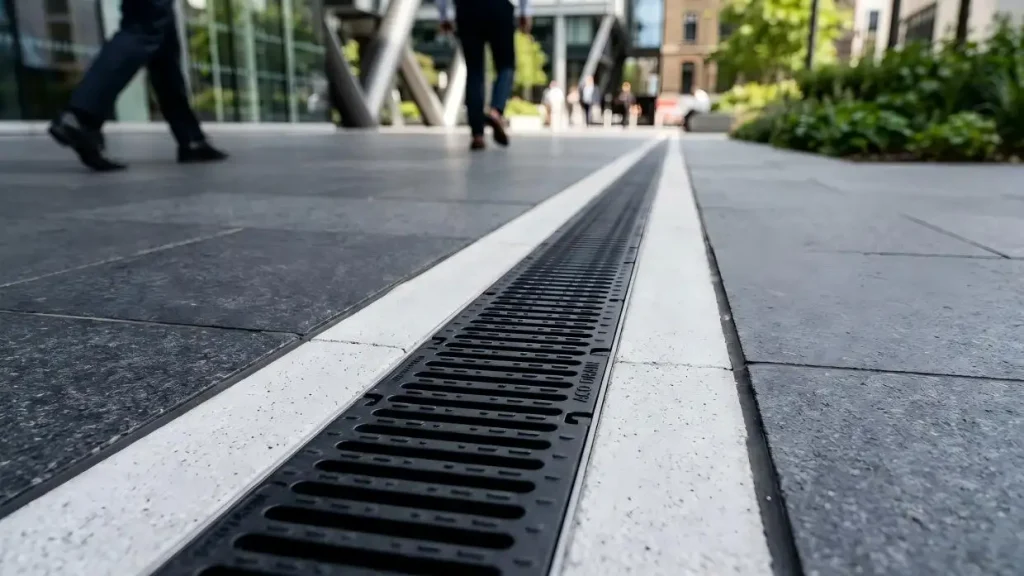
In this article, the author focuses on why the Polymer Concrete Drainage Channel bests traditional concrete drainage channels in many ways, including; mechanical strength, durability, ease of installation, and eco-friendliness.
1. Mechanical Strength
The strongest argument for using Polymer Concrete Drainage Channels is the mechanical strength of the system.
• 4 times greater than traditional concrete: The strength of polymer concrete is approximately four times that of traditional concrete. Some systems report normal strength as high as 90 MPa, as compared to 30 MPa for Portland cement concrete.
• Exceptional load bearing capacity: For this reason, Polymer Concrete Drainage Channel systems can be used in drainage infrastructures of highways, ports, airports and tunnels.
• High strength to weight ratio: Despite polymer concrete's superior strength, it is significantly lighter than traditional concrete.
2. Durability and Chemical Resistance
In general, traditional concrete drainage channels tend to be exposed to corrosive environments, and suffer degradation. The Polymer Concrete Drainage Channel offers a solution for each of these concerns.
• Excellent chemical resistance: Even in harsh conditions, polymer concrete maintains its structural integrity. Traditional concrete would withstand substantial damage if constantly exposed to the same conditions. Traditional concrete is rapidly deteriorated by corrosion. Polymer concrete is not affected by salt, most acids and alkalies.
• Extremely low water absorption: Traditional concrete has 9% moisture absorption. The moisture absorption of the Polymer Concrete Drainage Channel is between 0.05% and 0.6%. About 400 times more moisture is absorbed by cement concrete than moisture is absorbed by polymer concrete.
• Outstanding Freeze-Thaw Endurance: The non-porous, closed-cell structure of polymer concrete eliminates the freeze-thaw damage that leads to spalling and cracking in conventional concrete. Some products of polymer concrete withstand more than 1,600 freeze-thaw cycles without any damage.
• Long Lifespan: Conventional concrete rapidly decays when exposed to hostile environments. In contrast, polymer concrete can withstand the same environments for a much longer time.
3. Improved Hydraulic Characteristics
The inner surface of standard concrete is rough, but in polymer concrete it is smooth. For this reason, polymer concrete has a considerable hydraulic advantage when compared to standard concrete.
| Property | Polymer Concrete Drainage Channel | Traditional Concrete Drainage |
| Surface Roughness (Manning's n) | ~0.001 | ~0.013 (rough and porous) |
| Water Absorption | <0.05%-0.6% | ~9% |
| Flow Efficiency | High; Smoothed surface increases velocity | Roughness restricts flow |
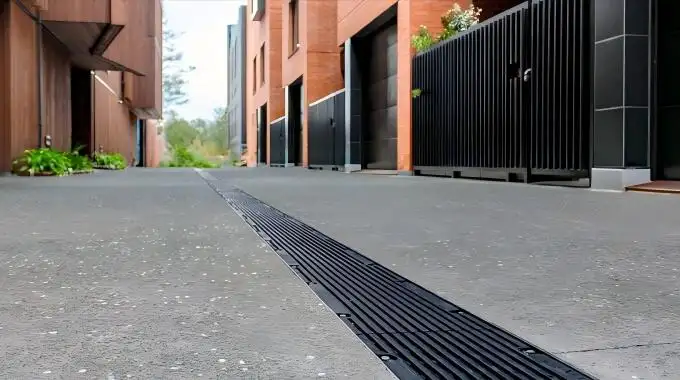
• Optimized Flow Velocity: The surface of the Polymer Concrete Drainage Channel is smooth and non-porous, thus, friction is greatly reduced, and water can flow rapidly and efficiently.
• Self-cleaning: The non-porous and smooth surface of the interior finish of the channel does not allow for debris build-up and will reduce channel maintenance.
• Rapid Drainage: The Polymer Concrete Drainage Channel can drain a system of 900 GPM at each outlet point.
4. Quick, Safe and Inexpensive Installation
The difference in systems is most evident during the installation of the Polymer Concrete Drainage Channel compared to traditional cast-in-place concrete.
• Reduced Weight: The Polymer Concrete Drainage Channel is usually about 40% lighter than the equivalent load bearing concrete. The approximate concrete density for Polymer Concrete is 2,300kg/m3, while that of traditional concrete is greater than 2,400kg/m3.
• Rapid Installation: Polymer Concrete Drainage Channel systems can be installed at the rate of 60-90 linear feet per hour. Traditionally for cast-in-place concrete systems, the average rate is around 5 to 10 linear feet per hour.
• Reduced Operations: Because of the light weight of the Polymer Concrete Drainage Channel, the requirement for heavy lifting equipment, cranes and special transporting systems is eliminated.
• Precast Convenience: Forming, Stripping and Curing conventional concrete is a long process. Polymer Concrete Drainage Channel systems are manufactured precast and ready for immediate installation.
• Lower Installed Costs: Although the material costs of the prefabricated Polymer Concrete Drainage Channel systems are higher, the rapid installation with a significantly low associated labor cost usually results in a lower total systems cost.
5. Environmental and Sustainability Benefits
The Polymer Concrete Drainage Channel offers numerous environmental benefits when compared with traditional concrete drainage.
• Increased recycled content: There is a high likelihood a substantial portion of the materials used in producing Polymer Concrete Drainage Channel systems are recycled materials. For example, some use recycled glass and street sweepings as bonded fillers. One of the largest channels can recycle approximately 104,000 plastic bottles and containers for each kilometer built.
• Decreased carbon footprint: The reduction of material weight results in lower transport emissions and less equipment use.
• Less frequent replacements: The longevity and durability of the Polymer Concrete Drainage Channel reduces the waste, transport, and resources over the lifecycle of the product.
• Pollution of the environment: Closed-cell and low water absorption of the Polymer Concrete Drainage Channel inhibits the passage of contaminants.
6. Reduced Maintenance and Lifecycle Costs
The Polymer Concrete Drainage Channel has an economic advantage in the long run because of less maintenance.
• Debris build-up prevention: The smooth and non-porous surface does not allow the build-up of debris and sediment, and it helps to reduce maintenance.
• High wear resistance: The Polymer Concrete Drainage Channel has a high resistance to the abrasion.
• Low repair requirements: The durable Polymer Concrete Drainage Channel does not require the difficult and lengthy patching repair that traditional concrete systems require.
Polymer Concrete Drainage Channels vs. Traditional Concrete Drainage Channels - A Comparative Evaluation
| Criterion | Polymer Concrete Drainage Channel | Traditional Concrete Drainage |
| Compressive strength | ~90 MPa (3-4× stronger) | ~30 MPa |
| Water absorption | <0.05%-0.6% | Up to 9% |
| Chemical resistance | Excellent (Acids, salts, oils) | Poor; attacked by acids and salts |
| Freeze-thaw resistance | Superior; >1,600 cycles | Spalling susceptibility |
| Installation rate | 60-90 ft/hour (crew of 2) | 5-10 ft/hour |
| Surface smoothness | Very smooth (n≈0.001) | Rough (n≈0.013) |
| Maintenance | Low; self-cleaning High; debris accumulation | |
| Environmental impact | Lower emissions, recycled content | Higher carbon footprint |
Product Versatility
CMSA offers the largest variety of Polymer Concrete Drainage Channel systems covering a significant range of client needs:
• MEADRAIN EN / PG / AC Series: Advanced drainage for difficult location solutions (e.g. airports, railway stations, cargo zones, ports, and industrial facilities).
• MEA®TRAFFIC: Heavy duty drainage for road and other high traffic drainage solutions.
• MEA®BRIDGE: Bridge and elevated structure drainage solutions.
• MEA®KERB: Combined kerbstone and drainage channel systems.
• MEA®Topslot: Urban surface drainage.
• MEA®City Tram: Tram and light rail drainage.
• MEA®HEELGARD: Heelguard Grate Safe Pedestrian Drainage.
• MEA®Drain Parking: Multi-storey car park and underground garage drainage.

Load Class Capability
All Polymer Concrete Drainage Channel systems are available in all loading classes, including the highest F900. F900 systems are designed for the most critical loading applications, including airport runways and container storage.
Final Words
The evidence confirms that Polymer Concrete Drainage Channel systems outperform traditional concrete in strength (90N/mm²), near-zero absorption, chemical resistance, and lightweight installation. Systems with long-standing expertise in drainage are the best contemporary systems for durable and low-maintenance sustainable infrastructure.
Frequently Asked Questions
Q: What is a Polymer Concrete Drainage Channel?
A: It's a drainage system incorporating a synthetic resin and aggregate blend, which results in a strong and durable system.
Q: How much stronger is it than traditional concrete?
A: It achieves a compressive strength of around 90 MPa, which is 3–4 times stronger than typical Portland cement concrete.
Q: Does it resist chemicals and salts?
A: Yes, it resists chemicals and salts, such as acids, oils, de-icing salts, and alkalis. Standard concrete will quickly deteriorate in these conditions.
Q: How long does it last?
A: Its non-porous, chemical-resistant nature provides a substantially longer useful life and requires little to no maintenance for decades.
Q: Is it environmentally friendly?
A: Yes, many products now incorporate recycled materials, such as glass and plastics, and when combined with a lower weight, reduces transport emissions.


