
Parking Structure Stormwater Drainage Installation: A Complete Guide to CMSA's Modular Solutions

Managing stormwater is a major consideration for all types of parking structures, including surface lots, multi-story garages, and subterranean builds. Without proper stormwater management, many types of structures create water quality issues, localized flooding, and depletion of sub-surface water resources. Thus, the installation of stormwater drainage systems in parking structures is imperative. CMSA is the first company to step forward, with our engineered and modular systems for the collection and use of rainwater, promoting both water and resource efficiency.
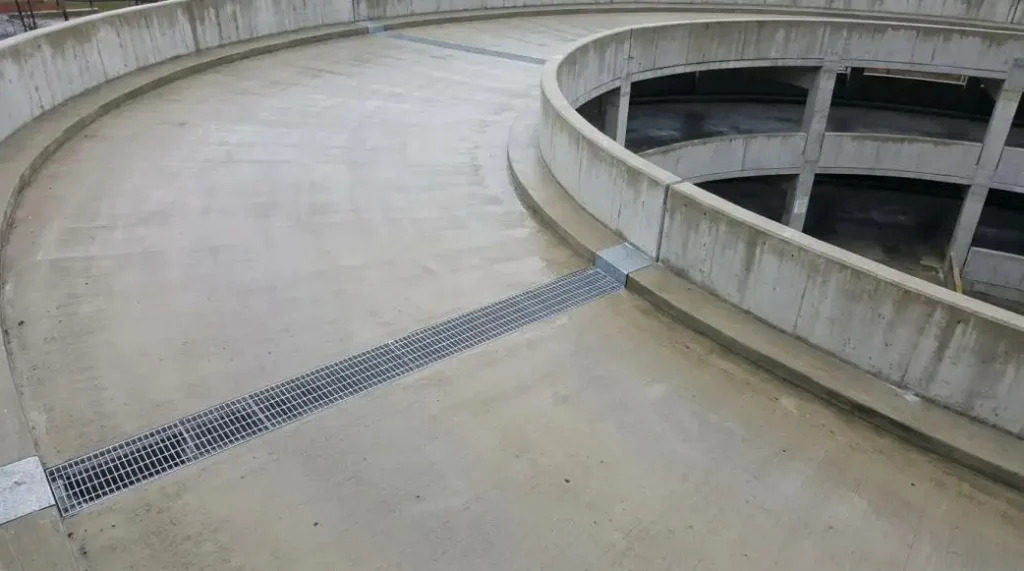
Why Do Parking Structures Require Special Stormwater Drainage?
In a built up urban environment, parking structures contribute significantly to stormwater runoff. The surfaces of parking structures quickly fill with various pollutants including oil, grease, metals, and debris. Once they are on the surface, pollutants are quickly transported by rainwater to drainage pipes and sewer systems, or directly to water courses and water bodies. A good stormwater drainage system achieves the following:
•Removes and contains pollutants as they are generated
•Alleviates flooding concerns by managing stormwater flows
•Modifies the water cycle by changing the means and purpose of stormwater
CMSA's storage and retention systems are designed for use in large water collection and retention applications, such as parking lots, roadways, and landscaped areas/paths. They are designed to be placed below the frost line and are not influenced by groundwater fluctuations.
CMSA Modular Rainwater Collection and Utilization System
CMSA uses decades of expertise in drainage technology including the support of hydraulic calculations and product selection to the integration of Building Information Modeling to the guidance of on-site installation. CMSA's Modular Rainwater Collection and Utilization System is built on four pillars:
1. Built to Last High-Quality PP Material
Core storage unit of CMSA PP Modular Box Stormwater Storage (Dimensions: 1200 x 600 x 300mm, void ratio 95%). The lightweight, high-density, polypropylene (PP) material is:
•Capable of strong compression resistance (Vertical = 400 kN/m2 for Type A)
•Corrosion resistant (highly suitable for underground parking)
•Of stable performance for a long period of time
•Fully recyclable
2. Convenient Modular Design
•Interlocking design of the stormwater storage system enables quick onsite installation
•Compact design of the stormwater storage system enables flexible stacking while lowering shipping costs
•Modular, flexible design allows the storage system to be configured in rectangular, L, or square storage units
•Horizontal and vertical alignment of the system enables the storage units to evenly distribute loads even when trafficked by heavy vehicles (up to 4 meter cover height for Type A)
3. 95% Storage Efficiency
With a void ratio of 95%, CMSA Modular Boxes take up the least possible amount of space in the footprint of a project and hold the maximum amount of stormwater. Building in an inner city location with extremely limited or no outer space available for parking or storage, CMSA Modular Boxes take the drainage design to an entirely new level.
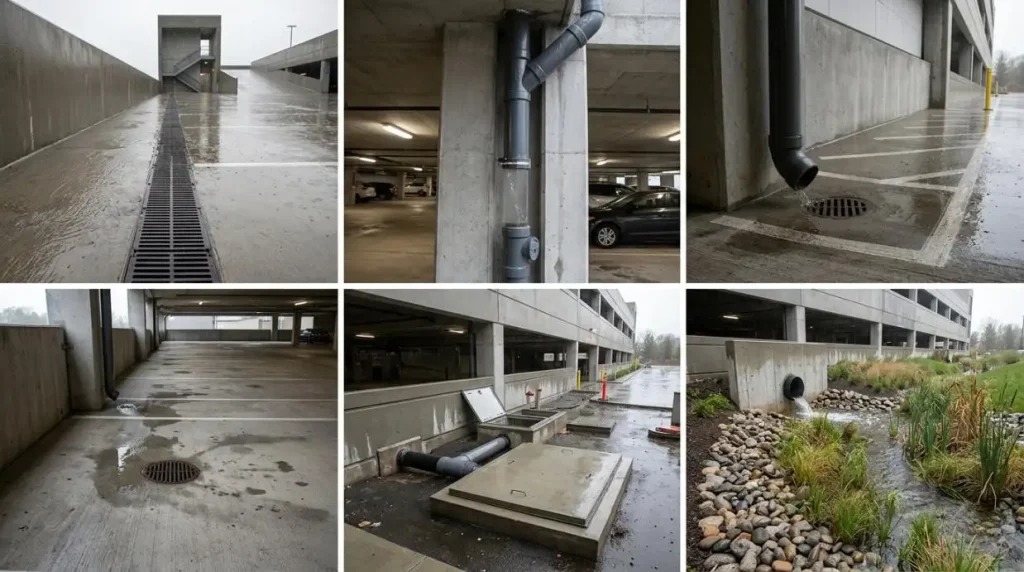
4. Comprehensive Pre-Filtration and First-Flush Abandonment
Making sure water flows and its quality is important. CMSA made two key devices for upstream support.
CMSA Rainwater Pre-filtration Device
•The height of the shaft can be adjusted so you can cut it on-site to where the soil is.
•The PE body and stainless steel basket catch big things and allow for water to flow without obstruction.
•Trash, leaves, and even gravel can obstruct pumps and clog the storage services. Hence it protects.
•A simple connection with a pipe and backfill makes it ideal for parking lot inlets.
CMSA Rainwater Abandon Device
•A floating ball mechanism lets the first-flush carry suspended particles and lets trash out. It can be removed to clear the pipe.
•A stainless steel filter captures all particles that are ≥2 mm.
•On the first flush, the device saves and stores the rainwater after it has been filtered.
•Casts a rubber seal to block anything that originates outside the pipe so it does not come in.
These devices ensure that anything that is added to a modular storage system has been processed and can be reused.
Step by Step Modular Parking System Installation Instructions
CMSA Storm water drainage placement for modular parking systems is completed through the following steps.
Step 1: Site Visit and Hydraulic Calculation
•Thanks to our state-of-the-art software, we can complete these drainage calculations in a short, accurate timeframe.
•Storage volumes are determined by the size of the parking area, the rainfall intensity, and the local requirements.
•The hydraulic calculation outlines the parameters of the system.
Step 2: Modular Box Layout and Assembly
•Excavate to required depth (0.25–4 m based on load class)
•Lay geotextile and impermeable membrane (if storage and not infiltration is required)
•Assemble PP modules horizontally and vertically – no cranes needed due to a lightweight design (each box ~10 kg)
•Create any geometric configuration: rectangular, square, or irregular shapes to fit the parking lot geometry
Step 3: Installation of Pre-Filtration and Abandonment Devices
•Install the pre-filtration device at each major catchment inlet (e.g. the drain inlets along the parking aisle)
•Put the abandonment device upstream of the storage tank to get rid of the first flush
•Set the shafts heights with respect to the final elevation – easy to trim on site
Step 4: Backfill, Compaction, and Cover
•After the modules are interlocked, backfill around and above the system
•For parking lots with vehicles, make sure the cover height meets the load requirements (Type A: 0.8–4 m; Type B: 0.25–2.5 m)
•Compact soil carefully, as damaging the modules is quite easy
Step 5: Connection to Reuse or Discharge
•The outlet pipes take the stored water to the irrigation systems, washing bays, or infiltration trenches
•The excess water is directed to the municipal storm drains or to the natural infiltration zones
Key Benefits for Parking Structure Owners and Developers
•Flood Mitigation: Reduces surface runoff from heavy rainfall and prevents ponding on parking decks
•Groundwater Recharge: Infiltrates clean water back into aquifers (where allowed)
•Water Conservation: Harvester rainwater can be used for vehicle washing and irrigation of landscaping for a reduction of 30 to 50 percent in city water consumption
•LEED and SUDS: Supports both sustainable urban drainage systems and green building credits
•Low Lifecycle Cost: Modular design allows for easy expansion or relocation; PP materials do not rust or degrade
CMSA's Technical Support: From Design to Acceptance
CMSA is an organization that provides assistance at every phase; they don't sell products.
•Drainage solutions: Development of plans and drawings
•BIM support: An entire product family library with assistance from specialists
•Installation: On-site training instruction provided for the initial preparations, regular inspection made during the construction period, and guidance given for the final acceptance
Conclusion
Installation of Parking Structure Stormwater Drainage offers an opportunity to increase your asset value. CMSA offers systems that are modular, made of PP materials, and include pre-filtration and first-flush abandonment devices to help maintain an efficient, durable, and flexible stormwater management system. If you are constructing a new parking garage or retrofitting a system to an existing parking garage, CMSA will help you to achieve your drainage goals by producing sustainable, flood resistant, and economical solutions.
To recieve a detailed, product-ready quote with hydraulic calculations, and product specifications and briefs, contact CMSA.
Frequently Asked Questions (FAQ)
Q1: Can CMSA modular boxes be put under existing parking lots without full reconstruction?
Yes. Because of the modular design and the low excavation depth that can be as low as 0.25 m for Type B, CMSA can retrofit under parking surfaces, causing little disruption. CMSA makes custom layouts to accommodate foundations and utility lines.
Q2: How does the system cope with heavy loads? Trucks and fire engines?
For all types of traffic, including heavy trucks and emergency vehicles, Type A CMSA modules can be put under cover depths of 0.8m to 4m with vertical compressive strength of ≥ 400 kN/m².
Q3: What is the necessary maintenance for the pre-filtration and abandonment devices?
For the stainless steel filter baskets of both devices, maintenance is pretty simple: they can both be cleaned at least once a year, or following any major weather events, with no special tools needed. The abandonment device's floating ball mechanism is self-cleaning, and requires no maintenance.
Q4: Is it acceptable to use the stored rainwater to wash cars or flush toilets in a parking garage?
Yes. The pre-filtration + abandonment + 95% void ratio storage creates an end product with an excellent level of quality and is suitable for washing cars, cleaning parking garage floors, and flushing toilets, when used with UV disinfection.
Q5: Does CMSA train local contractors for installation?Yes. CMSA extends a technical support package that is inclusive of on-site installation assistance, pre-construction training, routine site checks, and post-acceptance support.


