
Hygienic Design: How Stainless Steel Drainage Systems Prevent Odors in Hotels and Restaurants

In hotels and restaurants, drainage odors often stem from numerous sources other than the volume of wastewater. Food particles, grease, stagnant water, bacterial biofilm, and other contaminants typically accumulate in the drainage system and cause odors. High-use commercial kitchens can process hundreds of liters of wastewater each day and are in contact with hot water, detergents, oils, and organic matter.
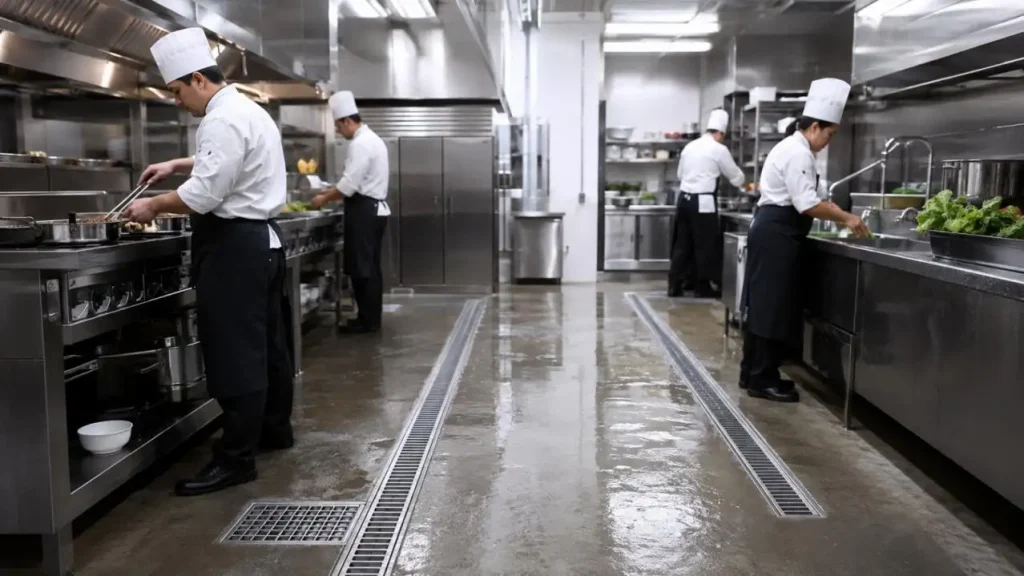
The Prevention of Odors in Hotels and Restaurants Stainless Steel Drainage System uses its design to control contamination and combines strong material selection and a strategic hydraulic design. It is designed to manage wastewater and deal with issues that cause persistent odors.
Why Drainage Odors Develop in Commercial Kitchens and Hotels
To solve drainage odors, we must first understand their origin. In commercial food preparation areas, wastewater is highly complex. It contains a mixture of:
- FOG (Fats, Oils, and Grease): Which solidify as they cool, clinging to pipe walls.
- Organic Food Particles: Which settle in low-flow areas of the drainage run.
- High-Temperature Discharge: From commercial dishwashers, which can accelerate chemical reactions and release volatile organic compounds (VOCs).
- Sanitizing Chemicals: Which can corrode inferior drainage materials, creating rough surfaces.
When these substances accumulate, they undergo anaerobic decomposition, releasing noxious gases such as hydrogen sulfide and methane.
The main foul odor sources can be classified as follows:
| Odor source | Engineering problem | Result |
| Food residue build-up | Poor internal drainage design | Bacterial growth and odor formation |
| Standing wastewater | Drainage with insufficient slope or poor drainage | Increase in microbial activity |
| Grease build-up | Adhesion and solidification of oils | Obstruction and foul odor |
| Backflow of sewer gas | Weak design of odor sealing | Stinking environment |
Therefore, Stainless Steel Drainage Systems Prevent Odors in Hotels and Restaurants by controlling the movement of wastewater and buildup of contaminants.
1. Why Stainless Steel Inhibits Bacterial Growth
The primary defense against biofilm formation is the surface profile of the drainage material. Traditional materials like concrete, cast iron, or low-grade plastics are inherently porous or become pitted over time due to chemical corrosion. These microscopic pits act as secure harbors for bacterial colonization.
A hygienic stainless steel drainage system improves odor control through:
• Lower surface contamination retention
• Easier removal of grease and food particles
• Better resistance against chemical cleaning agents
• Reduced risk of corrosion-related surface damage
CMSA's Hygienic Stainless Steel Drainage System uses 304 and 316L stainless steel to accommodate different environments.
| Stainless Steel Grade | Suitable Environment | Technical Advantage |
| 304 Stainless Steel | Hotels, restaurants, commercial kitchens | Balanced corrosion resistance and easy maintenance |
| 316L Stainless Steel | Food processing, chemical, pharmaceutical environments | Higher resistance to chloride and aggressive cleaning conditions |
316L stainless steel is best suited for drainage systems that constantly touch salt-containing substances or stronger cleaning chemicals due to the presence of molybdenum that improves resistance to pitting corrosion.
2. Geometric Engineering: Eliminating Dead Zones and Stagnant Water
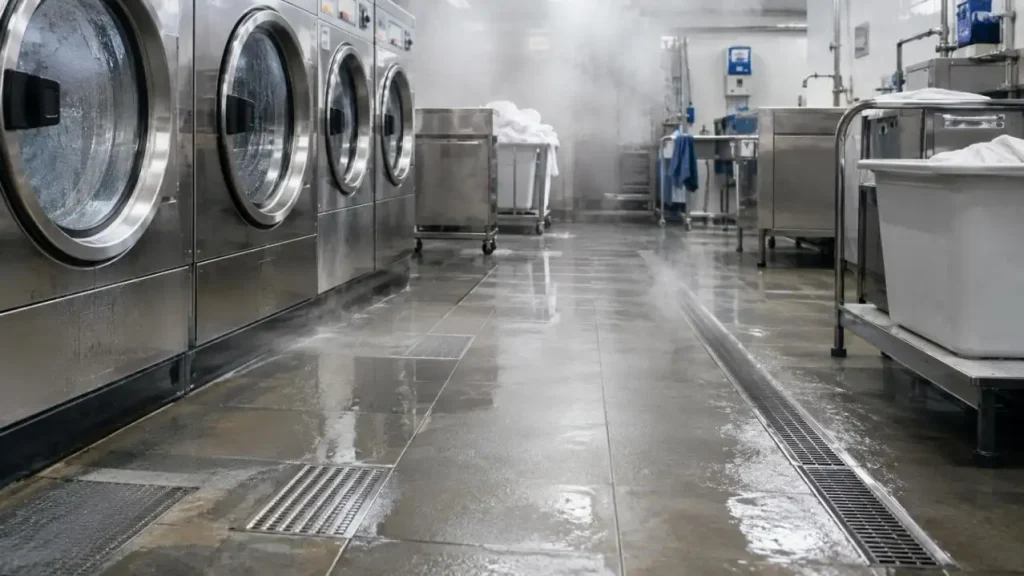
Even the highest-grade stainless steel will fail to prevent odors if the physical design of the channel allows water to pool. Stagnant water is a breeding ground for anaerobic bacteria.
To ensure rapid, continuous evacuation of wastewater, CMSA designs hygienic stainless steel drainage channels for restaurants with specific geometric profiles.
An inferior stainless steel design can still have odor issues.
The most important aspect of any design is the ability to quickly convey wastewater and contaminants.
Some important design aspects are:
• Internal corner radius;
• Channel slope;
• Outlet location;
• Flow direction;
• Ease of access for cleaning.
Sharp 90-degree internal corners create dead spaces for the accumulation of food particles and grease. Over the long term, these dead spaces become an odor source and can be difficult to clean.
CMSA's hygienic drainage structures incorporate a large internal radius to facilitate improved removal of residue for easier cleaning.
Hygienic drainage structures for commercial kitchens mean:
• No hidden contaminants
• Less time for cleaning
• Odor control
3. Advanced Trap Seals: Blocking Sewer Gas Migration
Even if drainage structures are clean, odors can still get into the building through wastewater pipes if there is inadequate odor control.
A water trap provides a physical barrier between the drainage pipe and the indoor environment. A drainage system designed properly will block sewer odors.
• Stable water seal depth
• Easy seal cleaning
• Reliable sealing performance
• Syphon resistance
CMSA offers hygienic floor drains that feature removable water traps and seal depths greater than 50 mm. These features allow sewer gas backflow prevention while also maintaining effective drainage.
The principle is relatively simple:
| Drainage Component | Function |
| Water trap | Blocks sewer gases |
| Debris filter | Captures larger particles |
| Stainless structure | Maintains hygienic surface |
| Removable design | Simplifies maintenance |
This combination dedicates itself to the prevention of odors in both hotels and restaurants by addressing both sources of contamination and paths of odor migration.
4. Leak-Proof Construction: Preventing Sub-Floor Saturation
Hidden issues of poor building hygiene can be caused by drainage systems because leakage along the sub flooring can be difficult to detect.
Drains that are not sealed may leak, allowing wastewater to accumulate and spread to the surrounding building. This may cause:
• Persistent smell
• Moisture damage
• Bacterial growth
• High costs from repairs and replacements
The use of sealed construction in CMSA's Hygienic Drainage Systems minimizes the leakage and maintains the integrity of the drainage system over the years of use. This design has workable surfaces and is installed in a manner designed for commercial use.
Stainless Steel Drainage Systems for Hotels and Restaurants
While specifying drainage systems, engineers should take into consideration other factors apart from the drainage capacity.
Key selection factors include:
| Material grade | Determines corrosion resistance and service life |
| Hydraulic capacity | Ensures wastewater removal during peak operation |
| Internal geometry | Controls residue accumulation |
| Odor sealing design | Prevents sewer gas migration |
| Maintenance access | Reduces cleaning time and operating costs |
The best drainage systems that hotels and restaurants should use are those that provide a balance between efficiency and cost in the long run.
CMSA's Hygienic Stainless Steel Drainage Systems for Commercial Applications
CMSA has introduced high-quality hygienic stainless steel drainage systems.
The hygienic stainless steel drainage system includes:
• Channel drain systems
• Floor drains
• Box systems
• Personalized drainage frames
These products are ideal for:
• Commercial kitchens
• Plants for food processing
• Beverage production facilities
• Plants for bottling
• Pharmaceutical industry
Modular Channels Offer Installation Flexibility and Improve Drainage Performance
Most commercial projects involve unique drainage layouts due to different floor configurations and wastewater scenarios.
With CMSA modular channel systems, engineers are able to configure:
• Direction of channels
• Position of outlets
• Layout of the drainage system
• Dimension of installation
Hygienic channel units, corner units, center outlet channels, and box channels, among other products, help provide creative drainage solutions that eliminate standing wastewater.
Certified Hygienic Performance for Long-Term Operation
For hospitality and food-related facilities, the drainage system must meet certain hygiene standards.
CMSA drainage systems offer:
• CE certification
• Compliance with EN1253
• Compliance with EN16165
These standards address:
• Safety of the drainage system
• Reliability of the system
• Slip resistance
• Durability
Final Words
Drainage engineering, not just cleaning, is the key to preventing odors in hotels and restaurants.
In order to reduce odors in hotels and restaurants, it is critical to design drainage systems that include hygienic internal structures, corrosion-resistant stainless steel, and all other design features that support water sealing and ease of maintenance.
To meet the drainage needs of commercial kitchens, hospitality venues and other similar industries, CMSA offers Hygienic Stainless Steel Drainage Product Systems.
For design, planning, and project construction of professional hygienic drainage systems, CMSA provides support to enable construction of cleaner and more efficient drainage systems.
FAQs
Q1. How do stainless steel drainage systems reduce odors in hotels and restaurants?
The design of stainless steel drainage systems eliminates odors by reducing the buildup of material, improving wastewater flow, and eliminating sewer gas backflow. Stainless steel systems contain design features to minimize odor producing, bacterial growth such as, smooth interior surfaces, large internal radius corners, and hygienic drain floor systems.
Q2. Which stainless steel materials are used to make CMSA hygienic drainage systems?
CMSA's hygienic drainage systems are made from 304 and 316L stainless steel. 304 stainless steel is suitable for commercial kitchens and restaurants, while 316L stainless steel provides superior resistance to corrosion for food processing, pharmaceutical, and chemical environments.
Q3. Why is stainless steel the primary choice for commercial kitchen drainage systems?
Stainless steel is the main choice because it is resistant to corrosion and heat, is easy to clean and has a long service life. In comparison to traditional drainage systems, its smooth, non-porous surface makes it less likely to retain food particles, grease, and bacteria.
Q4. In what ways do the internal designs of CMSA drainage channels improve hygiene?
Drainage channels by CMSA incorporate internal radius corners and smooth internal structures to enhance the flow of wastewater and each channel's cleaning accessibility. This design eliminates retention of organic materials and bacteria.
Q5. What hygienic drainage products does CMSA offer?
CMSA offers a variety of drainage systems with hygienic stainless steel drainage including:
• Modular drainage channels
• Hygienic drains
• Box channels
• Drainage grates
• Corner drains
• Channel outlets
• Custom drainage systems


